

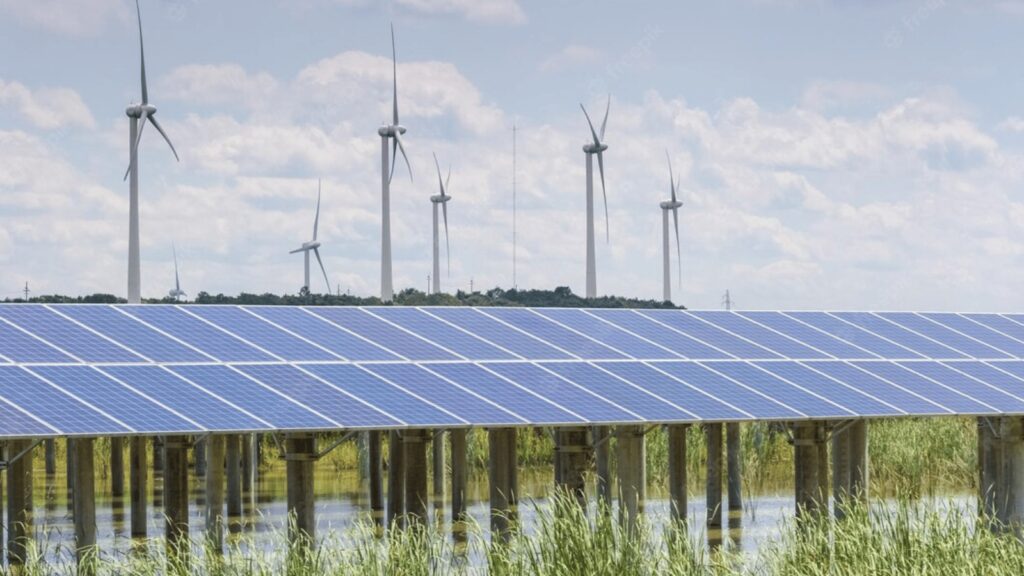

A new push for clean energy as coal dependence persists.
The United Nations Economic and Social Commission for Asia and the Pacific has launched a $4 million regional initiative aimed at accelerating clean energy transitions in Southeast Asia, a region facing surging energy demand and continued reliance on coal.
The programme, known as the Energy Transition for Green Growth and Prosperity initiative, was officially introduced on Tuesday, Feb. 25, 2026. The three-year effort will begin this year and run through 2028, focusing on supporting country-led and socially inclusive energy transitions while sustaining economic growth and job creation.
The initiative comes at a pivotal moment. Southeast Asia accounts for around 60 percent of global greenhouse gas emissions and 80 percent of global coal supply. At the same time, regional energy demand is projected to rise sharply toward mid-century, intensifying pressure on governments to balance development with decarbonization.
RELEVANT SUSTAINABLE GOALS

Funding Backed by Four Climate Foundations
The Energy Transition for Green Growth and Prosperity initiative has secured more than $4 million in initial funding commitments from four philanthropic organizations: ClimateWorks Foundation, Sequoia Climate Foundation, Children’s Investment Fund Foundation, and Tara Climate Foundation.
The funding is intended to support technical assistance, policy coordination and investment preparation tailored to national priorities across Southeast Asia.
By drawing support from philanthropic foundations, the programme seeks to address financing gaps that have long slowed energy reform efforts in emerging economies.

Governments Confront Structural Constraints
Armida Salsiah Alisjahbana, Under-Secretary-General of the United Nations and Executive Secretary of the United Nations Economic and Social Commission for Asia and the Pacific, said countries across the region are actively weighing how to reduce emissions without undermining economic stability.
“Countries around the region are considering how to reduce emissions while safeguarding growth, jobs, economic resilience and social inclusion,” she said.
Governments face a complex set of constraints. These include legacy fossil fuel infrastructure, limited fiscal space, regulatory complexity, uneven institutional capacity and persistent financing gaps. Each of these factors makes the transition to clean energy more challenging, particularly in fast-growing economies that depend heavily on affordable and reliable power.
Three Pillars to Drive Regional Energy Transition
According to the United Nations Economic and Social Commission for Asia and the Pacific, the initiative is structured around three core pillars.
First, it will strengthen analytical and evidence-based planning at the intersection of energy and economic development. This aims to ensure that climate strategies are aligned with national growth agendas.
Second, the programme will support regional power connectivity through green power corridors. Enhanced cross-border electricity networks are expected to facilitate the integration of renewable energy sources and improve system resilience.
Third, the initiative will mobilize green finance to improve investment readiness and scale up capital flows. By expanding access to both public and private financing, the programme seeks to unlock funding for clean energy projects and enabling infrastructure.
Coordinating Ministries and Financial Institutions
Through its intergovernmental platform, the United Nations Economic and Social Commission for Asia and the Pacific will work closely with ministries responsible for energy, finance, transport, environment and social development. The goal is to align energy transition strategies with green industrialization and employment creation.
The initiative will also engage development partners, financial institutions and regional experts to develop policy solutions and investment pipelines.
By bringing these actors together, the programme aims to improve policy coordination and enhance investment readiness across participating countries. Lessons learned are expected to inform broader regional energy cooperation across Asia and the Pacific.
Southeast Asia’s energy trajectory carries global significance. With its large share of greenhouse gas emissions and coal supply, decisions made in the region will influence the pace of global climate action.
The Energy Transition for Green Growth and Prosperity initiative signals an effort to bridge the gap between climate ambition and economic reality. By focusing on inclusive growth, job creation and financial mobilization, the programme seeks to frame clean energy not only as an environmental imperative but also as an economic opportunity.
You may also be interested in :
UN Warns Extreme Heat Could Overwhelm Asia-PacificPower Grids as Cooling Demand Triples by 2050