Every query sent to ChatGPT, Claude and other artificial intelligence (AI) services has an impact on natural ecosystems that’s both real and, in practice, extremely challenging to assess.
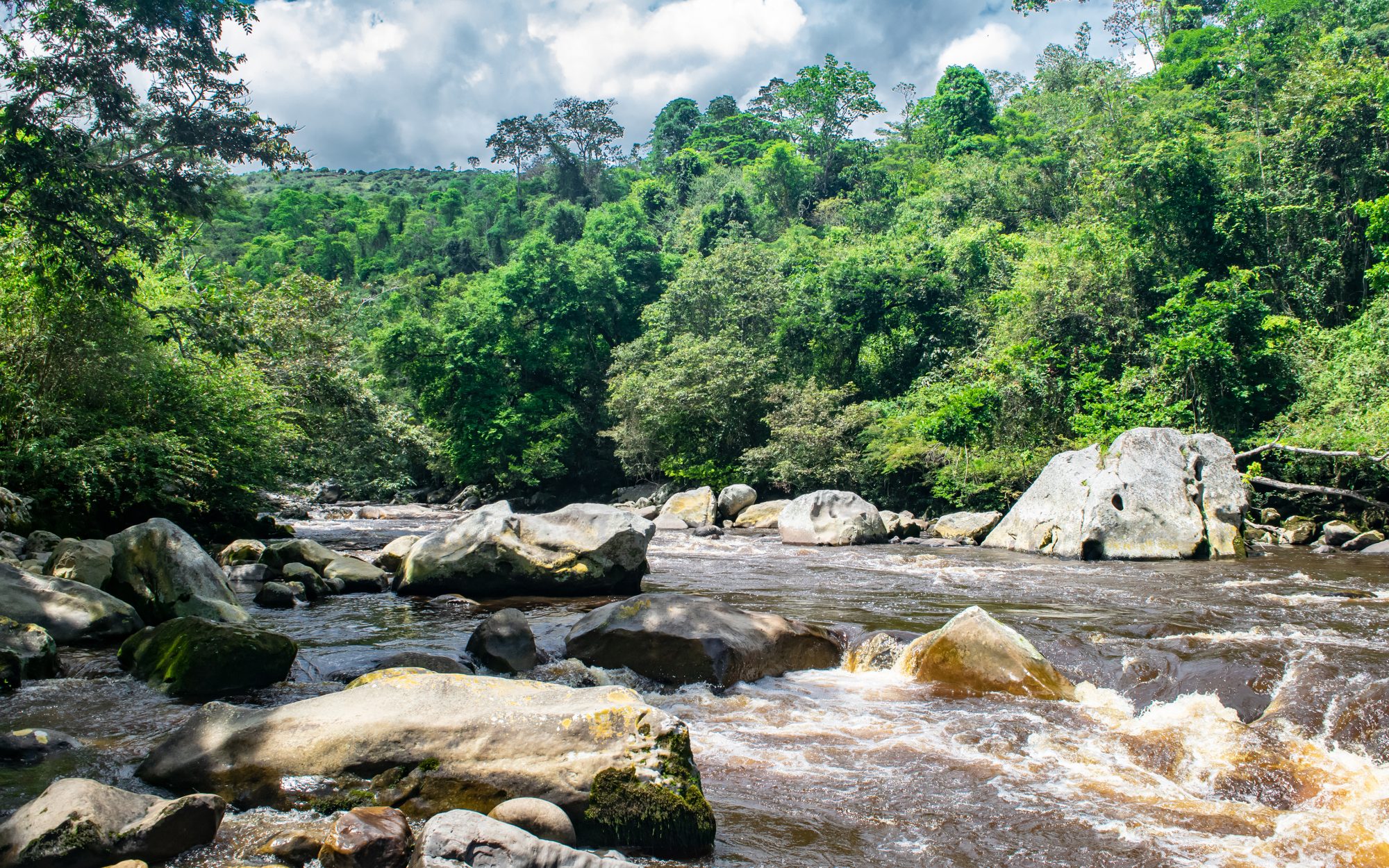
A new service from a provider of biodiversity credits aims to eliminate that friction. The first user is the Taskforce on Nature-related Financial Disclosures (TNFD), a standards body focused on corporate impacts and opportunities related to natural systems. The taskforce purchased credits to address the impact of the AI used in the production of its most recent annual report, with revenue from the credits going to help protect of Colombian cloud forest.
Impact assessment
Colombia-based Terrasos used a three-stage process.
- Estimate the outputs. Terrasos uses independently validated metrics to estimate the likely range of impacts a single AI query has on emissions, water use and land use. The calculation for land includes the area covered by facilities that generate the electricity used by the data center that processed the query. For emissions, the company uses a range of 0.03 to 1.14 grams of carbon dioxide per query.
- Translate into biodiversity impacts. The team then uses a methodology developed by researchers in the Netherlands to convert the output numbers into what’s known as the Potentially Disappeared Fraction (PDF): the share of species a place is expected to lose due to the emissions, water use and land consumption the query triggered. An impact of 0.02 PDF, for instance, would result in two species out of a hundred in a given area being displaced.
- Make an appropriate contribution. Buyers then have the option to buy an amount of Tebus — short for Terrasos biodiversity units — that is proportional to their PDF score. One Tebu protects 10 square meters of verified habitat for 30 years. In the TNFD’s case, the organization purchased 110 Tebus, at a cost of $45 each.
Don’t call them offsets
The process appears similar to the voluntary carbon market in that companies can fund projects outside their value chains to compensate for impacts — emissions in the case of carbon markets — that they can’t eliminate. But the Terrasos team said it’s not aiming to allow companies to offset the nature-related impact of AI use.
Claiming a Tebu as an asset similar to a carbon credit would be “problematic in that we don’t know where the impact is being produced and we are not compensating with a like-by-like ecosystem,” said Mauricio Serna, Terrasos’ country
Read More