
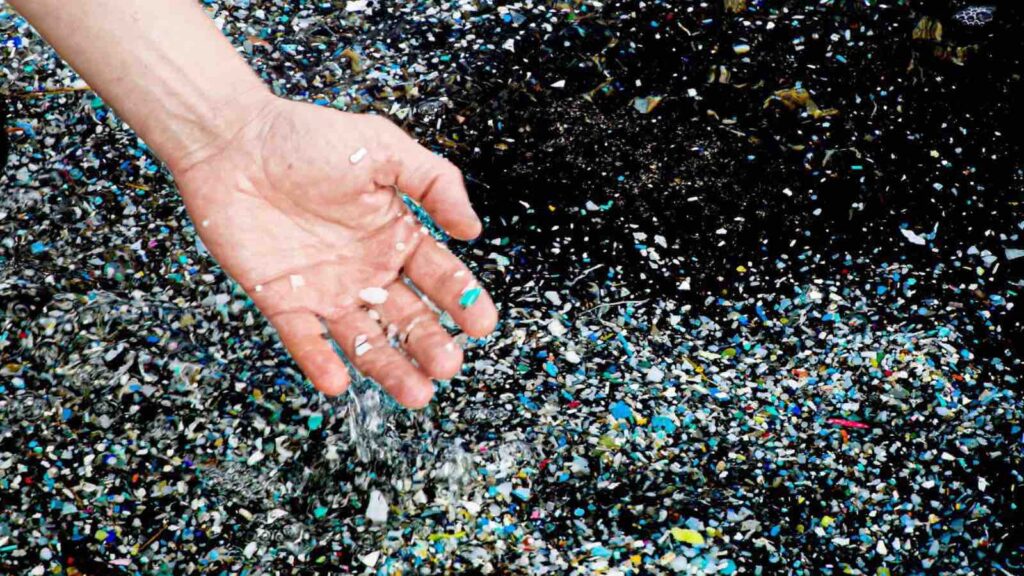

Taiwan’s new initiative comes amid increasing international concern over microplastics contamination and its potential effects on ecosystems, food chains and human health.
Taiwan is intensifying its battle against microplastics pollution through a new cross-ministerial initiative designed to tackle contamination “from land to sea,” as concerns grow over the spread of plastic particles through oceans, waterways, soil, rainwater and even the air.
The joint effort, announced by Taiwan’s Environment Ministry and the Ocean Affairs Council, marks a broader push to strengthen scientific monitoring, waste reduction, cleanup operations and public-private cooperation in response to the escalating environmental threat posed by microplastics.
Officials say the initiative reflects growing recognition that plastic pollution has become deeply embedded in modern ecosystems and cannot be addressed by a single agency acting alone.
RELEVANT SUSTAINABLE GOALS
Microplastics Have Entered the Planet’s Circulation System
Speaking at the Environment Ministry in Taipei on May 8, Kuan Bi-ling, minister of Taiwan’s Ocean Affairs Council, warned that microplastics are now circulating through nearly every part of the environment.
“The problem of microplastics and marine waste cannot be solved by a single ministry,” she said.
Kuan noted that microplastics have entered oceans, rivers, soil, rainwater and the atmosphere, underscoring the scale and complexity of the crisis.
“Today, we are formally demonstrating our resolve to work together across ministries,” she added.
The announcement signals a stronger institutional response as governments worldwide face mounting pressure to address the long-term health and environmental consequences of plastic pollution.

Taiwan Expands Strategy Beyond Cleanup Toward Source Reduction
Taiwan’s Environment Minister Peng Chi-ming said the government’s strategy would focus not only on cleanup efforts, but also on preventing plastic waste from entering ecosystems in the first place.
“Microplastics management begins with source reduction and extends to environmental monitoring and cleanup before waste breaks down into smaller particles,” Peng said.
“The sea has already endured too much,” he added.
The approach reflects a broader shift in environmental policy away from treating pollution solely as a waste disposal issue and toward managing the entire lifecycle of plastic products.
Officials indicated that the ministries would build on measures already introduced in recent years.
Taiwan’s Existing Plastic Restrictions Become Foundation for Broader Action
Taiwan has already implemented several policies targeting plastic pollution.
The Environment Ministry said microplastics in cosmetics and personal cleansing products have been banned since 2017. Authorities are now promoting circular economy legislation aimed at reducing single-use products while encouraging reuse systems.
The push toward circularity comes as governments and businesses across Asia face rising concern over plastic waste, marine pollution and resource security.
By targeting both consumption patterns and waste systems, Taiwan is attempting to reduce the flow of plastic entering rivers and oceans before it fragments into microscopic particles that are far harder to remove.
Ocean Monitoring and Marine Cleanup Efforts Expand
The Ocean Affairs Council said it has been building marine monitoring systems since 2020, particularly around major river mouths where plastic waste frequently enters coastal ecosystems.
According to the council, seawater and marine organisms are already being monitored for microplastics contamination, with collected data uploaded to an international database to support global research efforts.
The agency has also mobilised large-scale cleanup operations involving both citizens and maritime stakeholders.
Officials said 6,665 environmental protection vessels and 6,089 divers have been recruited to assist in removing marine waste from Taiwan’s waters.
The initiative combines environmental surveillance with direct cleanup measures, reflecting the growing urgency surrounding ocean pollution in coastal economies dependent on fisheries, tourism and marine biodiversity.
Plastic Pollution Becomes a Regional and Global Challenge
Taiwan’s new initiative comes amid increasing international concern over microplastics contamination and its potential effects on ecosystems, food chains and human health.
Researchers worldwide have detected microplastics in marine animals, drinking water, rainfall and even human bloodstreams, raising alarms over the long-term consequences of widespread plastic dependence.
Taiwan’s “from land to sea” strategy highlights how governments are beginning to approach the issue as a connected environmental system rather than isolated pollution events.
The collaboration between the Environment Ministry and the Ocean Affairs Council also reflects a growing understanding that effective solutions require coordinated action across industries, communities and government agencies.
As countries across Asia struggle with rising waste volumes and mounting marine pollution, Taiwan’s approach may increasingly be viewed as part of a broader regional effort to reduce plastic leakage into the environment while strengthening long-term environmental resilience.