

Landmark regional dialogue in Kathmandu focuses on unlocking opportunities for inclusive economic growth by investing in the care economy and accelerating women’s economic empowerment across South Asia.
Kathmandu, Nepal — Member States of the South Asian Association for Regional Cooperation (SAARC) are working towards a historic regional roadmap to transform care systems, aiming to unlock women’s economic potential and drive inclusive growth across South Asia.
The two-day ministerial dialogue, “TransformCare South Asia: Transforming Care Systems for Advancing Women’s Economic Empowerment in SAARC” concluded on 14 May, marking the first time the care economy has been positioned as a strategic pillar for cooperation in the subregion. Co-organized by UN Women and the SAARC Secretariat, the event was supported by the Ministry of Gender Equality and Family of the Government of the Republic of Korea.
RELEVANT SUSTAINABLE GOALS
South Asia continues to have one of the lowest female labour force participation rates globally, with unpaid care responsibilities borne disproportionately by women and girls limiting their access to employment and leadership opportunities. Closing gender gaps in female labour force participation could increase South Asia’s GDP by up to 51 per cent.
“Coordinated action to transform care systems can unlock greater choices and opportunities for women across South Asia,” said Nyaradzayi Gumbonzvanda, UN Assistant Secretary-General and UN Women Deputy Executive Director. “Investing in the care economy can expand women’s labour force participation, while helping to realize women’s rights to education, rest, participation in public life and equal opportunities too often constrained by unequal care responsibilities.”
The care economy presents a significant opportunity for job creation and economic multiplier effects. UN Women research shows that investments in the care sector can generate two to three times more jobs than equivalent investments in sectors such as construction, while also enabling more women to enter and remain in the workforce.
Through the TransformCare Investment Initiative, UN Women offices across South Asia provide technical expertise, data-driven evidence and financing strategies to help SAARC countries turn these regional goals into national realities. Since 2024, with the support of Ministry of Gender Equality and Family of the Republic of Korea through the UN Women Knowledge and Partnerships Centre, UN Women has been providing targeted technical assistance to support the reform of care systems through integrated approaches engaging government, women’s organizations, private sector and academia.
A key output of the ministerial dialogue was the formulation of a zero draft Action Plan for Transforming Care Systems in South Asia for SAARC countries.
Emphasizing the need to transform care systems for women’s economic empowerment, Ambassador Md. Golam Sarwar, SAARC Secretary-General, said: “The care economy is not a niche social issue, nor is it a peripheral concern for the benevolent. It is an economic imperative, a demographic necessity, and above all, a moral calling. If we are serious about inclusive growth, we must be serious about care. The future of South Asia depends not only on how we grow, but on how we care for one another.”
In reiterating the need for coordinated action across policies, financing, services, infrastructure, decent job creation and social norms to transform care systems, the SAARC Member States show strong commitment to advancing gender equality and women’s empowerment. Such shared regional challenges to advance the care economy, including entrenched gender norms, rapid demographic transitions, labour mobility, and climate pressures commonly faced by South Asian countries, require collective responses.
Positioning care as a common priority enables SAARC countries to leverage shared cross-country learning, align policy approaches, and scale solutions that benefit women and girls, particularly those most underserved. Strengthening regional cooperation on financing can also unlock blended financing approaches to scale investments to ensure the provision of accessible, affordable, quality care services and infrastructure as well as decent working conditions for paid care workers across South Asia.
Gunakar Bhatta, the vice-chair of the National Planning Commission, Government of Nepal: “It is time to move from promises to delivery. Nepal’s engagement in this dialogue reflects our commitment to moving from care promises to care delivery. Investing in care services is not a cost, but a growth strategy that creates jobs, strengthens families, and accelerates inclusive development across South Asia.”
About SAARC:
The South Asian Association for Regional Cooperation (SAARC) is an intergovernmental organization established to promote economic, social, and cultural development in South Asia. It includes eight member states—Afghanistan, Bangladesh, Bhutan, India, Maldives, Nepal, Pakistan, and Sri Lanka—and has its secretariat in Kathmandu, Nepal
About UN Women:
UN Women exists to advance women’s rights, gender equality and the empowerment of all women and girls. As the lead UN entity on gender equality, we shift laws, institutions, social behaviours and services to close the gender gap and build an equal world for all women and girls. We keep the rights of women and girls at the centre of global progress—always, everywhere. Because gender equality is not just what we do. It is who we are.
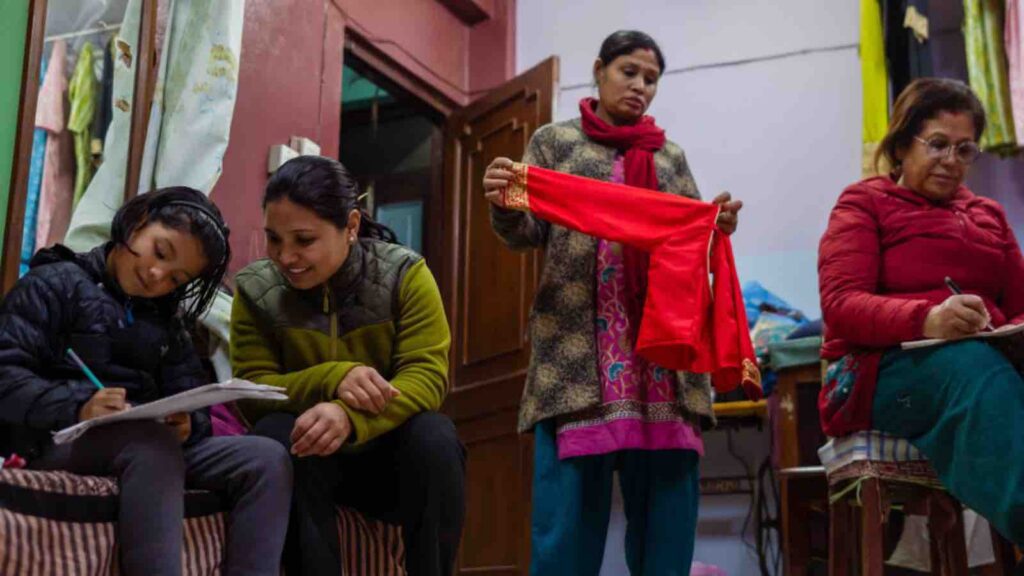
Lead image courtesy of Lorenza Cotellessa. all other images courtesy of Beagle Button.