
Gender inequality in water access threatens education, health and economic development worldwide.
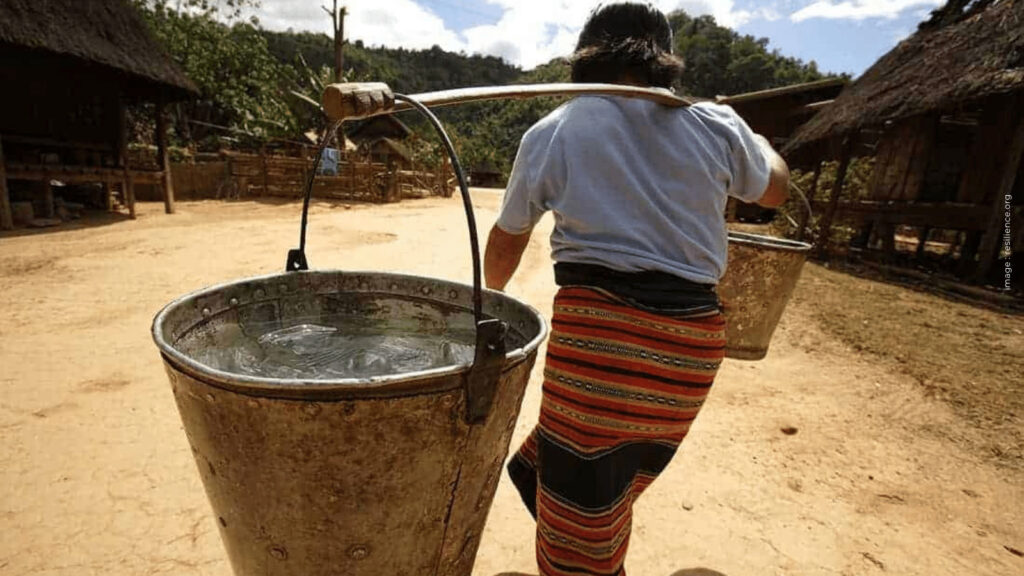
Women and girls around the world spend 250 million hours every day collecting water, a staggering burden that continues to shape access to education, livelihoods and safety, according to the United Nations World Water Development Report 2026 released by UNESCO ahead of World Water Day.
The report, Water for All People: Equal Rights and Opportunities, highlights how gender inequality remains deeply embedded in global water systems, even as more than 2.1 billion people still lack safely managed drinking water.
RELEVANT SUSTAINABLE GOALS
A Crisis Measured in Time and Inequality
Globally, the responsibility for securing water falls disproportionately on women. In over 70 percent of rural households without reliable water services, women are primarily tasked with fetching water, often travelling long distances and navigating unsafe conditions.
Girls are especially affected. Those under the age of 15 are nearly twice as likely as boys to be assigned water collection duties. Between 2016 and 2022, around 10 million adolescent girls missed school, work or social activitiesdue to inadequate sanitation facilities.
This daily, unpaid labour comes at a cost. Time spent collecting water reduces opportunities for education, employment and rest, reinforcing cycles of poverty and limiting economic mobility.

Health Risks, Safety Concerns and Physical Strain
The report warns that inadequate water and sanitation services expose women and girls to multiple risks. Long journeys to collect water can lead to physical strain and injury, while remote or poorly lit areas increase exposure to gender-based violence.
Poor sanitation infrastructure, particularly in rural regions and urban informal settlements, also affects dignity and health outcomes. The burden extends beyond water collection itself, as women frequently manage rationing of supplies and caregiving responsibilities within households — contributions that remain largely invisible in policy planning.
Central to Water Systems, Yet Excluded From Leadership
Despite their central role in managing water at the household and community levels, women remain significantly under-represented in water governance and decision-making.
In many low- and middle-income countries, fewer than one in five workers in water utilities are women, and representation in leadership positions is even lower. Women also hold less than half of government roles in water, sanitation and hygiene (WASH) in most countries, with nearly a quarter reporting female participation below 10 percent.
This systemic gap can weaken the effectiveness of water policies by overlooking practical knowledge and lived experience.
“Ensuring women’s participation in water management and governance is a key driver for progress,” said UNESCO Director-General Khaled El-Enany. “When women have equal access to water, everyone benefits.”
Structural Barriers Limit Access to Resources
The report identifies deep-rooted legal and institutional barriers that restrict women’s access to water and land. In some countries, men own twice as much land as women, affecting women’s ability to use water for productive activities such as agriculture.
Gender equality commitments often falter due to weak implementation and insufficient integration into policy frameworks. As a result, unpaid water-related labour continues to sustain essential services without formal recognition or compensation.
Climate Change Intensifies Existing Inequalities
Climate change is further widening disparities in water access and security. In water-stressed and disaster-prone regions, women face heightened exposure to risks while having limited access to early warning systems and recovery support.
Research cited in the report indicates that a 1°C rise in temperature reduces incomes in female-headed households by 34 percent more than in male-headed ones, while increasing women’s workload by an average of 55 additional minutes per week.
As climate pressures mount, the burden of adaptation often falls on women, reinforcing structural vulnerabilities.
A Call for Inclusive Water Governance and Gender-Responsive Policies
UN leaders emphasised the need to fully recognise women’s role in water solutions — not only as users but also as leaders, professionals and decision-makers.
“It is time to manage water as a common good, with women and men working side by side,” said Alvaro Lario, President of IFAD and Chair of UN-Water.
The report outlines key recommendations for governments and institutions, including removing legal barriers to women’s rights over land and water, increasing gender-responsive financing, improving sex-disaggregated data collection, and strengthening women’s leadership across the water sector.
Experts say addressing gender inequality is essential not only for fairness but also for improving water security overall.
As global water challenges intensify, the findings send a clear message: achieving universal access to safe water by 2030 will remain out of reach unless the gender gap is decisively closed.
You may also be interested in :
Water and Sanitation: The Silent Emergency Holding Back Global Development