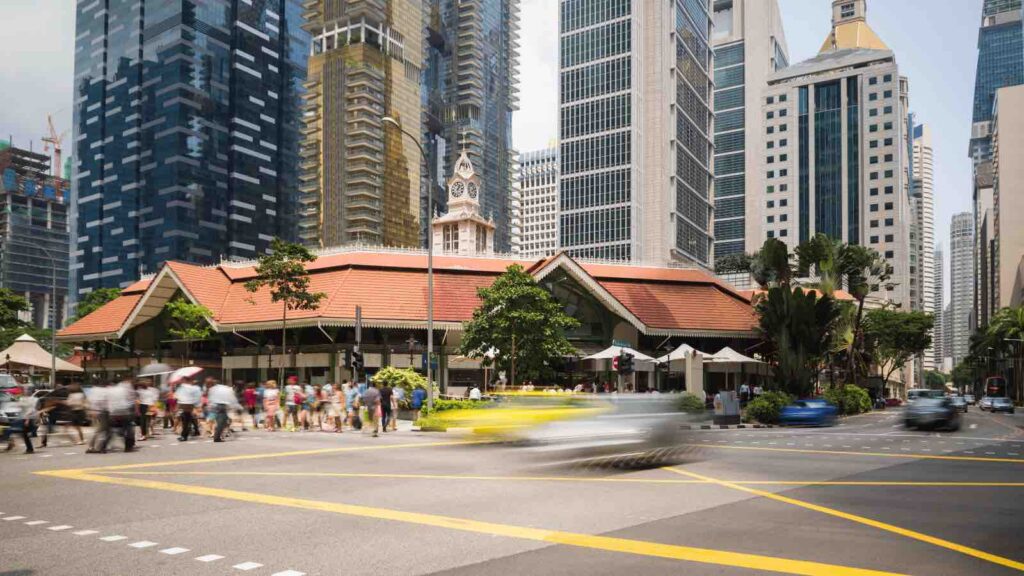
From the warmest June and November on record to the wettest March in decades, 2025 offered a clear picture of how climate variability is reshaping daily life in Singapore.
SINGAPORE — The climate story of 2025 in Singapore was defined by contrasts: record-breaking heat during key months, exceptional rainfall early in the year, and a growing number of days marked by dangerous heat stress. Taken together, the numbers point to a year shaped by shifting monsoon patterns and regional climate drivers, with implications that were felt across homes, workplaces and public spaces.
According to official climate data, 2025 ranked as Singapore’s eighth warmest year on record and the seventh wettest since 1980 — a combination that underscores how rising temperatures and rainfall extremes are increasingly occurring side by side.
RELEVANT SUSTAINABLE GOALS
A Year That Began Cool — Then Turned Exceptionally Hot
At the Changi climate station, Singapore’s annual mean temperature in 2025 was 28.1°C, about 0.3°C above the long-term average and tied with 2002 and 2010 as the joint eighth highest on record. Annual mean daily maximum and minimum temperatures reached 31.8°C and 25.4°C, ranking 11th and seventh highest, respectively.
The year began on a relatively cooler note. From January through March, during the Northeast monsoon season, monthly mean temperatures were at or below long-term averages. This moderation was linked to short-lived La Niña conditions early in the year.
That respite did not last. Temperatures edged above average in May and rose sharply with the onset of the Southwest monsoon in June. June 2025 emerged as the warmest month of the year, with a mean temperature of 29.3°C — 0.8°C above normal and tied with 1997 as the warmest June on record.
July followed closely behind, becoming the second warmest month of the year and the second warmest July on record.
October and November Rewrite the Record Books
After a brief cooling in August and September, temperatures surged again during the inter-monsoon months.
On Oct 28, the Changi climate station recorded a daily maximum temperature of 35.9°C, shattering the previous October record by a wide margin of 1.3°C. October’s monthly mean temperature became the second highest on record, with both daytime highs and nighttime lows ranking among the top three for the month.
November pushed those extremes even further. The month recorded its highest-ever mean temperature at 28.2°C and its highest mean daily maximum at 32.8°C. New records were also set for individual days: a minimum temperature of 27.7°C on Nov 1 and a maximum of 35.4°C on Nov 8.
December brought some relief, with temperatures returning closer to long-term averages, though still remaining above normal.
Heat Stress Days on the Rise
Alongside rising temperatures, heat stress intensified. Singapore experienced 29 days of high heat stress in 2025, up from 21 days in 2024.
Heat stress is measured using the Wet-Bulb Globe Temperature (WBGT), which accounts for humidity, wind speed and solar radiation in addition to temperature. A day of high heat stress is recorded when any hourly-average WBGT reaches or exceeds 33°C.
The highest 15-minute average WBGT in 2025 was 35.0°C, recorded at Sentosa Palawan Green on Oct 31. Officials noted that the increase in detected high heat stress days during the second half of the year was partly due to the deployment of additional WBGT monitoring stations, improving coverage across the island.
Extreme weather records based on all available stations in 2025 | Image credit : weather.gov.sg
One of the Wettest Years Since 1980
Rainfall told an equally dramatic story. Singapore’s average annual rainfall in 2025 reached 2,984.9 mm — 18 per cent above the long-term average and the seventh highest since 1980. At the Changi climate station, rainfall totalled 2,833.5 mm, about 34 per cent above normal.
The year opened with exceptionally wet conditions. January recorded 430.0 mm of rainfall, nearly double its long-term average, driven largely by a Northeast monsoon surge from Jan 10 to 13. During that event, Pulau Tekong recorded 241.8 mm of rain in a single day, surpassing the previous January daily rainfall record.
March 2025 stood out as the wettest March ever recorded in Singapore. A monsoon surge from March 19 to 20 alone produced 272.3 mm of rain islandwide, exceeding the entire month’s long-term average.
By the end of the month, islandwide average rainfall reached 482.9 mm — 130 per cent above normal — while the Changi climate station recorded 550.1 mm, breaking the previous March record. April followed closely, becoming the second wettest April since 1980.
Climate scientists attributed 2025’s patterns partly to regional influences, including a negative Indian Ocean Dipole and developing La Niña conditions later in the year, which contributed to increased rainfall.
The broader trend remains clear. The mean temperature for the past decade, from 2016 to 2025, stood at 28.09°C — the second highest on record — underscoring a sustained warming trend even as year-to-year variability continues.
For Singapore, 2025 offered a data-driven reminder that climate extremes are no longer occasional anomalies, but an increasingly regular feature of life in a warming, wetter region.
An advertising copywriter and an avid novelist. Currently mastering the art of gardening. Her dream is to build her own permaculture farm for sustainable future in her hometown, Bandung, West Java Indonesia.