
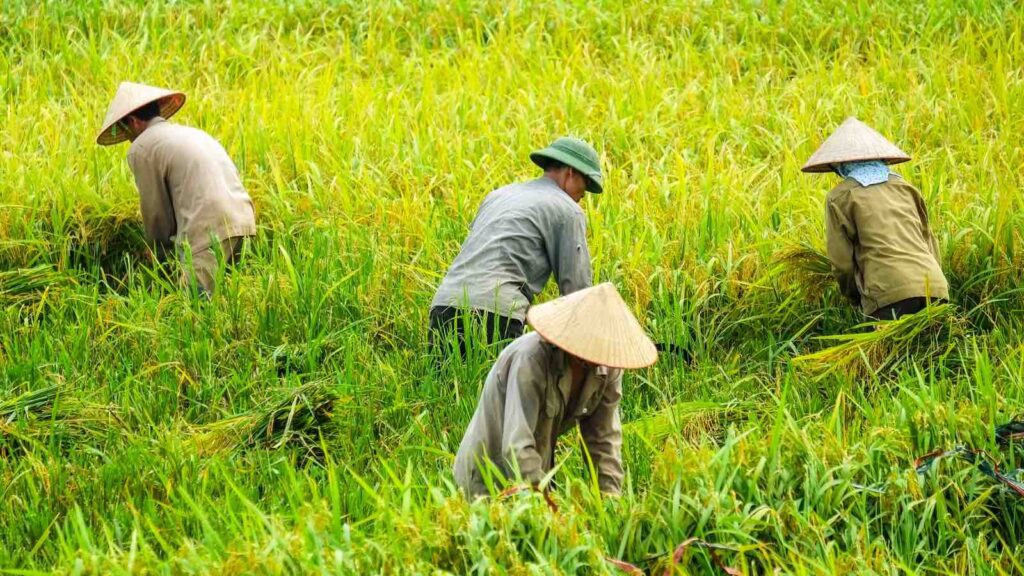

Funding aims to scale climate-smart rice production while protecting food security and smallholder livelihoods.
Rice is the staple food for more than half of the world’s population, yet it remains one of agriculture’s most significant climate challenges. Flooded paddy fields release methane, a greenhouse gas that is significantly more potent than carbon dioxide over a 20-year period. Rice cultivation accounts for roughly 12 per cent of global methane emissions, a climate footprint comparable to that of the aviation industry. At the same time, Asia produces and consumes about 90 per cent of the world’s rice, placing the region at the center of both global food security and agricultural decarbonisation.
Against this backdrop, agricultural technology company Rize has secured US$31 million in Series B funding to accelerate the expansion of its low-emission rice farming model across Southeast Asia.
The latest financing includes US$20 million in equity led by BNP Paribas Asset Management Alts, with participation from Temasek, The Rockefeller Foundation and Breakthrough Energy Ventures. An additional US$11 million in debt financing comes from UOB, BIDV and Temasek Foundation. The new round brings Rize’s total funding to US$47 million.
RELEVANT SUSTAINABLE GOALS
Alternate Wetting and Drying Targets Methane Emissions
Rize’s approach centers on Alternate Wetting and Drying (AWD), an irrigation method that periodically allows rice paddies to dry before they are re-irrigated.
According to the company, the practice can reduce methane emissions by up to 50 per cent, lower water use by between 20 and 30 per cent, and increase farmer income by up to 30 per cent without reducing crop yields.
The company says the model demonstrates that reducing agricultural emissions does not necessarily require sacrificing productivity or profitability for farmers.
Expanding Across Vietnam and Indonesia
Rize currently operates across Vietnam and Indonesia, where it works with more than 30,000 smallholder farmers cultivating approximately 50,000 hectares of paddy fields. The company employs a team of 250 people and reports generating tens of millions of dollars in revenue.
The company says participating farmers have adopted Alternate Wetting and Drying practices that reduce methane emissions by around half, cut water consumption by roughly one-quarter and increase incomes by nearly 30 per cent.
Rize has also shipped 1,500 metric tonnes of low-emission rice to buyers in Europe, Canada, Australia and Singapore, reflecting growing international demand for lower-carbon agricultural products.
Carbon Credits and Independent Verification
Rize says the emissions reductions achieved through its farming practices have been independently verified. The company also states that its carbon credits are on track to receive Gold Standard status.
Carbon markets remain an important part of the company’s strategy, although they continue to face sustained criticism over project quality and verification standards across the broader market.
For projects based on agricultural emissions reductions, monitoring, verification and proof that farming practices have been consistently followed remain central requirements.
Ambitious Growth Target by 2030
Following the new investment, Rize plans to expand its operations from 50,000 hectares today to 300,000 hectares by 2030 while increasing participation to 150,000 farmers.
Achieving that target will require more than additional funding.
The expansion depends on farmer training, effective water management, irrigation coordination, continuous monitoring, local partnerships, sustained buyer demand and long-term farmer trust. Scaling Alternate Wetting and Drying across diverse farming communities will require consistent implementation as well as verification that the practices are maintained.
Rice at the Center of Climate and Food Security
Rice represents both a climate mitigation and climate adaptation challenge.
The crop provides food security for approximately three billion people worldwide and supports the livelihoods of 150 million smallholder farmers, including around half a billion women. Rice cultivation also accounts for close to one-third of the world’s irrigated water use.
Rize says that if the roughly 25 per cent reduction in water use already achieved by its participating farmers were replicated at scale, global water savings could approach 8 per cent.
Methane also presents an opportunity for rapid climate impact. According to the Intergovernmental Panel on Climate Change (IPCC), methane is between 28 and 80 times more potent than carbon dioxide, depending on the time horizon considered, and reducing methane emissions can produce faster climate benefits than many long-term carbon reduction strategies
Balancing Decarbonisation With Farmer Prosperity
The challenge facing the rice sector extends beyond reducing emissions.
Efforts to decarbonise agriculture must also protect food production and the livelihoods of millions of smallholder farmers. Rize’s expansion strategy reflects that balance by focusing on farming practices that the company says improve farmer income while reducing emissions and conserving water.
Whether the model can successfully scale from 50,000 hectares to 300,000 hectares will depend not only on investment but also on sustained collaboration among farmers, local partners, irrigation systems, buyers and verification bodies.
The broader objective remains unchanged: reducing the climate impact of one of the world’s most important food crops without compromising food security or the economic well-being of the communities that depend on it.
You may also be interested in :
A Climate-Smart Future For Agriculture: The Role of Financial Institutions