

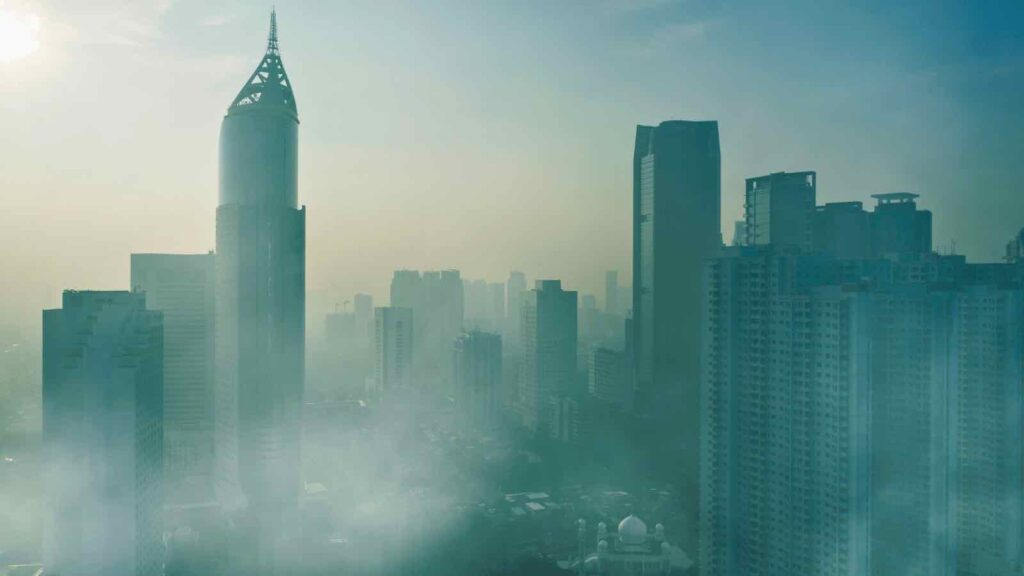

Air quality and climate are locked in a feedback loop with deadly consequences, warns new bulletin released by the World Meteorological Organization (WMO).
GENEVA — A new report from the World Meteorological Organization (WMO) paints a stark picture of how deeply intertwined air pollution and climate change have become — and how failing to address one threatens progress on the other. The WMO Air Quality and Climate Bulletin 2025, released today to mark the International Day of Clean Air for Blue Skies, highlights the global impacts of aerosols and fine particulate matter, and urges immediate, integrated action across borders.
RELEVANT SUSTAINABLE GOALS

The report connects the dots between climate change and public health, tracing how pollution from fossil fuels, wildfires, industrial emissions, and agriculture is intensifying climate effects while simultaneously harming ecosystems, economies, and millions of lives. It calls for enhanced atmospheric monitoring and cross-border coordination to break what WMO calls a “vicious cycle.”
“Climate change and air quality cannot be addressed in isolation. They go hand-in-hand,” said Ko Barrett, WMO Deputy Secretary-General. “We must tackle them together to protect the health of our planet, our communities, and our economies.”

Dangerous Feedback Loops: When Pollution Fuels the Climate Crisis
Air pollution and climate change aren’t just related — they reinforce each other. Greenhouse gas emissions like black carbon and ground-level ozone not only trap heat but also degrade air quality. As heatwaves, droughts, and wildfires increase due to global warming, so does the release of pollutants, triggering respiratory illnesses and further heating the atmosphere.
This dynamic played out vividly in 2024, as wildfires in Canada, Siberia, Central Africa, and especially the Amazon Basin drove PM2.5 (fine particulate matter) levels to dangerous highs. The Amazon, experiencing record-breaking fires and prolonged drought, registered the highest PM2.5 anomaly globally.
Ambient air pollution is already responsible for over 4.5 million premature deaths every year, according to WHO estimates. The costs — human, environmental, and economic — are mounting fast.
The Bulletin includes, for the first time, data from three independent models tracking PM2.5 anomalies — airborne particles smaller than 2.5 microns — comparing 2024 levels to a 21-year baseline.
- Eastern China continued to see declines in PM2.5 levels, a result of aggressive policy enforcement.
- Northern India remained a persistent hotspot.
- Amazon wildfires created a new epicenter of pollution, with urban areas far downstream, including in Brazil, experiencing measurable air quality degradation.
Wildfire-driven PM2.5 pollution is expected to rise as the planet warms, threatening health, infrastructure, and ecosystems globally.
Aerosols: A Double-Edged Sword for Climate
One of the most complex — and misunderstood — players in the climate puzzle is aerosols. These tiny airborne particles come in many forms and can both cool and warm the atmosphere depending on their color and chemical makeup.
- Black and brown carbon absorb sunlight and heat the atmosphere.
- Sulfates and other lighter aerosols reflect sunlight, providing short-term cooling — but also contributing to acid rain and glacier melt when they settle.
International regulations, such as the reduction of sulfur in shipping fuel, have improved air quality and reduced disease — including childhood asthma. However, they have also had the unintended consequence of slightly accelerating global warming by reducing the cooling effect of sulfate aerosols.
The report emphasizes that disentangling the interplay between aerosols, reactive gases, and greenhouse gases is critical to designing effective mitigation strategies.
Winter Fog in South Asia: A Sign of Deeper Trouble
The Indo-Gangetic Plain, home to over 900 million people, is seeing increasingly persistent and dense winter fogevents. Once seen as seasonal, this fog is now recognized as pollution-driven, linked to emissions from vehicles, construction, agriculture, and burning biomass.
“Persistence of fog is no longer a simple, seasonal weather event – it is a symptom of escalating human impact on the environment,” the Bulletin notes.
Addressing this requires multi-sector strategies, including enforcing bans on agricultural burning and expanding access to clean cooking, heating, and public transportation.
Monitoring the Atmosphere: A Global Imperative
The Bulletin stresses the urgent need for robust, global atmospheric monitoring infrastructure, particularly in the Global South where data gaps are largest.
While satellite technology has advanced rapidly, ground-based monitoring remains essential for calibration, validation, and on-the-ground decision-making. The report highlights ongoing efforts:
- Ozone monitoring in South America
- Improved pollen forecasting in Europe
- Atmospheric deposition assessments in Africa
Without sustained investment in in-situ measurement networks, climate forecasting and air quality alerts will fall short — especially in regions most vulnerable to pollution-related harm.
As pollution crosses national boundaries and wildfires worsen year after year, the WMO bulletin makes one thing clear: no country can tackle this alone. Air quality and climate must be addressed in tandem — not in silos.
“Climate impacts and air pollution respect no national borders,” said Ko Barrett. “We need improved international monitoring and collaboration to meet this global challenge.”