

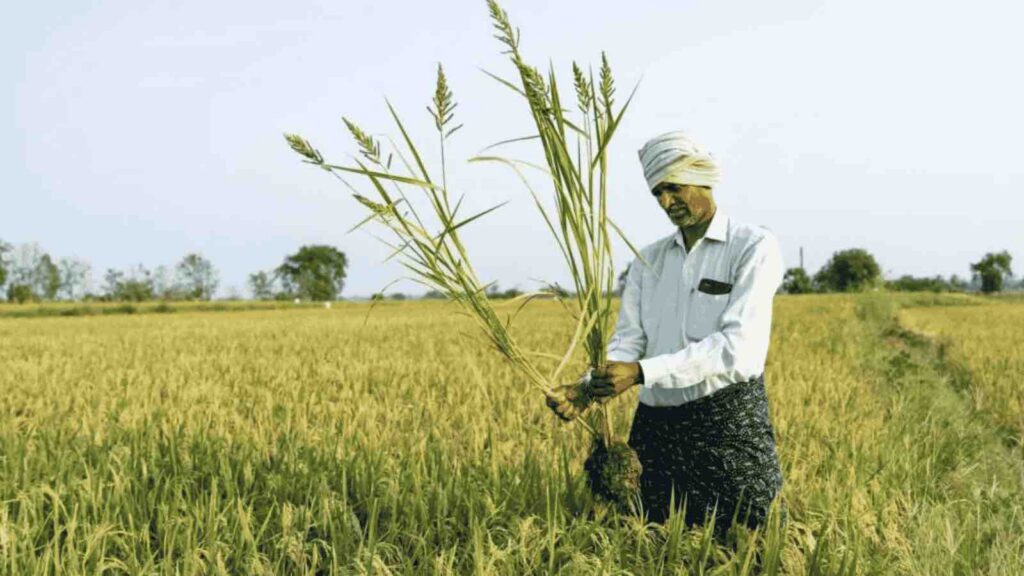

US agtech startup targets water use, methane emissions and farmer resilience as rice production faces growing climate pressure.
Mitti Labs has raised $9.5 million in Series A funding to expand an artificial intelligence-led farming platform designed to cut water use and methane emissions from rice production across Asia while converting verified emissions reductions into carbon credits.
The US agtech startup secured the funding in a round led by Aramco Ventures, the venture capital arm of Saudi fossil fuel giant Aramco. Returning investor Lightspeed India also participated, alongside first-time backers Godrej Industries Group, Cisco Foundation, Francis Family Fund and Volta Circle.
The round brings Mitti Labs’ total funding to $12.5 million.
The financing comes as a particularly destructive El Niño wave and rising costs are expected to reduce global rice output for the first time in more than a decade, with Asia facing the largest decline in production volume.
Rice sits at the center of an increasingly difficult climate equation. The crop is essential to global food security, but its production contributes substantially to methane emissions and places heavy pressure on water systems. At the same time, rising temperatures, changing rainfall patterns and extreme weather are threatening rice yields themselves.
RELEVANT SUSTAINABLE GOALS
From 35,000 Farmers to 100,000 in One Year
Mitti Labs works with farmers in India to introduce more sustainable cultivation techniques and uses satellite data and artificial intelligence to track whether those methods are being adopted.
The company then measures methane reductions, converts them into credible carbon-equivalent credits and shares a portion of the revenue from credit sales with participating farmers.
Over the past year, Mitti Labs has expanded from working with 35,000 smallholder farmers to 100,000 across six Indian states.
India is the world’s most populous country and one of its most water-stressed.
Mitti Labs plans to use its new funding to scale its GeoAI platform, deepen its presence across India’s rice-growing regions and expand into the Philippines and Indonesia through new greenfield projects.
“Growing more rice with less water is one of the world’s major challenges. Demand for rice continues to grow, but record heat and changing rainfall patterns are threatening water systems and endangering food security,” said Mitti Labs co-founder Xavi Laguarta.
“With our technology and scalable operational model, we can transform how rice is grown, lower emissions and cut water consumption while building resilient livelihoods for 150 million smallholder farmers.”

Why Rice Has Become a Major Climate Challenge
Asia produces more than 90 per cent of the world’s rice, which serves as a staple food for half of the global population.
But rice cultivation is also responsible for 9 to 12 per cent of global methane emissions, an amount equivalent to the entire aviation industry. Rice accounts for around 1.5 per cent of all greenhouse gas emissions.
Methane has an outsized short-term impact on the climate.
It is responsible for around 0.5 degrees Celsius of global warming and is 86 times more potent than carbon dioxide over a 20-year period.
Methane concentrations in the atmosphere are also expanding faster than ever before. Without action, human-caused methane emissions are projected to increase by as much as 13 per cent between 2020 and 2030, moving the world in the opposite direction of the 1.5-degree Celsius climate goal.
Climate Change Is Also Threatening Rice Production
The relationship between rice and climate change works in both directions.
Rising temperatures could reduce rice yields by 40 per cent by the end of the century and are already increasing arsenic levels in the crop.
Extreme rainfall has reduced rice yields in China during the past 20 years.
In Vietnam’s Mekong Delta, widely known as the country’s rice bowl, nearly 250,000 acres of land are being removed from production, partly because of the climate crisis.
The challenge has led companies including Mitti Labs to focus on making rice production more sustainable and resilient, attracting growing investor attention.
Alternate Wetting and Drying Cuts Methane and Water Use
One of Mitti Labs’ main approaches is alternate wetting and drying, or AWD, a farming technique that replaces permanently flooded paddy fields with repeated wet and dry cycles.
When carried out properly, AWD can reduce methane emissions by more than half and cut water consumption by 40 per cent without affecting yields.
The technique has existed for about three decades, but verifying its implementation across large numbers of farms has remained difficult.
Most rice is cultivated on fragmented plots smaller than two hectares. There are around 150 million such farms, making them too small and too numerous for comprehensive data on farming practices, water consumption or emissions to be readily available.

GeoAI Creates a Digital Twin of Individual Rice Fields
Mitti Labs is seeking to solve that verification challenge through its GeoAI engine, which was developed with support from NASA.
The platform combines high-resolution synthetic aperture radar with field-collected ground truth and physical models to create a digital twin of each individual plot.
That allows the company to monitor crop health, soil moisture and flooding at the level of an individual farm rather than relying on regional estimates.
Mitti Labs uses satellite modelling and artificial intelligence to analyse historical farming practices and environmental conditions, monitor the implementation of climate-smart practices in individual fields, and measure methane, nitrous oxide and carbon fluxes through field data collection and gas chromatographs.
Those measurements are then used to quantify emissions reductions and convert them into carbon credits.
Dry-Seeding and Stubble Management Add to Emissions Strategy
Alternate wetting and drying is not the company’s only farming intervention.
Mitti Labs also works with farmers on dry-seeding, which produces less methane than conventional planting in wet soil.
The company also helps farmers improve stubble management practices to reduce pollution caused by burning crop residues after harvest.
India’s Rice Farms Put Heavy Pressure on Water Supplies
Mitti Labs already operates what it describes as the world’s largest AWD programme in India.
Lightspeed India partner Hemant Mohapatra said India “carries 18% of the world’s people on 4% of its freshwater.”
Per-capita water availability in India has fallen by half since 1970. If current trends continue, water demand is projected to exceed supply by 50 per cent by the end of this decade.
“Roughly 80-90% of India’s water goes to farming, and rice alone drinks more than 30% of all irrigation water on the planet. No other single decision on Earth moves as much freshwater as how a paddy is irrigated,” Mohapatra wrote.
Investors See Water Resilience as an Economic Issue
Burjis Godrej, chairperson designate of Godrej Agrovet, said water resilience had become critical for farming communities.
“As an investor deeply rooted in India, we know firsthand how critical water resilience is for farming communities,” he said.
“Mitti Labs has built a remarkable model that leverages technology towards securing the livelihoods of smallholder farmers. This model has the potential to reshape rice farming all over Asia.”
Since launching three years ago, Mitti Labs has grown to 150 employees.
Their work has helped save around 500 billion litres of water, roughly equivalent to the annual water supply of the entire city of Bengaluru, which has been struggling with water shortages for years.
“Solving the world’s water crisis requires bringing together smallholder farmers, industry stakeholders, governments, and non-profits to transform how rice is grown,” Mohapatra said in a statement.
“With its unique technology and vast network of farmer-partners, Mitti Labs can unlock new revenue opportunities tied to this transition and help build the future of rice.”
Carbon Credits Remain Under Scrutiny
The voluntary carbon market has repeatedly faced questions from experts over its effectiveness.
Against that backdrop, Mitti Labs’ carbon credits have received an A rating from independent assessment firm Sylvera.
With the new capital, the company plans to issue two million carbon credits annually from 2028.
Its model depends on translating verified reductions in agricultural emissions into credits while directing a share of the resulting revenue back to participating farmers.
Climate-Smart Rice Startups Expand Across Asia
Mitti Labs is part of a broader group of companies working to reduce the climate impact of rice farming.
Singapore-based Rize recently closed a $31 million Series B financing round and plans to expand its AWD-based rice farming network to more than 150,000 farmers by 2030, covering more than 300,000 hectares.
Another Singapore company, AgriG8, uses a gamified digital platform to help rice farmers lower emissions through alternate wetting and drying.
France-based CarbonFarm, like Mitti Labs, uses artificial intelligence and satellite technology to monitor rice decarbonisation activities and generate verified carbon credits.
For Mitti Labs, the immediate challenge is to scale a model that connects climate-smart farming practices, satellite monitoring, artificial intelligence, carbon markets and farmer income across some of Asia’s most important rice-growing regions.
Its expansion from India into the Philippines and Indonesia will test whether that approach can operate at a wider regional scale while confronting two closely linked pressures: producing more rice for a growing population and doing so with less water and lower methane emissions.
You may also be interested in :
Rize Raises US$31 Million to Expand Low-Emission Rice Farming Across Southeast Asia
