

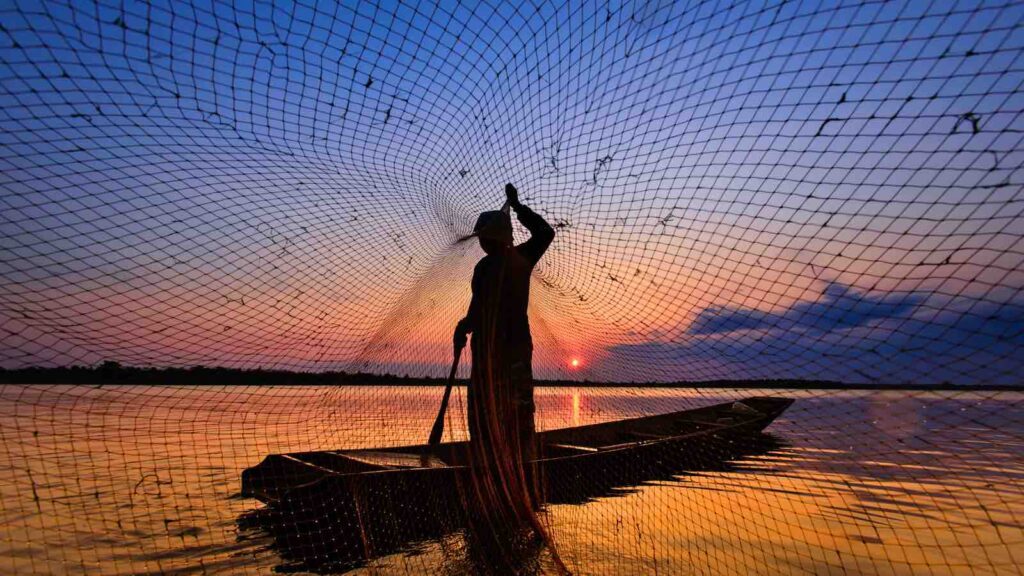
As Indonesia readies its processors and producers for new markets, the rewards are expected to ripple through coastal economies, driving higher incomes, improved standards and greater resilience for fishing communities.
JAKARTA — Indonesia’s Ministry of Marine Affairs and Fisheries (KKP) has secured fresh market access for its seafood products in Vietnam, South Korea and Canada, signaling a major push to diversify export destinations and bolster local economies. The expansion, formalized through bilateral equivalence agreements on fish quality systems, adds approval numbers for 20 processing units to Vietnam, eight to South Korea and six to Canada.
RELEVANT SUSTAINABLE GOALS
New Approval Numbers Open Doors Abroad
In a statement on July 6, 2025, Ishartini, Head of KKP’s Quality Assurance Agency, announced the additional approval numbers:
- Vietnam: 20 new units, bringing the total to 611 approved Processing Units (UPI).
- South Korea: 8 new units, increasing the total to 667 UPI.
- Canada: 6 new units, for a cumulative 337 UPI.
“Under the minister’s direction and in light of global trade dynamics, we must innovate—diversifying commodities and export markets to raise our export volumes and directly benefit local economies,” Ishartini said.
Bilateral Equivalence Strengthens Quality Assurance
The newly inked Bilateral Equivalence Agreements harmonize Indonesia’s fish-quality protocols with those of Vietnam, South Korea and Canada. These pacts affirm mutual recognition of inspection, testing and certification systems—pivotal steps in easing customs clearance and meeting stringent international standards.
To underpin this expansion, KKP is:
- Enhancing nine upstream and downstream quality certifications.
- Intensifying inspection and surveillance.
- Boosting laboratory testing capacity.
- Building cross-border quality networks with exporting partners.
Indonesia generates over 20 million tons of fishery products annually, yet has historically relied on a narrow set of trading partners. By tapping Vietnam’s bustling seafood market, South Korea’s high-value segments and Canada’s premium channels, Indonesian exporters stand to:
- Increase Export Volume: New approval numbers unlock sales to nearly 1.6 million extra metric tons of potential output.
- Drive Local Growth: Broader market reach fuels jobs in coastal communities, from harvesters to processing workers.
- Enhance Competitiveness: Equivalence agreements reduce non-tariff barriers, cutting delays and compliance costs.
KKP released the full roster of companies now authorized to ship to each destination:
Vietnam (20 UPI):
CV Kana Cahaya Bahari
PT Duta Buana Pacific
PT Cipta Raya Universe
PT Indo Samudra Nusantara
PT Pahala Samudera Fishery
PT Arrohmah Segara Indonesia
PT Karya Persada Khatulistiwa
PT Gurita Global Internasional
CV Segara Makmur Sempurna
PT Berkah Mutiara Selatan
CV Anugerah Laut Jawa Indonesia
PT Wira Putra Bahari
PT Hamparan Segara Artha
PT Indo Mutiara Utama
PT Lautindo Synergy Sejahtera
PT Ameritindo Cerah Terpadu
PT Battousai Ono Niha
PT Benua Omega Samudra
PT Changleong Maritim Indonesia
PT Jayawi Ambon Internasional
South Korea (8 UPI):
PT Bhineka Anugerah Nusantara
PT Hamparan Segara Artha
PT Cipta Raya Universe
PT Modern Mitra Sejati
PT Berkat Matsya Nusantara
PT Blue Ocean Lobster
PT Celebs Ocean Fisheries
PT Chen Woo Fishery
Canada (6 UPI):
PT Brata Adi Laksana
PT Sari Samudera Indonesia
PT Tilapia Nusantara Jaya
PT Berkat Matsya Nusantara
PT Ameritindo Cerah Terpadu
PT Chen Woo Fishery
Implications for Indonesia’s Blue Economy
The expansion into new seafood markets dovetails with Indonesia’s broader blue-economy aspirations—leveraging marine resources sustainably while driving economic growth. By adhering to global best practices and tracking catch data rigorously, the government and industry can reduce the risk of overfishing key stocks. Quality-assured exports create incentives for fishers to comply with catch limits and seasonal closures, fostering healthier fish populations and more stable yields over the long term.
Moreover, opening premium markets rewards producers for sustainable practices with higher prices, translating into improved livelihoods for coastal communities. When small-scale fishers see clear economic benefits from conservation—such as certification premiums and consistent market access—they are more likely to support ecosystem-friendly policies. This alignment between economic reward and environmental stewardship strengthens the case for robust marine spatial planning, expanded no-take zones and stricter bycatch management.
Finally, the policy framework underpinning this market diversification encourages a holistic approach to fisheries governance. Integrating export approvals with traceability systems and observer-based monitoring promotes transparency across the supply chain. These elements not only safeguard Indonesia’s reputation as a responsible seafood supplier but also reinforce domestic regulations aimed at protecting coral reefs, mangroves and the broader marine environment. As international partners recognize Indonesia’s commitment to sustainability, the country stands to become a regional leader in the blue economy—balancing growth, food security and the health of its oceans.
You may also be interested in :
10 Inspiring Social Justice And Activism To Follow On Instagram