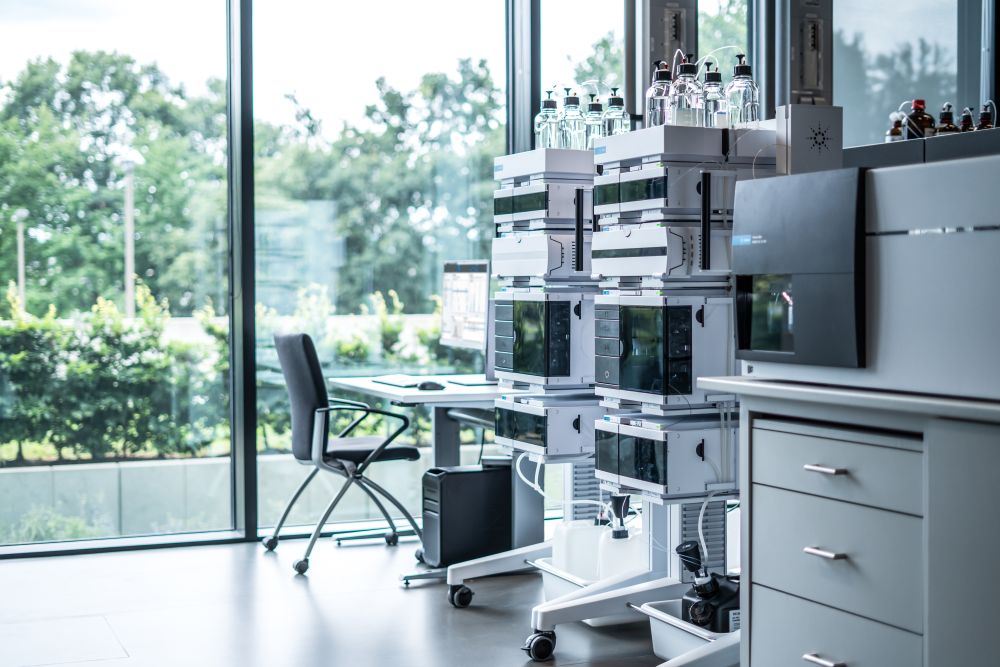
Agilent Technologies has trained close to 250 employees, most from its procurement team, to encourage decarbonization commitments across its supply chain.
The voluntary training was developed to help the procurement organization understand how to address the life sciences technology and lab equipment maker’s climate agenda as part of contract negotiations.
“It provides practical guidance and resources to help procurement employees engage with relevant stakeholders and support Agilent’s supply chain decarbonization efforts,” said Mignon Senuta, who joined Agilent in August as global head of sustainability.
Senuta reports to Joydeep Ganguly, senior vice president of global operations and chief operations and quality officer at Agilent. Within that context, she is accountable for building sustainability metrics into the company’s governance strategy.
“This includes considering where clearer expectations, accountability and targeted capability building can most effectively support procurement teams and the broader business,” Senuta said.
Agilent’s validated emissions reduction target is to cut its indirect emissions footprint — which falls into the Scope 3 category and represents 90 percent of Agilent’s greenhouse gas emissions — by 30 percent by 2030.
So far, the company has reduced emissions 43.4 percent from its 2019 baseline for a small slice of its Scope 3 footprint: upstream transportation and distribution (37.7 percent cut); business travel (32.3 percent); and employee commuting (69.4 percent).
Self-paced format
The initial course on sustainable procurement policies is offered on demand through Agilent’s online employee training system and takes roughly 90 minutes to complete, although it can be broken down into shorter sessions, according to Senuta.
The material was developed by members of Agilent’s procurement organization using publicly available training tools and additional resources from Equipoise, a consultancy with expertise in sustainable procurement policies, and Scope 3 Peer Group, a network of sustainability professionals that gathers to share best practices.
The current module focuses on providing Agilent’s employees with foundational knowledge of Scope 3 sustainability concepts, so that they feel comfortable discussing them and gauging the maturity of suppliers during negotiations. It also offers insights into how suppliers might go about the process of setting emissions reduction targets.
“We want to empower the folks who are managing these relationships with information that’s useful and not a bunch of technical jargon,” Senuta said. “But wh
Read More