
New Orleans could be surrounded by sea water in a matter of decades according to new research. The study says the US city has reached a “point of no return”, and that rising temperatures and sea levels mean the process of relocating residents should start immediately.
For the city’s 360,000 residents, the financial effects of climate change will probably arrive before the water itself. Long before streets become permanently flooded, household finances can begin to deteriorate.
Properties at extreme risk of flooding can lose value, becoming harder to insure and then harder to sell.
And while New Orleans is an extreme example, situated as it is below sea level on the low-lying Louisiana coast, the financial risks of climate change apply elsewhere.
In many countries, the home is often the largest family asset, offering security in retirement or for younger generations. But, long before any place becomes physically uninhabitable, insurance premiums, mortgage costs, property valuations and market confidence can all take a hit if an asset is considered to be at risk.
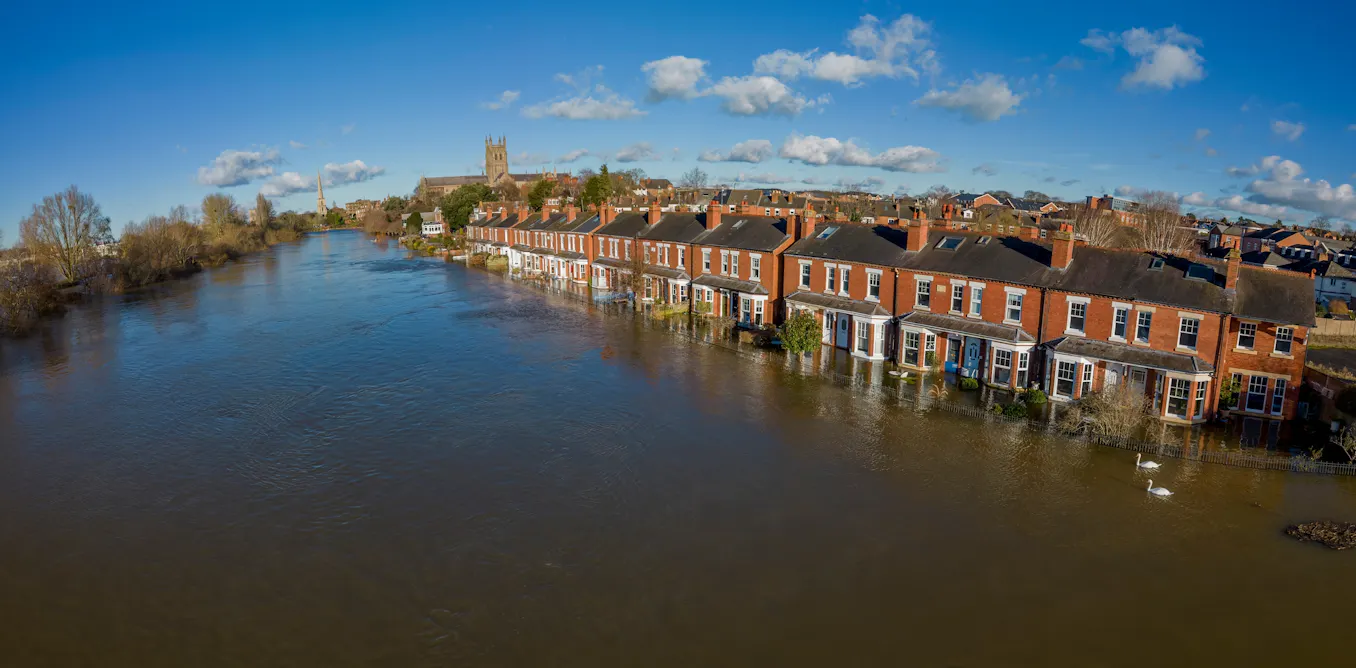
Recent evidence suggests this is already happening in the UK. It has been estimated that the owners of around 430,000 homes in England could become “climate mortgage prisoners” by 2050.
These are households that may struggle to insure, sell, or remortgage their homes because flood exposure makes the property financially unattractive or unacceptable to lenders. Flood risk can turn a family home from a saleable asset into a trapped asset. A homeowner may still live in the property, still make mortgage payments, and still maintain the house, yet find that the market has changed around them.
If insurers raise premiums or withdraw cover, mortgage lenders may become more cautious. And if lenders become more cautious, buyers may disappear.
When buyers disappear, the home no longer performs its basic financial role as a saleable asset.
There are also official estimates that around 6.3 million properties in England are currently in areas at risk of flooding, with this figure expected to rise to 8 million by 2050.
Flooded market
All of this is likely to become more of an issue for the less well off. Wealthier households might be able to move earlier, absorb transaction costs, pay higher premiums, or buy in lower-risk areas.
Poorer households will have fewer options. They may remain in exposed properties because they cannot afford to move, even as the value of those properties deteriorates. In that sense, climate risk can widen wealth inequality – not only through physical destruction, but through unequal access to an escape route.
New Orleans offers an extreme version of this logic, and the danger is that forced relocation becomes necessary only after households have already lost out financially.
The UK should be able to avoid reaching that stage. But it cannot wait until communities are visibly failing. It should identify wh
Read More