
The support will be delivered through DFCD’s Origination Facility, managed by the World Wide Fund for Nature Netherlands (WWF-NL) in partnership with development organization SNV, with implementation support from WWF Indonesia.
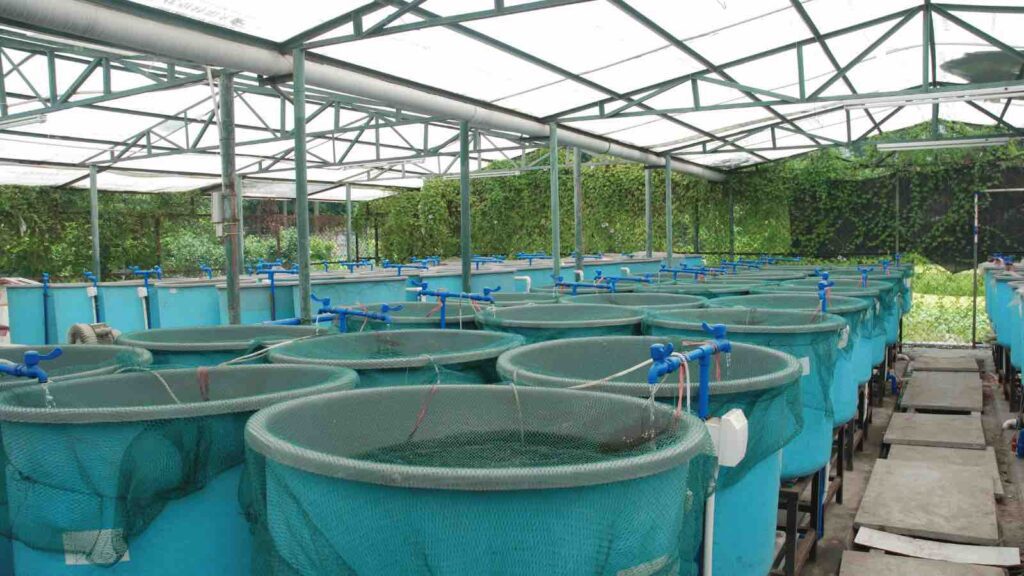
Indonesia’s shrimp industry is set to receive a targeted boost in climate resilience and sustainability, as the Dutch Fund for Climate and Development (DFCD) prepares to provide a €340,000 grant to aquaculture technology firm PT Jala Akuakultur Lestari Alamku (JALA).
The funding, expected to be formalized soon, is aimed at strengthening traceability, environmental safeguards and climate adaptation across the country’s shrimp value chain — a sector increasingly exposed to climate risks and global market scrutiny.
The support will be delivered through DFCD’s Origination Facility, managed by the World Wide Fund for Nature Netherlands (WWF-NL) in partnership with development organization SNV, with implementation support from WWF Indonesia.
RELEVANT SUSTAINABLE GOALS
Addressing Climate Pressures in Shrimp Farming
Indonesia’s shrimp sector faces a growing set of climate-related challenges that directly affect productivity and farmer livelihoods.
According to DFCD, these include water quality fluctuations, temperature stress, salinity shocks and rising disease risks, all of which disproportionately impact small and medium-scale farmers.
Stuart Beavis, DFCD Regional Lead for Asia, said the partnership with JALA is designed to tackle these issues at the system level.
“With JALA, we will work on improving supply chain traceability and developing pathways to increase farmer income,” he said. “Leveraging JALA’s large shrimp database, we aim to optimize feeding, aeration, and water exchange. The project will also help reduce nutrient loading, water stress, and pollution in ponds.”

A Data-Driven Model for Sustainable Aquaculture
JALA has emerged as a fast-growing player in Indonesia’s aquaculture sector, working with more than 10,000 registered shrimp farms and operating one of the country’s largest aquaculture data platforms.
Its system provides farmers with real-time insights, input supply and market access, supported by a growing dataset drawn from over 27,000 shrimp farming cycles and more than 18,000 application users.
The company’s integrated model combines digital farm management, IoT-based water-quality monitoring, input supply and downstream trading and processing, positioning it to scale climate-adaptive practices across the sector.
Strengthening Traceability and Environmental Safeguards
The DFCD-funded program will focus on building a more transparent and environmentally responsible shrimp supply chain.
Key components include baseline environmental and social assessments, the development of a climate-adaptive shrimp farming model, and the strengthening of JALA’s traceability systems.
The initiative will also introduce independent verification of land-use history to address deforestation risks — a critical issue as shrimp farming has been linked to mangrove degradation in cases of poorly managed pond expansion.
In parallel, the project will conduct market analysis to support the development of certified shrimp products aligned with international standards, responding to rising demand from global buyers for responsibly sourced seafood.
Balancing Growth With Sustainability
Indonesia’s shrimp industry is under increasing pressure to balance rapid growth with environmental accountability.
As global markets demand higher standards of traceability and sustainability, companies like JALA are positioning themselves to meet those expectations while improving outcomes for farmers.
JALA CEO Liris Manduningtyas said the partnership marks a step toward a more responsible production model.
“Together with WWF and DFCD, we are implementing climate-adaptive shrimp farming to build a deforestation-free, traceable, and climate-resilient supply chain,” she said.
Unlocking Investment and Scaling Impact
Beyond environmental gains, the program is also expected to strengthen JALA’s investment readiness, as the company prepares for future funding rounds, including both debt and equity financing.
By aligning climate resilience, data-driven farming and supply chain transparency, the initiative reflects a broader shift in how aquaculture is evolving in Southeast Asia.
For investors, policymakers and farmers alike, the project signals a growing recognition that long-term competitiveness in the seafood industry will depend on sustainability as much as scale.
You may also be interested in :
Indonesia Expands Seafood Exports to Vietnam, South Korea, and Canada