

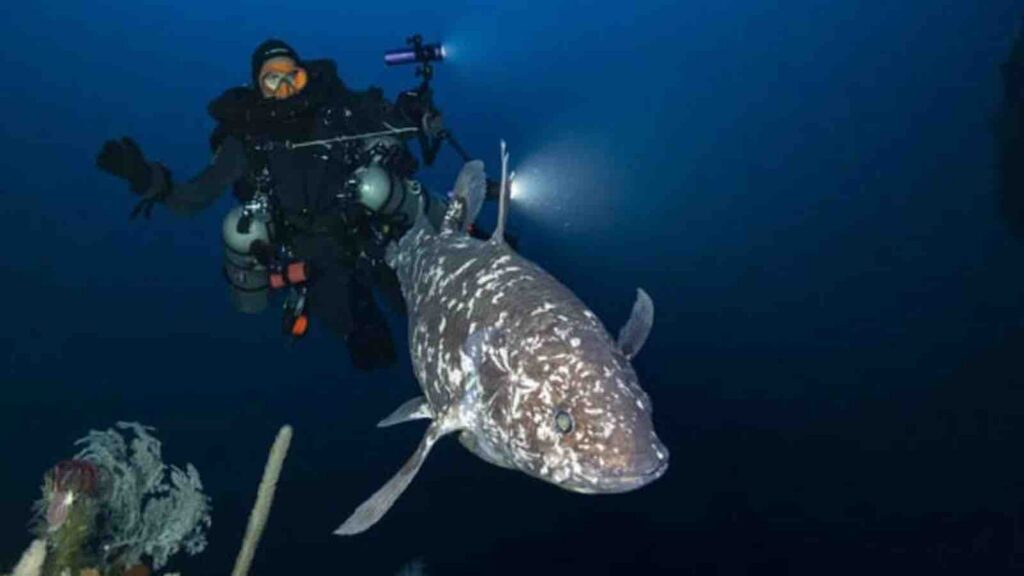

New findings in North Sulawesi highlight Indonesia’s critical role in protecting one of the world’s rarest ancient fish species.
JAKARTA — Indonesia’s National Research and Innovation Agency (BRIN) has documented 18 individual Coelacanths (Latimeria menadoensis) in the waters surrounding Talise Island in North Sulawesi, providing new scientific evidence that Indonesia is one of the world’s most important habitats for one of the rarest marine species on Earth.
The discovery strengthens the scientific basis for expanding conservation efforts, including a proposal to establish a dedicated marine conservation area that is expected to evolve into a world-class conservation site.
The findings were presented by Prof. Alex Masengi of Sam Ratulangi University and Prof. Augy Syahailatua, researcher at BRIN’s Research Center for Biosystematics and Evolution, during the Marine Futures Unlocked 2: From Insight to Impact symposium held at the BRIN Grand Ballroom Gatot Subroto in Jakarta on Thursday, July 23, 2026.
RELEVANT SUSTAINABLE GOALS



Research Confirms Talise Island as a Key Habitat for Coelacanth
The research concludes that Talise Island possesses exceptional ecological value for the survival of the Coelacanth while reinforcing Indonesia’s position as one of the principal habitats of the ancient species, which has survived for approximately 400 million years.
According to the researchers, the findings provide important scientific evidence supporting long-term conservation of one of the world’s most extraordinary marine animals.
Prof. Alex Masengi said research on Indonesia’s Coelacanth population has continued for more than two decades.
Since the project began in 2004, researchers have identified at least 52 individual Coelacanths in Indonesian waters, along with four individuals in South Africa through international collaboration.
“During 20 years of research, we have continuously worked to understand the life of the Coelacanth in its natural habitat. Our latest findings show that Indonesia plays a very important role in conserving this species,” Alex said.

Collaborative Expedition Documents 18 Coelacanths in Talise Waters
One of the most significant breakthroughs came through a joint expedition involving BRIN, OceanX and NHK, which returned to explore an underwater cave off Talise Island.
The cave was first surveyed in 2009, when researchers documented four Coelacanths.
During the latest expedition, the team recorded 18 individuals, including 11 Coelacanths living inside a single underwater cave.
The discovery represents one of the most significant observations made during the two-decade research program.
Researchers also documented a juvenile Coelacanth measuring approximately 26 centimeters in Amurang Bay.
The finding provides new clues about the species’ reproductive process and the continuity of its population.
The research further confirms that the Coelacanth’s habitat in Indonesia extends from Biak, Papua, to Buol, Central Sulawesi, demonstrating the species’ distribution across Indonesian waters.
Modern Technology Reveals New Insights Into Coelacanth Biology
To investigate biological characteristics that remain poorly understood, researchers employed several advanced technologies.
Among them was the use of environmental DNA (eDNA), a technique that identifies the presence of species through genetic traces found in aquatic environments.
Researchers also conducted a CT scan on one Coelacanth specimen.
The scan revealed 22 eggs inside the fish, providing important new information about the species’ reproduction.
“The discovery of 11 Coelacanths in a single cave and the CT scan showing 22 eggs represent extremely valuable achievements for understanding the biology and reproduction of this species,” Alex said.

Conservation Area Proposal Advances in North Sulawesi
Prof. Augy Syahailatua said the new findings reinforce the urgency of protecting the Coelacanth’s habitat around Talise Island.
The area is currently being prepared as a dedicated conservation zone through public consultations, discussions with local governments and coordination with Indonesia’s Ministry of Marine Affairs and Fisheries.
“Coelacanth conservation is intended not only to protect this rare species, but also to support scientific research, education and conservation-based ecotourism. The presence of the Coelacanth provides a major opportunity for Indonesia to strengthen its position as a global center for marine biodiversity research,” Augy said.
Augy explained that the process of establishing the conservation area has entered an important stage.
In July 2026, the North Sulawesi Provincial Government submitted approval documents to the Ministry of Marine Affairs and Fisheries seeking designation of the waters surrounding Talise Island as a conservation area, or a Coelacanth habitat sanctuary.
Following the establishment of national conservation status, the government and researchers plan to propose the Talise Island Coelacanth habitat for inclusion as a UNESCO World Heritage Site.
The proposed conservation area lies within the Coral Triangle, one of the world’s most important centers of marine biodiversity.
Scientific Evidence Supports Long-Term Marine Conservation
The researchers said more than 20 years of Coelacanth research have produced new knowledge about the ancient species’ population, habitat and reproductive biology.
The findings also provide the scientific evidence needed to support conservation policy while establishing a foundation for the long-term protection of both the Coelacanth and Indonesia’s deep-sea marine ecosystems.
As research continues, the discoveries from Talise Island underscore Indonesia’s growing contribution to marine biodiversity science and reinforce the importance of safeguarding one of the planet’s oldest surviving fish species for future generations.