Investigation questions sustainability-linked finance as palm oil companies facing environmental, corruption and human rights allegations continue to attract investment.
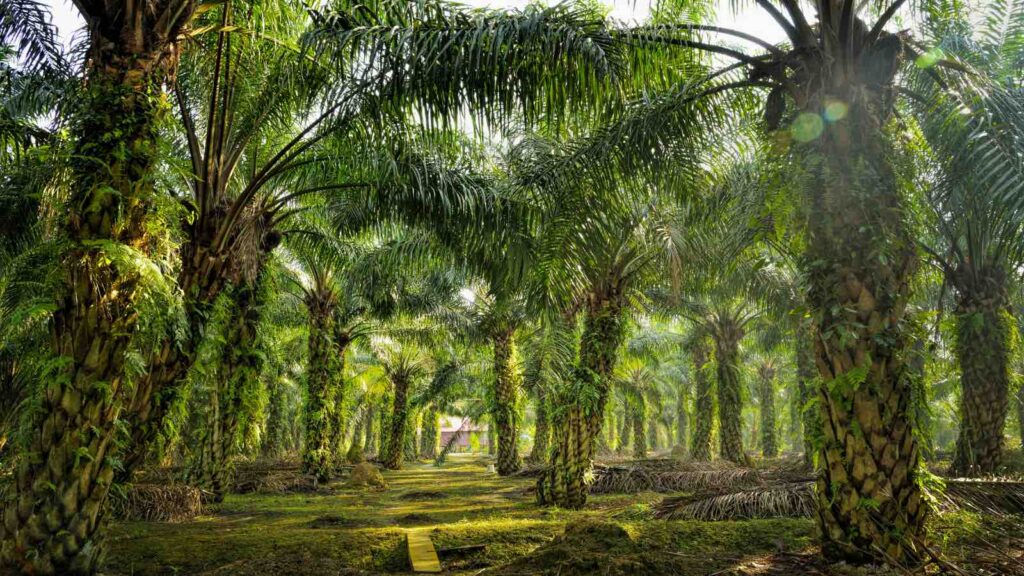
More than 100 major banks arranged approximately US$31 billion in sustainability-linked loan deals for palm oil companies facing allegations of supply-chain links to deforestation in Indonesia between 2018 and 2025, according to an analysis by Global Witness.
The investigation, by the campaigning and investigative organisation, argues that weaknesses in sustainable finance standards have allowed high-risk companies to continue attracting investment while presenting themselves as environmentally responsible.
Banks identified in the analysis include Barclays, HSBC, Crédit Agricole, Rabobank, Bank of China and Standard Chartered, among others. In several instances, financing involved refinancing revolving credit facilities, enabling companies to maintain access to substantial funding despite continuing environmental and governance concerns.
Unlike green bonds, sustainability-linked loans, or SLLs, are tied to sustainability targets specific to individual companies and negotiated between borrowers and lenders. Global Witness says there are no legally binding standards defining what constitutes meaningful environmental performance.
It argues that this gap leaves companies effectively assessing their own environmental and human rights impacts.
RELEVANT SUSTAINABLE GOALS
Wilmar and Musim Mas Received Loans Amid Corruption Allegations
The investigation focuses in part on Wilmar International, one of the world’s largest palm oil producers, and Musim Mas Group.
In April 2022, Indonesian authorities announced an investigation into alleged corruption involving officials at major producers Wilmar International, Musim Mas Group and Permata Hijau. They were accused of securing palm oil export permits despite failing to meet Indonesia’s domestic supply requirements.
A Jakarta court acquitted the companies in March 2025. The Supreme Court overturned that decision in September 2025 after judges responsible for the acquittal were arrested for accepting bribes.
As news of the Supreme Court verdict spread, Wilmar’s share price fell 3.8 per cent to its lowest level in a decade.
In March 2026, Wilmar notified investors that one of its officials had been sentenced to six years in prison for bribing judges who had previously acquitted its subsidiary, the Wilmar Group, of corruption charges.
Between 2022 and 2025, Wilmar International and Musim Mas Group received a combined US$566 million in sustainability-linked loan commitments across multiple transactions while the companies faced corruption allegations related to palm oil exports.
Of that amount, US$400 million went to Wilmar.
The financing included a US$200 million SLL from Standard Chartered in 2023. Global Witness’s analysis also identified sustainability-linked loan backing for Wilmar from Hong Kong-domiciled Bank of East Asia and Malaysia-based Maybank.
Major banks, including UK-based Standard Chartered and HSBC, facilitated hundreds of millions of dollars in sustainability-linked loan deals for Wilmar and Musim Mas while the producers were facing allegations of corruption and deforestation.
Global Witness Links Wilmar Concessions to 4,200 Hectares of Deforestation
Wilmar adopted a “no deforestation” policy with a 2015 cut-off date.
Global Witness’s analysis nevertheless suggests concessions owned by the company could be connected to approximately 4,200 hectares of deforestation between 2016 and 2024, an area equivalent to the size of Oxford.
The analysis includes concessions on customary land that local NGOs claim was obtained by Wilmar subsidiaries without the consent of Indigenous Peoples.
Local Indonesian civil society organisations have also accused the company of forcing Indigenous communities to surrender their land, adding to concerns surrounding its environmental and social practices.
Across the 2018-to-2024 period, Wilmar received approximately US$950 million in sustainability-linked loan commitments from major international banks, including Standard Chartered
‘Sustainable’ Investment Funds Also Hold Wilmar Shares
The questions raised by Global Witness extend beyond bank lending into investment products marketed around environmental and social considerations.
According to the investigation, major investors including BlackRock currently hold approximately US$46 million in Wilmar investments through funds labelled “sustainable” or “ESG,” referring to environmental, social and governance considerations.
Global Witness argues that such financing illustrates the gap between the sustainability labels attached to financial products and allegations concerning the companies receiving the capital.
Olam and Louis Dreyfus Tied to Suppliers Linked to Deforestation
Global Witness said new evidence also connects Olam Group and Louis Dreyfus to recent deforestation in West Kalimantan through third-party suppliers.
The companies were receiving sustainability-linked financing from banks including Barclays and Crédit Agricole.
According to the investigation, Olam and Louis Dreyfus continued buying from suppliers apparently connected to deforestation while receiving billions of dollars in SLL commitments from banks.
Other palm oil companies, including Apical, Bunge, COFCO, Kuala Lumpur Kepong, Louis Dreyfus and Olam Group, have faced allegations involving deforestation or supply-chain connections to environmentally sensitive areas.
Sustainability-Linked Loans Face a Credibility Test
Global Witness argues that the findings reveal a broader weakness in the sustainability-linked loan market.
Unlike financing specifically directed toward designated green projects, SLLs depend on company-specific sustainability targets agreed between lenders and borrowers.
According to Global Witness, the absence of legally binding standards establishing what qualifies as meaningful environmental performance allows companies with questionable records to secure sustainability-linked financing while continuing to present themselves as sustainable.
The organisation argues that this undermines the credibility of the rapidly expanding sustainable finance market.
EU and UK Reviews Leave Oversight Gaps
The report also points to gaps in the oversight of “sustainable” finance alongside stalled reviews of deforestation finance in the European Union and United Kingdom.
Global Witness argues that the combination allows high-risk companies to continue attracting investment.
Its findings place the public-interest question at the centre of the sustainable finance debate: whether money labelled around sustainability is being subjected to standards strong enough to ensure that environmental and human rights performance matches the claims attached to the financing.
The investigation argues that, without stronger standards, sustainability-linked finance can continue flowing to companies facing serious allegations involving deforestation, corruption and human rights abuses, even as lenders and investment funds market the financing under sustainability or ESG labels.
You may also be interested in :
Deforestation, Carbon Reduction, and Inclusion : RSPO Leads Palm Oil Transformation