Around 150 million metric tons of carbon credits were retired in 2025, generated by projects as diverse as forest protection and landfill methane capture. To understand how more sophisticated buyers are navigating this market, Trellis worked with Calyx Global, an independent rater of carbon credit projects, to examine companies that purchase from high-rated sources.
The result is not a definitive list of the best buyers. Compiling such a list isn’t possible, because there is no universally agreed upon definition of what constitutes a high-quality credit. Even independent raters disagree on some projects. But the strategies used by the three companies that top Calyx’s leaderboard — Salesforce, Autodesk and EY — nonetheless contain insights that can be leveraged by other buyers, especially those with smaller due diligence budgets. Here’s what we learned.
How Calyx assembled its leaderboard
Calyx rates credits on a risk basis. Project developers claim that each credit they sell represents a ton of carbon dioxide equivalent removed or reduced, but there are multiple reasons why this might not be the case. Some projects issue more credits than their impacts justify, for example. The Calyx team studies projects and assigns an AAA to D rating based on this and other types of risk.
To assess buyers, Calyx used records from four major carbon credit registries — Verra, Gold Standard, ACR and the Climate Action Reserve — to identify credits retired in 2025. Then the team compared those credits with its assessments to assign an average rating to those credits. Only three large buyers — defined as retiring at least 100,000 tons during the year — achieved ratings of BBB or above. (The averages are not drawn from the entirety of each company’s portfolio because Calyx has not rated every project.)
| Company | Average credit score | Approximate number of retired credits | Percentage rated by Calyx |
| Salesforce | A | 1,740,000 | 80% |
| Autodesk | BBB to A | 170,000 | 67% |
| EY | BBB | 1,250,000 | 75% |
What credits did the companies purchase?
One notable focus is superpollutants: a collection of potent warming gases, including methane, that are collectively responsible for an estimated one-half of climate warming. Projects that tackle these gases can mitigate climate change more quickly than those that target carbon dioxide. Examples from the leaders’ portfolios include credits from a project that captures and burns gas from a landfill in Recife, Brazil (EY), as well as destruction of stockpiles of unused refrigerant gas from Thailand and Chile (Autodesk and Salesforce).
There’s a buzz about superpollutants at present, with other buyers known for their due diligence, including Google, investing in this area. But the leaders’ portfolios also include more contested project types, including those designed to protect and conserve forests, an approach that has come under scrutiny after some projects were found to have issued excess credits.
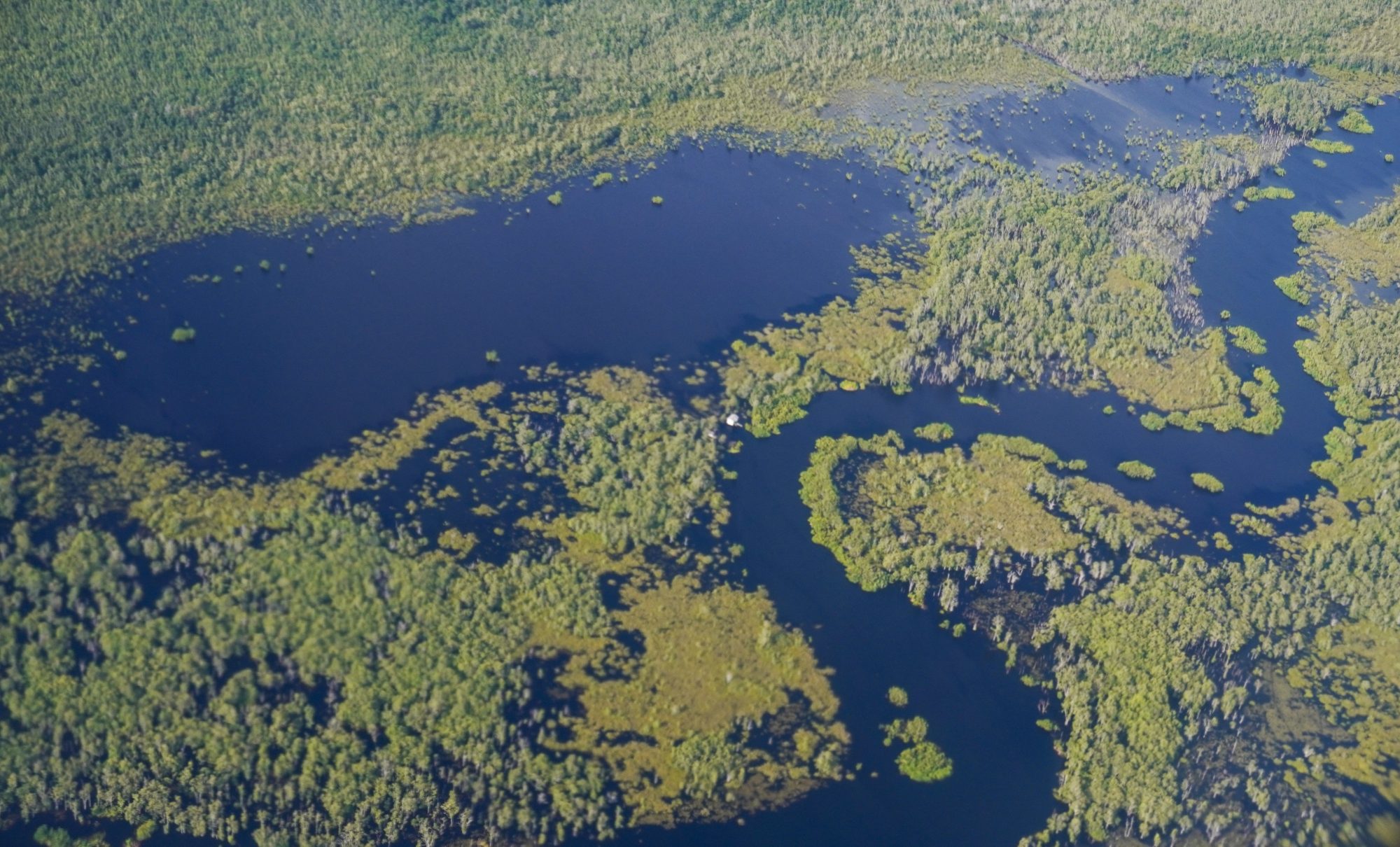
Carbon market participants counter that forest protection can lead to real emission savings if the right rules are followed, a message that the three buyers appear to agree with. The trio have purchased from projects designed to protect one of Indonesia’s largest remaining intact peat swamp forests (EY) and tropical forest in Malaysia (Salesforce and Autodesk). (It’s worth noting that these were judged by Calyx as higher-risk than the superpollutant credits.)
As of January of this year, California is requiring large companies to disclose details of the carbon credits they purchase. For more information on the companies’ portfolios, see the disclosures from Salesforce, Autodesk and EY.
How did the companies choose the credits?
Salesforce and Autodesk said they rely on a range of due diligence methods, including:
- Alignment with trusted standards. Use of a methodology from a reputable registry is an essential step. Many companies now also check to see whether the methodology and registry have been approved by the Integrity Council for the Voluntary Carbon Market, a nonprofit that develops principles for identifying high-quality credits.
- Buyer coalitions. Salesforce is a member of the Symbiosis Coalition, which focuses on forests; the Superpollutant Action Initiative (as is Autodesk); and the Kinetic Coalition, which funds the retirement of coal-powered power plants in emerging economies.
- Ratings agencies. Salesforce will only purchase credits that have high scores from at least one third-party agency,
Read More