

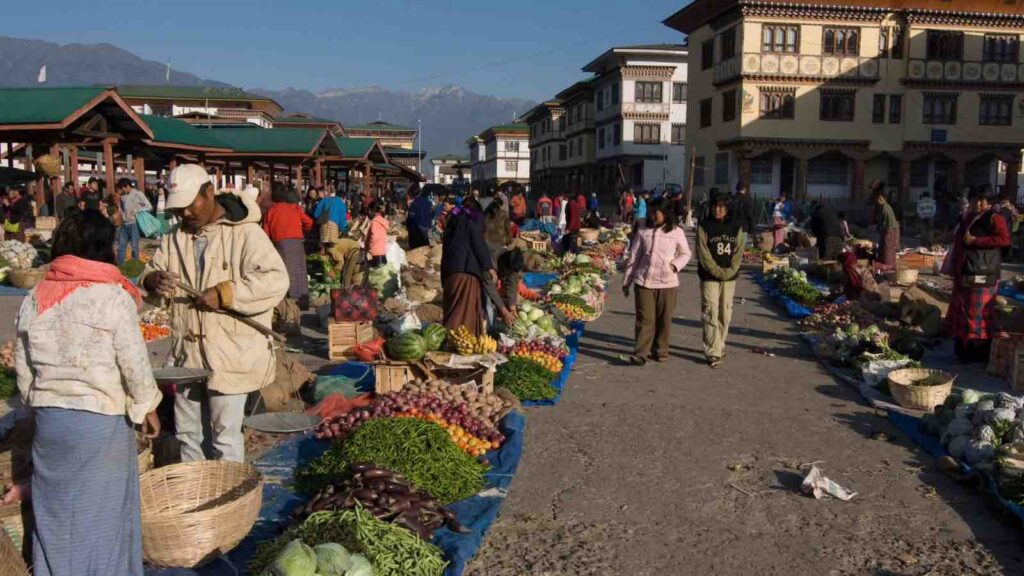

Delegates from more than 60 countries gather in the Himalayan nation to explore whether regenerative farming, Indigenous knowledge and a more mindful relationship with food can help build a more resilient food system.
PARO, Bhutan — As climate extremes and geopolitical instability put growing pressure on global food supplies, Bhutan is asking an unusual question: Can fixing the food system begin with changing how people think about food itself?
Delegates from more than 60 countries and the United Nations are gathering in Paro for five days for what organizers describe as the world’s first “conscious food summit.”
The meeting brings together governments and farmers with mindfulness experts and yoga therapists. Its premise is that repairing a food system strained by hunger, poor nutrition, poverty, climate change, biodiversity loss and conflict will require more than economic measures or increasingly intensive agriculture.
It will also require people to reconsider their relationship with what they eat.
“Food lies at the intersection of many of the defining challenges of our time,” Bhutan’s prime minister, Tshering Tobgay, said. “Our central message is simple: transforming our food systems requires both inner and outer change.”
RELEVANT SUSTAINABLE GOALS

Food Security Faces Pressure From Climate Change and Conflict
The summit comes as threats to food production are becoming harder to separate from wider environmental and geopolitical pressures.
The consequences of a changing climate have been visible close to Bhutan.
Last week in neighboring Nepal, a glacial collapse triggered floods and landslides that killed hundreds of people.
The pressure could intensify as a “super El Niño” affects weather this year and next. The World Food Programme has warned that 50 million people could be pushed close to starvation.
Food shortages and higher prices for staple products are likely around the world. The warning follows a northern hemisphere summer in which drought, extreme heat and wildfires devastated harvests.
For organizers in Bhutan, those pressures expose weaknesses in a global food system that may not be resilient enough for what lies ahead.

Beyond the Question of Producing More Food
Jerry Spooner of Regenerative Vanua, a Pacific NGO, said climate change, a potential super El Niño, biodiversity loss and growing global instability could push food systems to their limits.
“As we face the growing impacts of climate change, a potential super El Niño, biodiversity loss and increasing global instability, it is becoming clear that our food systems are not resilient enough for the challenges ahead,” Spooner said.
He argued that the discussion needs to move beyond simply finding ways to increase production.
The opportunity in Bhutan is to move beyond discussing how we produce more food and instead focus on how we build food systems that regenerate ecosystems, strengthen communities, celebrate culture and improve our collective resilience.
The summit will promote regenerative practices and Indigenous knowledge, while placing conscious eating at the center of its discussions.
Bhutan Puts Values Alongside Science and Policy
The emphasis on consciousness does not mean rejecting science, Tobgay said.
Instead, the idea is to consider how human values influence the way scientific knowledge, public policy, finance and technology are put into practice.
“Consciousness can cultivate compassion, empathy, resilience, creativity and a stronger connection with nature,” he said. “This does not mean choosing spirituality over science. It means recognising that our values and mindsets influence how science, policy, finance and technology are used.”
Tobgay said food systems are ultimately shaped by choices, institutions, incentives, relationships and values.
That means addressing underlying causes as well as visible problems.
It also means giving farmers and rural communities a greater role in decisions that directly affect them.
“Too often, policies are developed for these groups rather than with them,” he said.
From Commodity to Something People Value
Rather than centering the summit on large political speeches and promises, organizers plan to encourage personal reflection with the involvement of “spiritual masters,” including mindfulness practitioners.
Tobgay argues that treating food primarily as a commodity traded on global markets has encouraged careless attitudes toward it, contributing to waste and unhealthy eating.
The summit’s approach divides change into two connected areas.
“Outer change is agriculture, markets, finance, public policy and consumption,” Tobgay said.
Inner change matters only if it alters what people actually do.
“Consciousness has value only if it influences our decisions and changes how we act,” he said.
For Tobgay, applying consciousness to food production has practical consequences.
A conscious system would consider the wellbeing of both the land and the farmer.
It would regenerate soils instead of exhausting them, protect water, reduce pollution and deforestation, and recognize the dignity and wellbeing of the people who produce food.
Those principles connect the summit’s focus on individual values with its broader concerns about agriculture and the environment.
The aim is not to treat mindfulness as a substitute for changes to markets, finance or policy. It is to influence the choices that determine how those systems operate.
That includes asking people to identify the values they want reflected in food production and consumption rather than leaving businesses and governments alone to shape those choices.
Could Changing How We Eat Change the Food System?
Tobgay’s own routine offers a small example of the philosophy behind the summit.
He begins each day at 5 a.m. with a bowl of porridge and a banana, sitting beside a small stream near his home.
“I listen to the birds that are up and about by that time, I listen to the stream and the water,” he said.
He argues that conscious eating does not need to be complicated.
Many cultures already have traditions of pausing before a meal to consider where food came from, how it was prepared and to give thanks. Reviving those practices would take almost no time.
For Bhutan’s prime minister, however, such a small change could be an early step toward something much larger: changing how people treat food, the planet and one another.
You may also be interested in :
Microplastics Are Disrupting Photosynthesis – And Threatening Global Food Security