
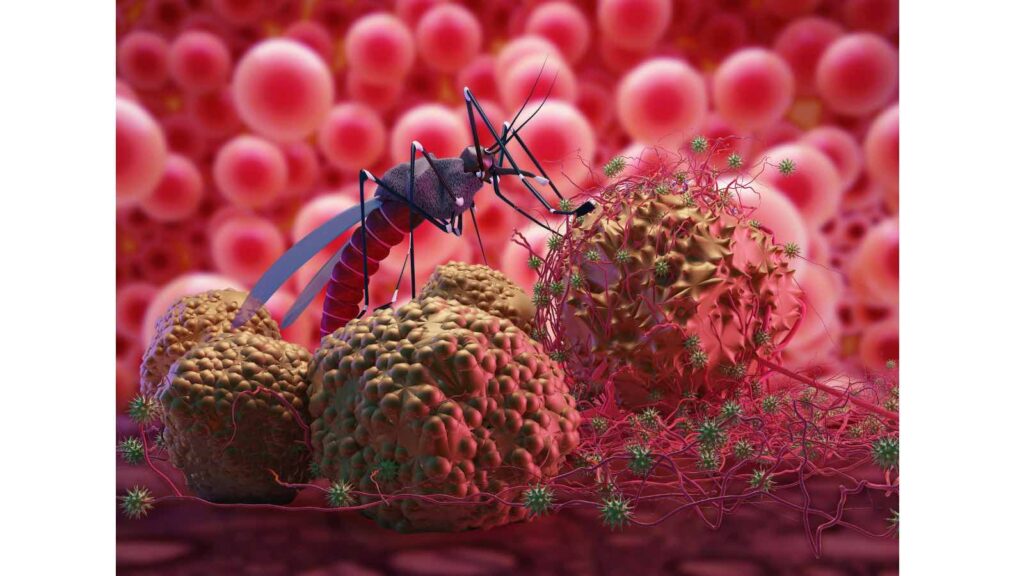

A study in Brazil’s Atlantic Forest found human blood in 18 of 24 successfully identified mosquito samples, raising concerns that habitat loss could increase opportunities for diseases to spill over from wildlife.
Deforestation does more than displace large animals and destroy trees. Scientists are finding that it can also alter the behavior of much smaller inhabitants of the forest, with consequences that may reach directly into human communities.
A recent study in Brazil’s Atlantic Forest found that wild mosquitoes are increasingly turning to humans as a source of blood as their natural habitat shrinks.
The mechanism is straightforward but troubling. Mammals, birds and amphibians that ordinarily provide blood meals for forest mosquitoes disappear or migrate as habitats are fragmented. Mosquitoes still need to feed, leaving them to adapt to whatever hosts remain readily available.
Around forest edges increasingly shaped by human activity, that can mean people.
The findings add a public-health dimension to the consequences of deforestation. Forest mosquitoes can carry viruses including yellow fever, Zika, dengue, chikungunya and Mayaro, meaning more frequent contact with humans can increase the risk of pathogens spilling over from wildlife populations.
RELEVANT SUSTAINABLE GOALS
Atlantic Forest Loss Is Changing the Mosquito’s Menu
Brazil’s Atlantic Forest is recognized as one of the world’s centers of biodiversity.
Human expansion and deforestation, however, have reduced it to about one-third of its original extent, leaving the remaining forest divided into isolated fragments.
That fragmentation sets off a chain reaction.
Mammals, birds and amphibians that traditionally act as natural hosts for forest mosquitoes can disappear or migrate when their habitats are lost. With those sources of blood becoming scarcer, mosquitoes must adapt to survive.
Humans living nearby provide an abundant alternative.
The shift illustrates how changes to an ecosystem can affect relationships between species that may initially seem far removed from forest clearance itself.
Scientists Followed the Blood to Find Out What Mosquitoes Were Biting
Researchers from the Oswaldo Cruz Institute and Federal University of Rio de Janeiro investigated the change at two nature reserves surrounded by human settlements.
They used light traps to collect 1,714 mosquitoes representing 52 different species.
Their main interest was in female mosquitoes with visibly swollen abdomens, indicating that they had recently taken a blood meal.
Back in the laboratory, scientists used DNA analysis to identify the origin of the blood inside those mosquitoes.
The results provided a striking picture of their feeding behavior.
Among samples whose blood source could be accurately identified, 18 out of 24 contained human blood.
The remaining samples contained smaller amounts of blood originating from dogs, rodents, birds and amphibians.
Researchers even detected a mosquito carrying a mixture of amphibian and human blood, demonstrating the insects’ flexibility in feeding on available hosts.
Why More Human Bites Could Mean More Disease Risk
The consequences extend beyond the discomfort of mosquito bites.
Forest mosquitoes are known vectors of potentially serious viruses, including yellow fever, Zika, dengue, chikungunya and Mayaro.
As these mosquitoes begin feeding routinely on people, opportunities increase for disease spillover, in which pathogens circulating among wildlife reach human populations.
People living along forest margins are particularly exposed because they occupy the point where fragmented natural ecosystems and human settlements increasingly meet.
The research therefore connects habitat degradation with a potential change in the pathways through which infectious diseases can reach communities.
An Indonesian Entomologist Sees a Wider Public-Health Warning
The implications are not confined to Brazil.
Prof. Upik Kesumawati Hadi, an entomologist at IPB University, warned that the disappearance of forest cover through human activity can increase mosquito populations, particularly where former forests have been converted into settlements.
“When forests disappear, their ecological functions disappear with them. Forest destruction is not only an environmental crisis, but also a real threat to human health."
Prof. Upik Kesumawati Hadi, an entomologist at IPB University
Deforestation commonly results from converting forests into agricultural land, mines, plantations and housing.
As vegetation disappears, ecosystems deteriorate and animals lose their habitats.
That transformation can create conditions in which mosquitoes and humans encounter one another more frequently.
Prof. Upik identified mosquito-borne diseases including dengue fever, Zika, chikungunya, zoonotic malaria and yellow fever among the health threats relevant to changing ecological conditions.
Her warning places deforestation within a broader public-interest discussion.
The connection matters because the effects of forest destruction do not necessarily remain inside the boundaries of a cleared ecosystem.
When species lose habitat, their behavior and interactions can change. In the case of mosquitoes, the search for alternative blood sources can bring disease vectors into closer contact with people.
Protecting Forest Ecosystems Can Also Protect Human Communities
The findings from the Atlantic Forest provide another reason to view ecosystem protection through the lens of public health.
Maintaining ecological balance is not simply about conserving trees. Forests support networks of mammals, birds, amphibians, insects and other species whose interactions influence how pathogens circulate and where disease-carrying mosquitoes find their hosts.
When those relationships are disrupted, humans can become a more attractive target.
The emerging evidence therefore carries a practical warning. Protecting functioning forest ecosystems can also serve as a protective barrier for the communities living beside them, reducing the conditions that may bring humans and disease-carrying mosquitoes into increasingly close contact.
You may also be interested in :
Dengue Cases in Assam Surge During Monsoon, Study Finds Higher Risk Among Urban Populations