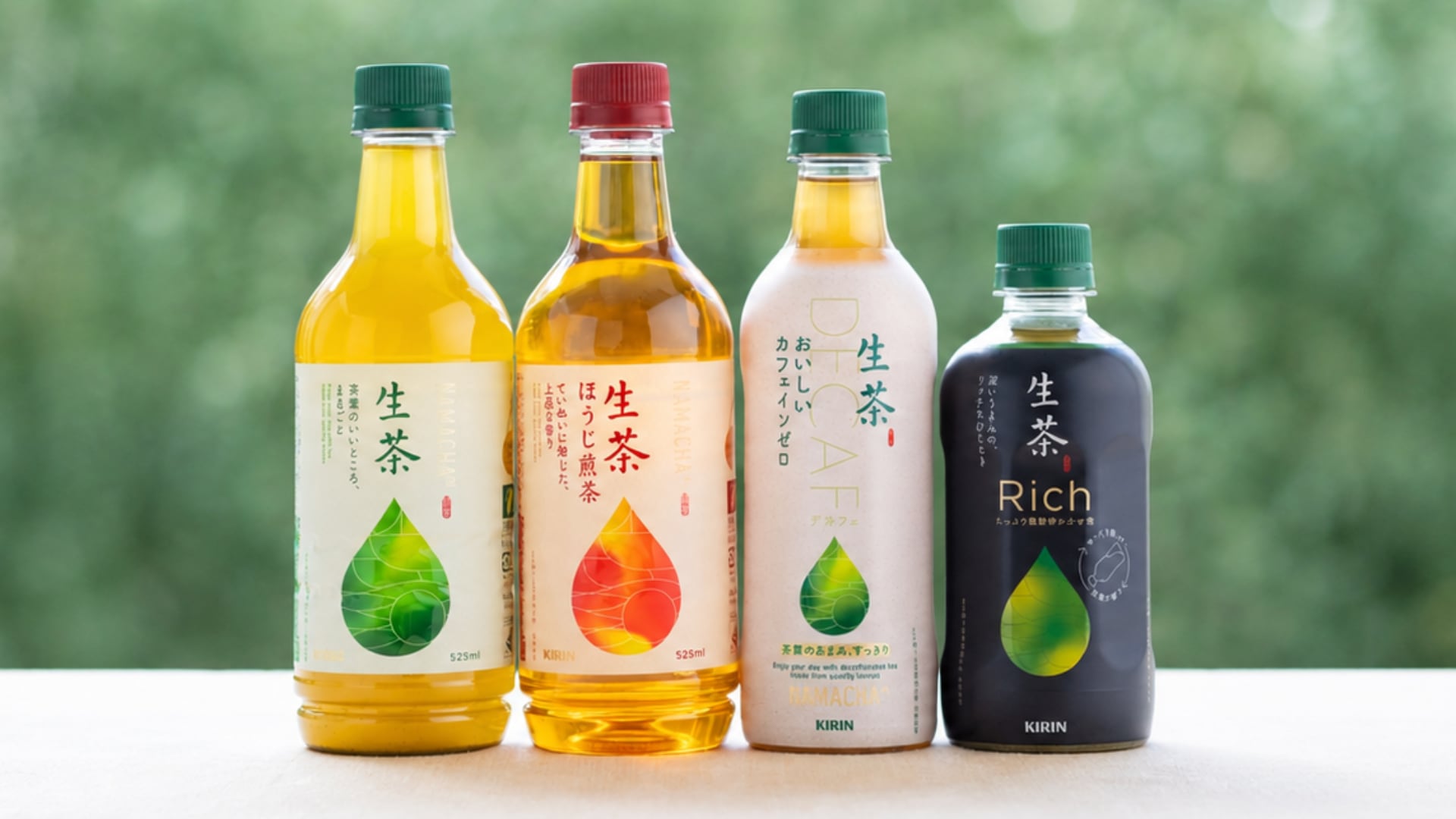
The Japanese beverage giant’s latest climate-risk assessment estimates that carbon pricing could add ¥43.8bn to packaging costs by 2050 under its Sustainable Scenario, which assumes a stronger global shift towards a low-carbon economy.
The estimate covers emissions associated with aluminium, plastics including PET, and paper used in Kirin’s packaging. The figure reflects the potential cost passed through to Kirin as carbon pricing makes these materials more expensive.
The Sustainable Scenario carries the highest packaging cost impact. Under Kirin’s Middle Degradation Scenario, the estimated impact falls to ¥1.1bn by 2050, while the High Degradation & Climate Change Progression Scenario puts it at just ¥0.1bn.
That is because the stronger climate-transition scenario assumes higher carbon prices: the faster the global shift towards a low-carbon economy, the greater the potential cost pressure on carbon-intensive materials.
Kirin also estimates that meeting the targets of its Plastic Policy could require an additional ¥2bn in spending on recycled PET resin by 2027. The calculation is based on the volume of recycled PET needed to meet its targets and unit prices assumed when the policy was formulated.
Beyond packaging, Kirin expects its low-carbon transition to also financially impact its energy and agricultural raw materials.
What are the different sustainability scenarios?
Sustainable Scenario: A stronger transition towards a low-carbon economy, with tighter climate policies and higher carbon prices, but lower physical climate risks.
Middle Degradation Scenario: A more gradual transition, with moderate climate-policy and physical climate risks.
High Degradation & Climate Change Progression Scenario: A weaker transition with worsening climate conditions, resulting in greater physical risks such as declining agricultural yields.
The Sustainable Scenario carries higher transition costs because carbon prices are assumed to be higher, while the High Degradation scenario carries greater physical risks from climate change.
Financial impact on energy and agriculture
The climate transition could have an even larger financial impact on Kirin’s energy costs. The company estimates carbon pricing could add ¥91.8bn to energy costs by 2050 under its Sustainable Scenario, compared with ¥3.8bn under the Middle Degradation Scenario and ¥3.1bn under the High Degradation & Climate Change Progression Scenario.
Agriculture faces a different risk. Kirin estimates declining agricultural yields could have a financial impact of ¥0.9bn–¥2.6bn by 2050 under the Sustainable Scenario, rising to ¥3.1bn–¥12.1bn under the High Degradation & Climate Change Progression Scenario.
Carbon pricing could also affect agricultural raw materials, with the estimated impact ranging from ¥0.9bn–¥4.1bn under the Sustainable Scenario to ¥2.2bn–¥8.1bn under the High Degradation & Climate Change Progression Scenario.
The figures highlight the two sides of Kirin’s climate exposure: stronger decarbonisation could raise transition costs through carbon pricing, while weaker climate action could leave the company more exposed to physical risks such as declining agricultural yields.
Plans for low-carbon transition
“The main targets for the reduction of Scope 3 emissions are containers and packaging and agricultural raw materials. We envisage that regenerative agriculture will be a key adaptation and mitigation measure for climate change related to agricultural raw materials,” according to the Kirin Group Environmental Report 2026.
The company said
Read More