
The market for carbon credits generated by sustainable agriculture projects has been boosted by a flurry of recent corporate deals, pilot projects and approvals by standards bodies, ratcheting up the likelihood that market-based mechanisms will play a significant role in decarbonizing food systems.
The moves come on two fronts, with project developers working with farmers to issue millions of new credits into the voluntary carbon market and food companies investing in credit-based schemes that count against supply chain emissions.
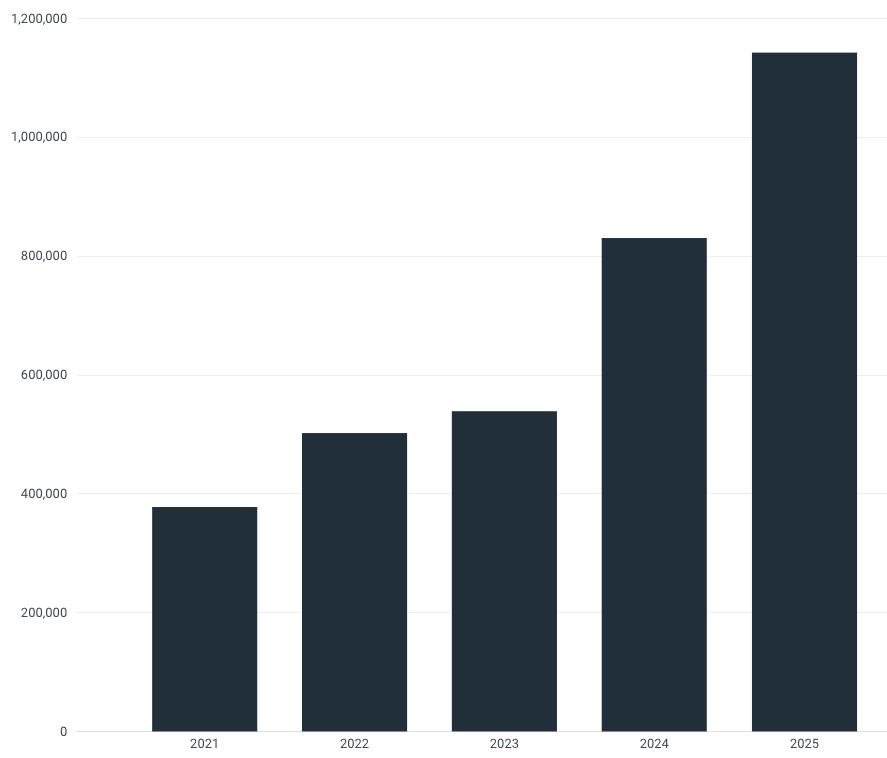
The credibility of farmland credits was enhanced last October when the Integrity Council for the Voluntary Carbon Market (ICVCM), an influential standard-setter, rubber-stamped two key methodologies that govern how farmers generate credits, including through reduced tillage and fertilizer use. The decision is expected to strengthen demand for the credits, which has risen steadily this decade.
Retirements of soil carbon credits
Record sales
Indigo, a large U.S. developer, last month released 1.1 million credits generated using one of the ICVCM-approved methodologies. The move came around a month after the company announced the sale of close to 3 million credits to Microsoft over a 12-year period — a deal that Ryan Jones, Indigo’s vice president for sustainability solutions, said is the largest such transaction he’s seen in the market. Agreena, a European-based rival to Indigo, issued 2.3 million credits last September and expects to release around 3 million more early next year, according to Frederik Aagaard, the company’s chief commercial officer.
The rising demand is also attracting new entrants. Earlier this month, Holganix, a manufacturer of microbial inputs that farmers use to build soil health, announced the launch of a new division that pays farmers a flat fee of $70 per acre for the right to sell the carbon and water savings generated through use of the company’s products. The credits are currently generated using the company’s own methodology, but it’s in discussion with major independent standard-setters, said Tim Weaver, Holganix’s chief strategy officer.
Value-chain investments
Agreena is expanding its offerings to include value-chain credits, also known as insets. Unlike credits for the voluntary carbon market, which can be freely purchased and traded before being used to offset an organization’s emissions, value-chain credits are used by companies to quantify and take ownership of the emissions benefits generated by investments in supply chains. Last week, Agreena issued close to 11,000 insets, which it dubs “Verified Impact Units.” The two unnamed buyers in this pilot project were described by Aagaard as large global food and
Read More