

Farmers turn climate-smart practices into economic opportunity; with a low-carbon rice farming model that aims to cut methane emissions, raise crop value and open new export opportunities.
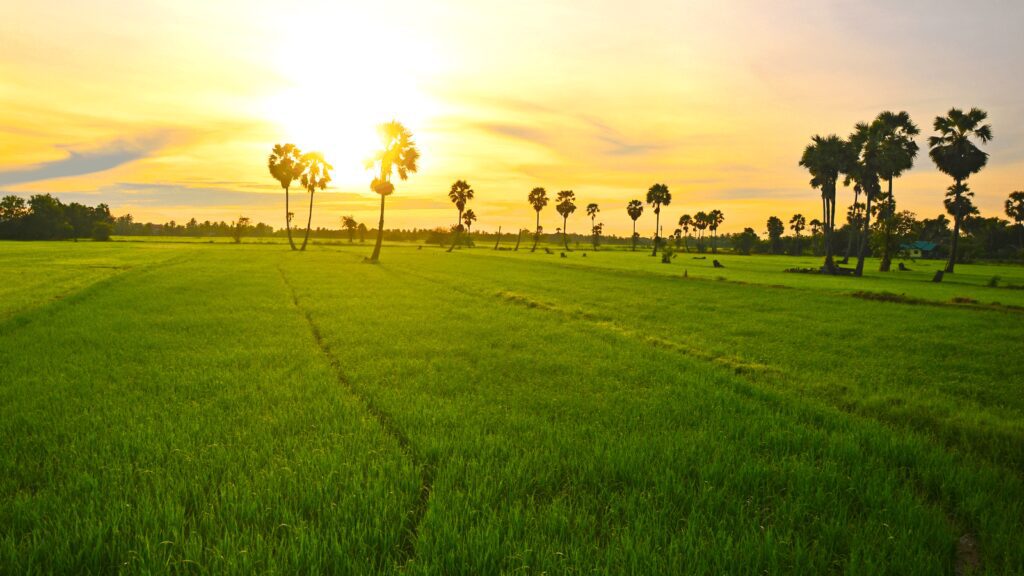
Farmers in Thailand’s Central Plains are emerging as pioneers of a low-carbon rice farming model that aims to cut methane emissions, raise crop value and open new export opportunities.
The shift comes at a critical moment for Thailand’s rice industry, which is facing mounting pressure in global markets. The white rice segment has been particularly affected by falling prices and fierce competition from major exporters such as India and Vietnam, both of which benefit from lower production costs.
While Thailand’s premium jasmine rice — especially the Hom Mali 105 and RD15 varieties — continues to maintain its strong market position, the broader rice sector is confronting rising production costs and growing environmental concerns.
In response, farmers and policymakers are increasingly looking toward climate-friendly cultivation methods that can reduce emissions while strengthening economic resilience.
RELEVANT SUSTAINABLE GOALS
Central Plains Production Under Pressure
Rice farming in the Central Plains plays a major role in Thailand’s agricultural output. The region’s extensive irrigation systems allow farmers to accelerate dry-season production using off-season rice varieties that are not sensitive to photoperiod.
In some areas, farmers can grow rice as many as three times a year.
But this high-intensity production model requires large quantities of fertiliser, chemicals and water. Over time, those inputs have driven cumulative costs higher, placing increasing pressure on farmers when global rice prices fluctuate.
As production costs rise and international competition intensifies, farmers are exploring new cultivation strategies that balance productivity with sustainability.

Climate Targets Driving Change in Rice Farming
Thailand’s climate commitments are also shaping the direction of agricultural policy.
Sommai Lertna, Director of the Rice Research and Development Division at the Rice Department, said that under the Paris Agreement the country has set a target of reducing greenhouse gas emissions by 4 million tonnes of carbon dioxide equivalent by 2030.
The agricultural sector has been tasked with cutting 2 million tonnes, and 1 million tonnes must come from rice cultivation.
The focus on rice is not accidental. Flooded rice paddies are a major source of methane emissions, which are generated through microbial decomposition in oxygen-free conditions.
To address this, the Rice Department has introduced policies promoting environmentally friendly rice farming while supporting producers of organic rice, Climate-Smart Agriculture (CSA) rice and low-carbon rice.
These initiatives create a new opportunity for farmers: generating revenue not only from rice sales but also from carbon credits.
Alternate Wetting and Drying Reduces Methane
At the center of Thailand’s low-carbon rice model is a cultivation technique known as alternate wetting and drying.
Under this system, rice fields are not kept continuously flooded. Instead, the soil surface is allowed to dry and the underground water level must drop to 10 centimeters below the surface before irrigation water is reintroduced.
The field is then allowed to dry again before being irrigated once more, typically repeating the cycle twice.
This approach can reduce methane emissions by 0.5 to 1 tonne per rai per crop cycle.
Beyond its climate benefits, the method also strengthens rice plants, reduces the risk of disease and pests, and lowers the energy costs associated with pumping water.
“The Rice Department has been testing alternate wetting and drying for several decades, which has enabled us to quantify methane emission reductions,” Sommai said.
He added that other approaches — including reducing fertiliser use and avoiding stubble burning — are still being studied to establish reliable carbon-reduction calculations.
Farmers Enter the Carbon Credit Market
The alternate wetting and drying model offers farmers an additional economic pathway: participation in the carbon credit market.
By reducing methane emissions through this cultivation method, farmers can generate carbon credits that may be sold alongside their rice harvest.
To participate in the carbon market, however, farmers must first be registered and certified by relevant authorities. One of the key institutions responsible for certification is the Thailand Greenhouse Gas Management Organisation (Public Organisation), or TGO.
This certification ensures that emissions reductions are verified before carbon credits can be issued.
A New Direction for Thailand’s Rice Economy
Thailand’s rice farmers have long been known for producing some of the world’s most prized grain. Today, they are also beginning to play a role in the global push for climate-friendly agriculture.
By combining traditional rice cultivation with new water management techniques and carbon markets, farmers in the Central Plains are demonstrating how agricultural systems can evolve under both economic and environmental pressures.
If the model continues to expand, Thailand’s low-carbon rice could become not only a tool for reducing methane emissions but also a strategy for strengthening the competitiveness of one of the country’s most important industries.
You may also be interested in :
Optimising Greywater Use in Agriculture: A Sustainable Solution For Indonesia Amid Climate Change