GSK has committed to reducing more emissions faster than any other large pharmaceutical company.
Now it has five years left to deliver.
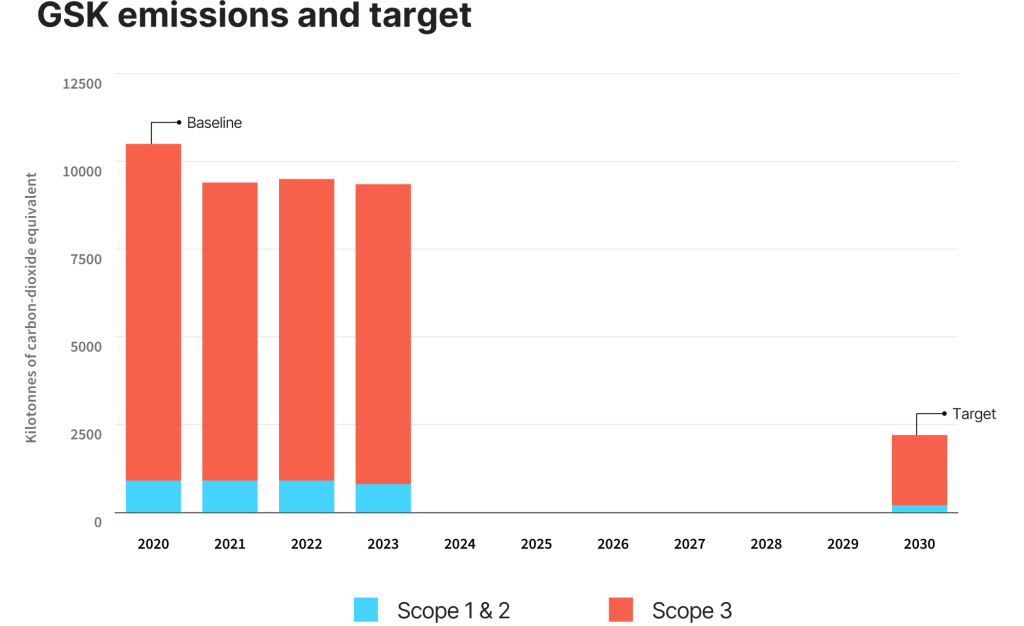
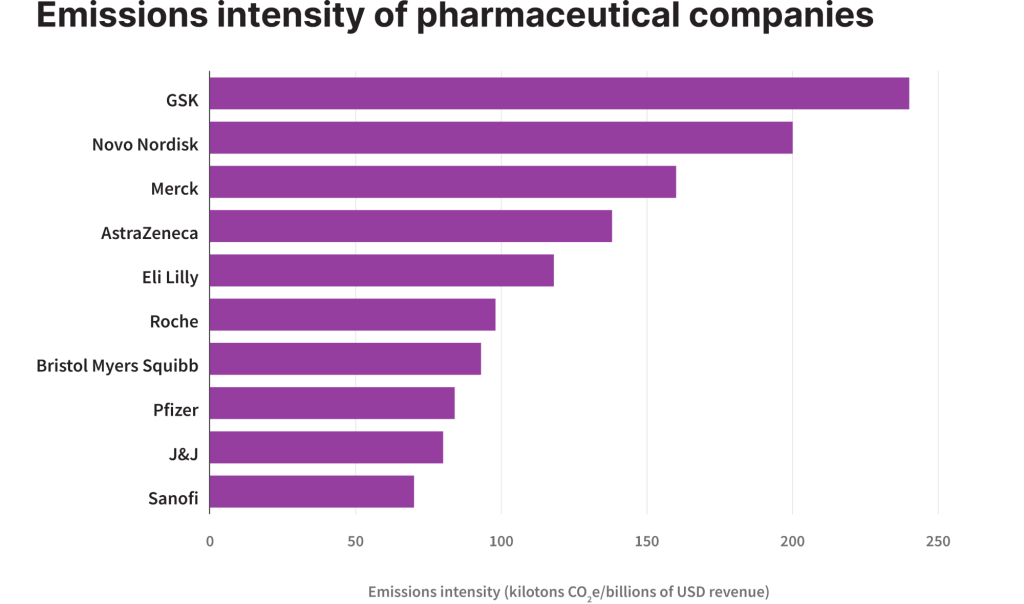
By 2030, the London-based pharmaceutical company has promised to slash direct and indirect greenhouse gas emissions by 80 percent, relative to a 2020 baseline. It did so even though it has the industry’s highest emissions intensity, as measured by metric tons of emissions per dollar of revenue
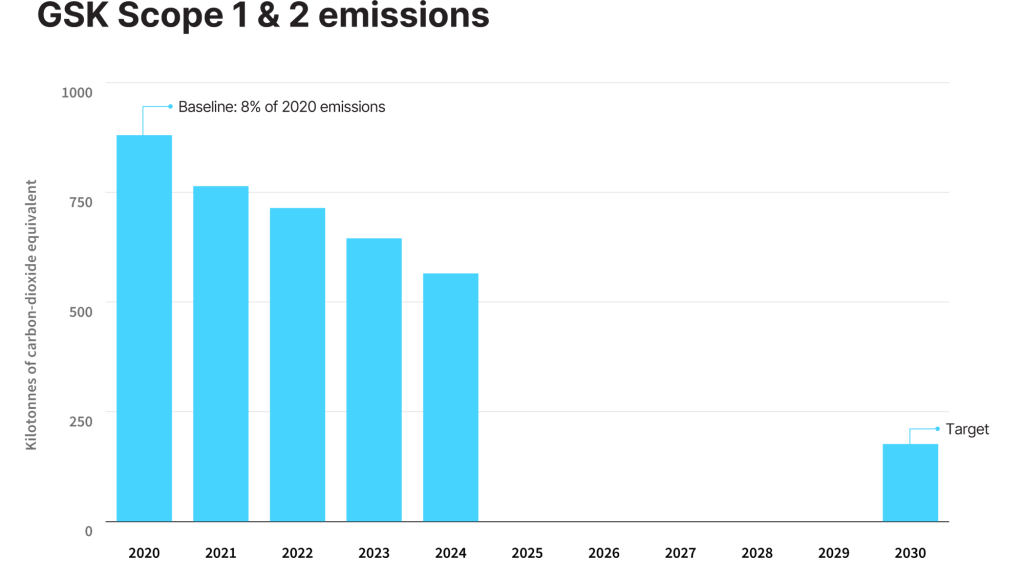
So far, it is not on track to meet its goals. By 2023, the last year for which it published full data, GSK’s emissions had fallen 12 percent — half the pace it needs to reach its 2030 target.
But the numbers do not tell the whole story. This profile in the Chasing Net Zero series — our company-by-company look at progress toward 2030 climate goals that kicked off with Nestlé and IKEA’s biggest retailer — reveals that GSK’s decarbonization plan includes two initiatives that, if successful, would lead to dramatic emissions cuts.
One is common to almost all large companies: GSK is working with industry groups to convince pharma suppliers to reduce the emissions of their products. The news here is mixed: Ingredient manufacturers, many of which are in China and India, have started to engage, but actual emissions reductions have been slow to appear.
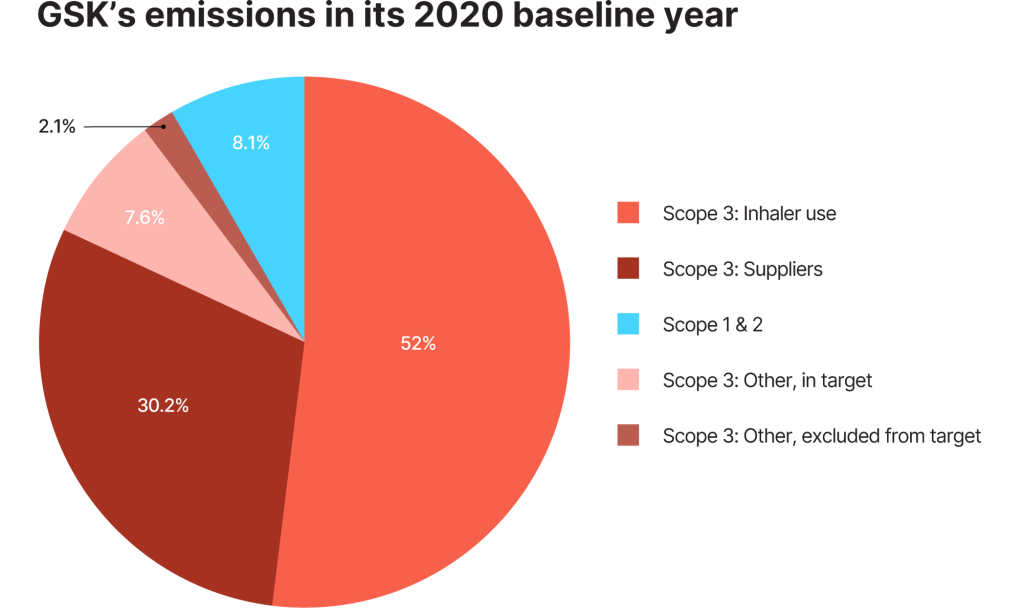
The other initiative is a sector-specific project that promises tantalizing results. If GSK can obtain regulatory approval and widespread adoption of a new version of its flagship Ventolin asthma inhaler, it would at a stroke eliminate close to half of its emissions.
GSK declined to make any executives available for this article, but in a recent podcast, Giulia Usai, GSK’s senior director for procurement sustainability, acknowledged the challenge of the 2030 deadline.
“We have less than 60 months to our target; that’s nothing,” she said. “It gives us all anxiety, but at the same time, it helps us prioritize the actions that will give us quicker results.”
The commitment: A big promise from a company in transition
Since taking over as chief executive in 2017, Emma Walmsley has faced relentless criticism from investors complaining that GSK lacks the lucrative pipeline needed to replace products losing patent protection. During Walmsley’s term, the company has fallen from seventh in the industry by revenue to 12th, in part because she spun out consumer businesses in 2022 to focus on lines with higher potential, including vaccines and treatments for respiratory diseases, HIV and cancer.
Despite these struggles, Walmsley has made unusually aggressive climate and nature commitments:
- Reducing GSK’s Scope 1, 2 and 3 emissions — which totaled 11 million tons of carbon dioxide equivalent in 2020 — by 80 percent by 2030. (The company excluded Scope 3 categories representing 2 percent of its 2020 emissions from its goals.)
- Becoming carbon neutral by 2030 by using carbon credits to offset the remaining 20 percent of its emissions.
- Reducing its emissions by 90 percent from 2020 levels by 2045, a net-zero commitment validated by the Science Based Targets initiative (SBTi).
“They really understand the interconnections between health, climate and nature,” said Amy Booth, a University of Oxford researcher studying sustainability in the pharmaceutical industry. She praised GSK’s early commitment to transparency and to address its impact on biodiversity. (The company was the first to publish disclosures in line with Taskforce for Nature-related Financial Disclosures standards.)
“They are one of the better companies at reporting data,” she said. “They report extensively across Scopes 1, 2 and 3, and provide pages of methodology backing up their data.”
The context: Pharma companies are engaged
GSK is not alone in its industry in setting ambitious climate goals.
Eighteen of the top 20 publicly traded pharma companies have had near-term commitments validated by the SBTi. Several say they will eliminate nearly all of their Scope 1 and 2 emissions — those from company facilities and from purchased electricity, respectively — before 2030, largely by shifting to renewable electricity sources.
Eight of the top 20 also have long-term SBTi commitments. Seven are based in Europe, where drugmakers face pressure to reduce their climate impact from national health systems and European Union regulations that apply to all large companies.
More than 90 percent of most pharma companies’ emissions lie in value chains, with the largest component of these Scope 3 emissions coming from the raw ingredients in their products. Transportation can also be a significant source of emissions because many drugs require refrigeration, sometimes at very low temperatures.
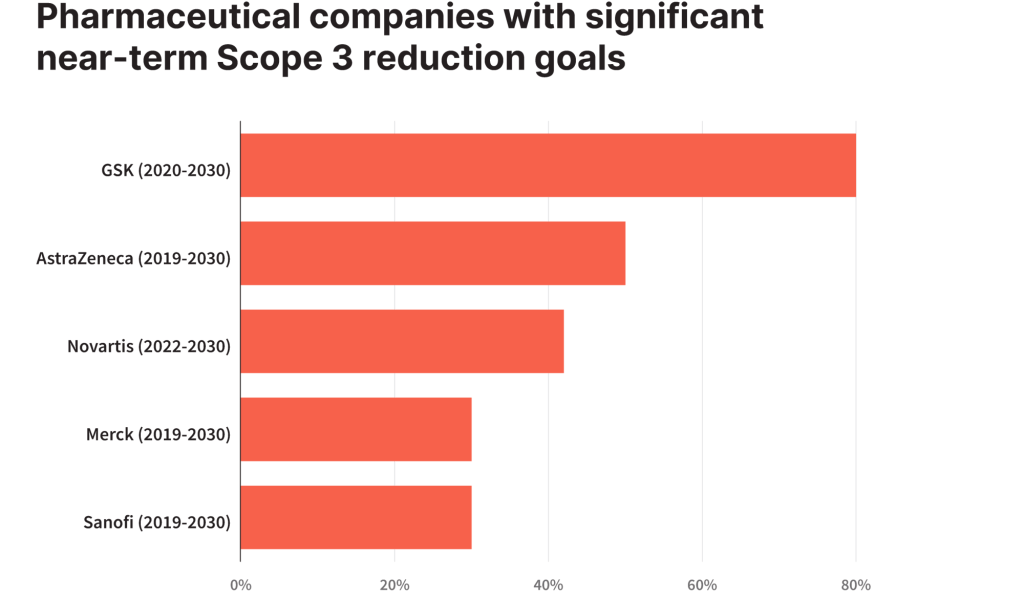
Here GSK stands out: Its 80-percent Scope 3 commitment is the largest in the industry. The industry’s next highest Scope 3 goal is AstraZeneca’s, GSK’s larger British rival, which has promised a 50-percent reduction by 2030.
Scopes 1 and 2: Rapid shift to renewable energy
While Scopes 1 and 2 represent a small fraction of GSK’s overall carbon footprint, the company has made the largest reductions so far in this area, mainly by investing in renewable energy. It is increasingly purchasing electricity from renewable sources. And it’s replacing some of its on-site generators that burn fossil fuels with wind and solar generation systems.
Last year, for example, GSK activated two wind turbines and a 56-acre solar farm at its plant in Irvine, Scotland. The plant produces a majority of the world’s supply of the antibiotic Augmentin, which is made using an energy-intensive fermentation process. With the new capacity, more than half of the facility’s energy will come from its on-site wind and solar generation.
In addition, the company has made progress in improving the efficiency of its manufacturing processes, especially by reducing the gas leakage during inhaler manufacturing.
Scope 3: Reengineering a problematic product

GSK is the world’s leading maker of drugs to treat asthma and other respiratory diseases, propelled by the success of Ventolin, which it introduced in 1968. Even though GSK’s patents have expired and generics are available, 35 million patients worldwide used the company’s version in 2024, accounting for sales of almost $890 million, 2 percent of GSK’s revenue.
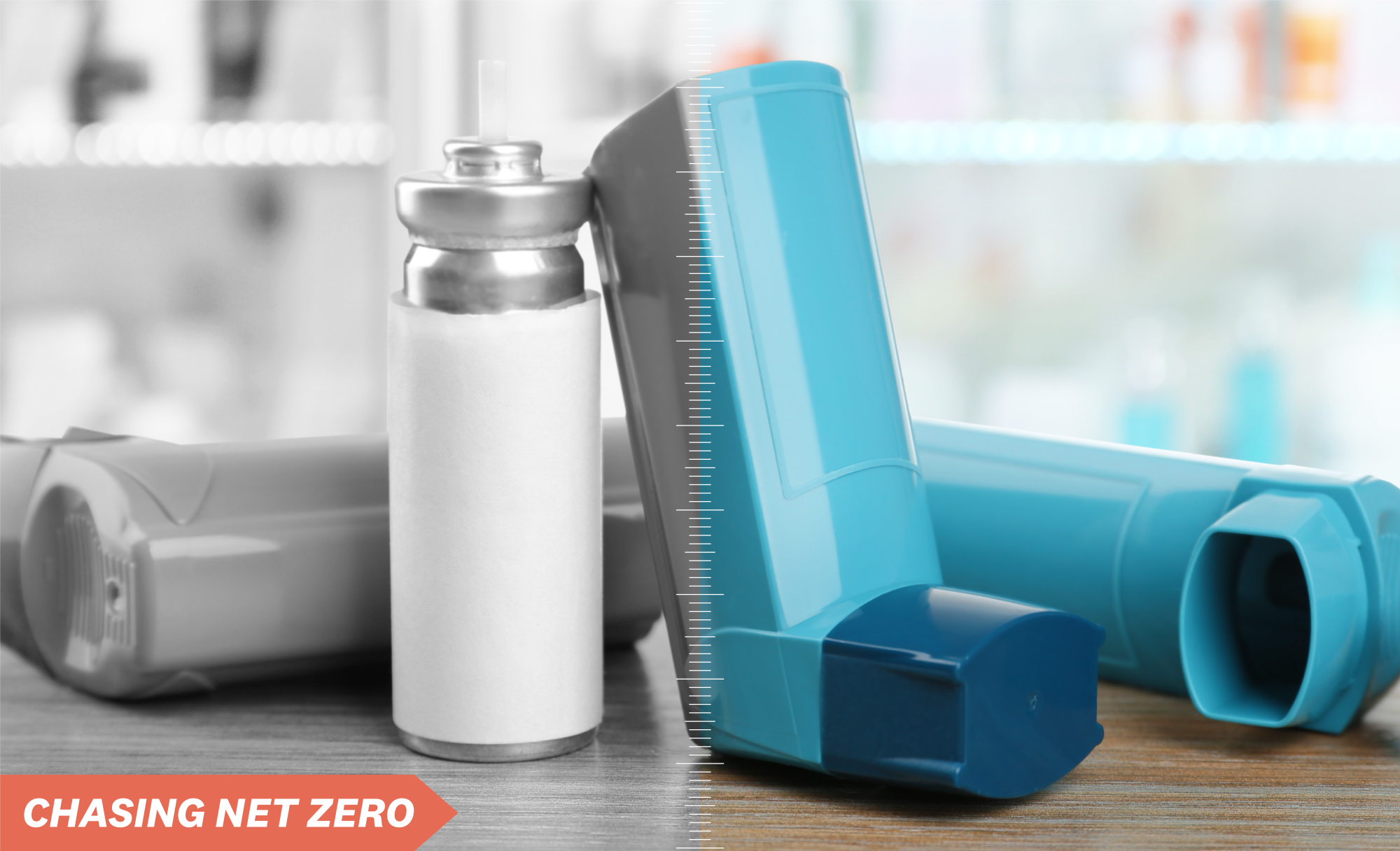
A puff from Ventolin’s ubiquitous L-shaped inhaler offers immediate relief from asthma symptoms. Unfortunately, each puff is also powered by R-134a, a gas that traps 1,400 times more heat than CO2. GSK plans to switch to a chemical known as HFA 152a, made by Orbia, the large Mexican company. The new propellant cuts carbon emissions by 90 percent.
It’s not as simple as substituting one gas for another, however. The drug formula and the inhaler mechanism need to be adjusted to work with the new propellant. The revised product is now in phase III clinical trials, and GSK hopes to submit the results for regulatory approval next year. HFA 152a is also highly flammable and has to be manufactured with elaborate safety precautions. GSK has started building new production lines for low-carbon Ventolin at its factory in Evreux, France.
“In the medicines sector, changing a product is costly, challenging and not guaranteed,” said Claire Lund, GSK’s vice president of environmental sustainability, on a recent podcast. “We have to work with multiple regulators in multiple countries, and we have to set up a global supply chain.”
Will GSK be able to accomplish the biggest item on its decarbonization checklist? While the re
Read More