

According to FAO estimates from 2011, providing women farmers with equal access to productive resources — including land, credit, social protection programmes and practical technology — could increase farm yields by 20 to 30 percent.
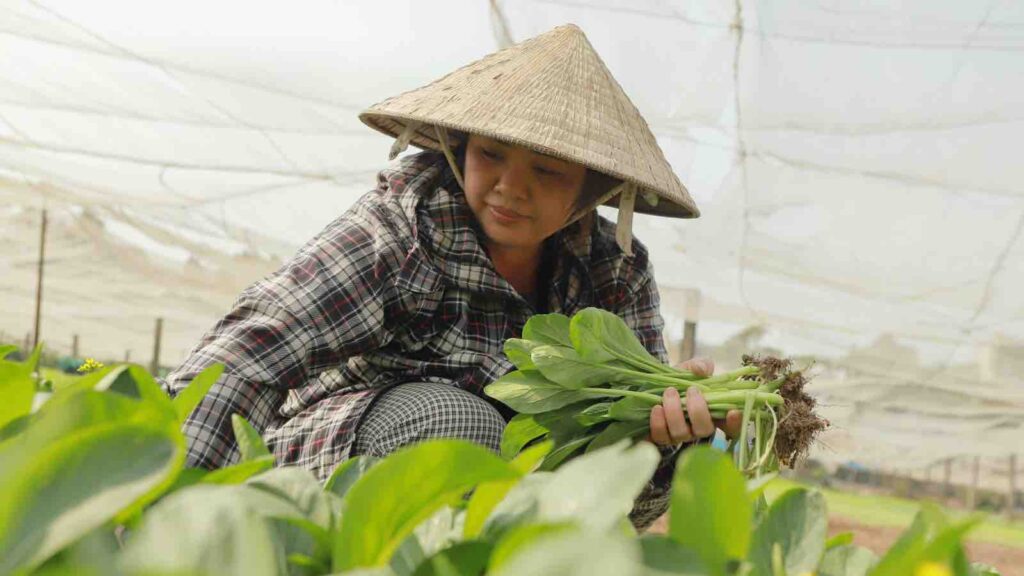
From the rice plains of Luzon in the Philippines to the uplands of Java in Indonesia, women farmers are emerging as Southeast Asia’s first defenders against the growing impacts of climate disruption.
A research perspective by Elyssa Kaur Ludher, Visiting Fellow with the Climate Change in Southeast Asia Programme at the ISEAS – Yusof Ishak Institute, underscores how women farmers are adapting daily to shifting weather patterns while sustaining regional food systems.
They transplant seedlings in flood-prone paddies, manage irrigation water, adjust planting calendars when rains arrive late and stretch harvests to feed their households during price spikes. Strengthening their agency, the research argues, will be central to whether Southeast Asia can continue to feed itself in a harsher climate.
RELEVANT SUSTAINABLE GOALS
Barriers Persist Despite Their Crucial Role
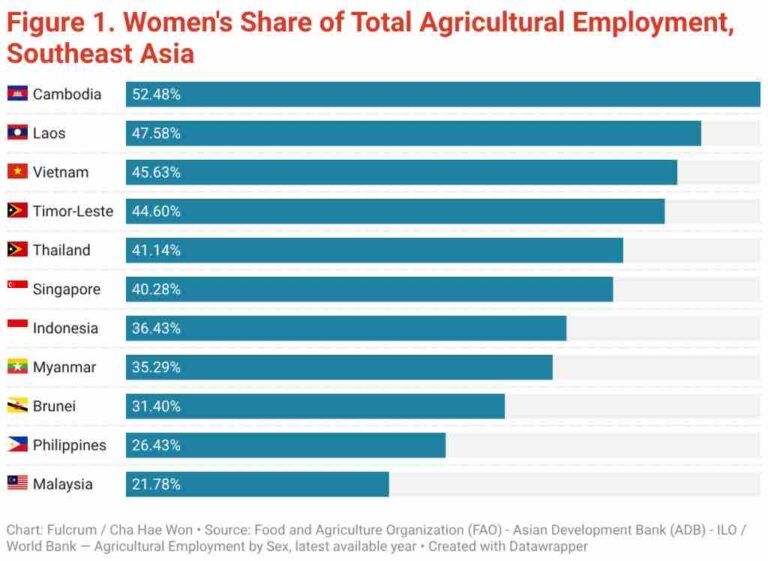
Across ASEAN countries, women form a major — and often undercounted — share of the agricultural workforce.
Yet a 2021 report by the ASEAN Secretariat and the OECD found that women farmers still face persistent social and economic barriers. They are frequently paid less than men and remain a minority among documented landowners.
In agriculture, forestry and fisheries, women receive only about 7 percent of agricultural investment and credit, limiting their access to resources that could improve productivity and resilience.
This year’s designation of the UN International Year of the Woman Farmer (IYWF) offers an opportunity to highlight both their contributions and the systemic disadvantages they face.

Central to Household Welfare and Agrobiodiversity
Despite limited recognition, women farmers play a critical role in sustaining rural economies and food security.
Research shows that women tend to invest a larger share of their earnings than men in family health, education, nutrition and well-being.
They are also often custodians of agrobiodiversity, maintaining crop varieties that support climate adaptation and improve dietary diversity. Ensuring that women farmers can thrive is therefore closely linked to broader societal resilience and development.
In many Southeast Asian countries, women already exercise relatively strong influence over household budgets and daily spending decisions. In Thailand, the Philippines and Cambodia, they also hold visible administrative roles within farmer groups and village organizations.
Women provide much of the labour in post-harvest processing and value addition, including tasks such as sorting and grading coffee beans.
Limited Voice in Community Decision-Making
Even so, their influence in wider agricultural decision-making remains constrained.
In parts of Indonesia and Myanmar, key farming decisions — including irrigation schedules, crop variety selection and pest management strategies — are often made in male-dominated community meetings.
As a result, women’s practical knowledge may go unrecognized, contributing to missed productivity gains. Globally, the Food and Agriculture Organization estimated in a 2023 report that female-managed farms of the same size produce about 24 percent lower yields than those managed by men, largely due to unequal access to resources.
Climate change is likely to widen these disparities. When floods damage rice fields or cyclones disrupt harvests, women frequently shoulder the burden of replanting crops, managing food stocks and caring for sick family members.
Equal Access Could Boost Yields and Reduce Hunger
According to FAO estimates from 2011, providing women farmers with equal access to productive resources — including land, credit, social protection programmes and practical technology — could increase farm yields by 20 to 30 percent. Such gains could help reduce global hunger by up to 17 percent.
Yet women farmers continue to receive limited institutional support. Globally, they access only around 5 percent of agricultural advisory services, and women make up just 15 percent of advisory agents.
This leaves many without tailored guidance on climate-smart technologies, crop insurance or disaster recovery assistance.
Three Fronts for Action: Land, Finance and Voice
The research highlights three priority areas for improving inclusion: land and law, finance and services, and voice in decision-making.
Governments play a key role in expanding joint land titling that includes wives’ names on leases and mortgages, removing barriers to land inheritance and integrating gender targets into irrigation and climate-smart agriculture programmes.
Public investment can also be directed toward women-led farms and cooperatives, with subsidies and disaster recovery funds reporting beneficiaries by gender rather than by household.
At the local level, ensuring meaningful representation of women farmers on decision committees could help incorporate their knowledge into climate planning.
Financial institutions and agribusinesses can support inclusion by designing collateral-light loan products, flexible payment schedules and procurement systems that recognize the crops and tasks women manage.
Food companies and retailers can strengthen climate-resilient supply chains by sourcing from women-led producer groups and offering price incentives alongside technical support.
Farmer organizations and civil society groups can create spaces where women set agendas, manage budgets and negotiate directly with buyers and government agencies. Researchers and NGOs can also collaborate with women farmers to co-develop climate-resilient practices that reduce labour burdens and fit within time and mobility constraints.
Consumers, too, can play a role by supporting products from fair and gender-responsive value chai
A Turning Point for Southeast Asia’s Food Systems
The International Year of the Woman Farmer offers Southeast Asia an opportunity to set concrete timelines for improving inclusion — from whose names appear on land titles to who signs contracts, receives training and participates in climate-risk planning.
A food system that relies heavily on underpaid female labour while excluding women from decisions and resources, the research argues, is not resilient but fragile.
If the region addresses these structural gaps, it could build agricultural systems that are both more equitable and better equipped to withstand climate pressures.
In that future, women farmers will not only remain the first defenders of a warming Southeast Asia — they will be among the reasons its food systems continue to endure.