According to Vietnam Electricity (EVN), about 7,700 customers—representing 40% of total consumption—qualify for direct purchase agreements.
Vietnam is doubling down on its energy ambitions, with the Communist Party’s Politburo issuing a new resolution that underscores energy as the foundation of economic growth. Signed by Party General Secretary To Lam on August 20 as Resolution No. 70-NQ/TW, the five-year roadmap calls for boosting installed generation capacity, lifting the share of renewables to over 25%, raising power reliability and access to a top-three ranking within ASEAN, and implementing direct power purchase agreements (DPPA) to encourage private-sector investment.
RELEVANT SUSTAINABLE GOALS
2030 Targets: More Capacity, More Clean Power, Fewer Emissions
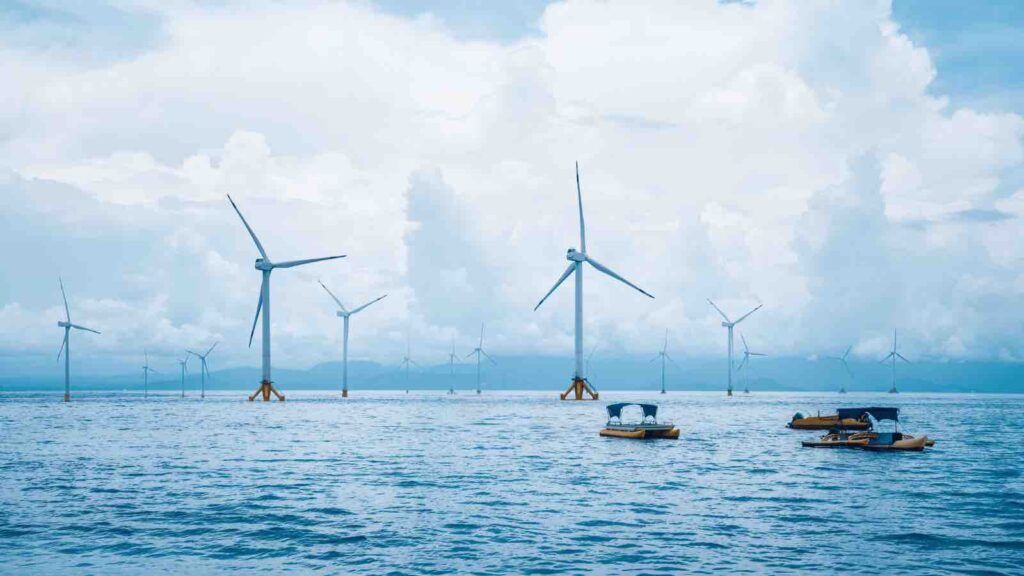
By 2030, Vietnam aims to raise unprocessed primary energy supply to 150–170 million tons of oil equivalent, installed capacity to 183–236 GW, and generation to 560–624 billion kWh. Renewables are expected to make up 25–30% of total supply, helping reduce carbon emissions by 15–35% compared to business-as-usual. The resolution also supports nuclear power development under the plan.
The resolution calls for smarter power systems to boost efficiency, with the goal of achieving ASEAN top-three statusin electricity reliability and coverage. Looking ahead to 2045, Vietnam seeks a modern, competitive, and sustainable energy industry integrated with regional and global markets.
DPPA Nationwide—and a Two-Part Tariff to Enable It
To promote competition, the Politburo instructed authorities to expand retail power options and implement DPPA nationwide. According to Vietnam Electricity (EVN), about 7,700 customers—representing 40% of total consumption—qualify for direct purchase agreements. EVN CEO Nguyen Anh Tuan said at a September 4 meeting that plans are being drawn up to improve pricing mechanisms and policy frameworks, including introducing a two-part electricity tariff.
This tariff would separate fixed charges based on registered capacity from variable charges based on consumption, reducing cross-subsidies between customer groups. Currently, Vietnam applies a single tariff regardless of consumption levels, which does not reflect actual generation costs.
The Ministry of Industry and Trade is drafting regulations for a phased rollout starting in early 2026, beginning with large DPPA customers and extending nationwide by 2027. Former Deputy Director of the Energy Institute Ngo Duc Lam stressed that two-part tariffs are crucial to implementing DPPA and building a competitive power market.
By coupling a higher renewable share with market reforms—notably DPPA and a two-part tariff—Vietnam’s new resolution sets a path to expand capacity, improve reliability, and cut emissions by up to 35% versus business-as-usual. The targets are clear; the mechanism is in motion.
You may also be interested in :
Vietnam Strengthens Renewable Energy Push With New Incentives Under Decree No.58/2025