
Move marks a break from government-only accounting, as Indigenous groups welcome recognition but warn of access barriers and greenwashing risks.
For the first time, the Convention on Biological Diversity (CBD) has opened its official Online Reporting Tool (ORT) to actors beyond national governments. Communities, cities, non-governmental organizations, research institutions, businesses and financial institutions can now voluntarily submit information on their biodiversity actions under the Kunming–Montreal Global Biodiversity Framework (KMGBF), adopted in 2022 to halt and reverse biodiversity loss by 2030.
Until now, only national governments could file reports. The change is designed to capture conservation work that happens outside central ministries, reflecting the CBD Secretariat’s call for a “whole-of-society approach.”
RELEVANT SUSTAINABLE GOALS
Why the Rules Changed
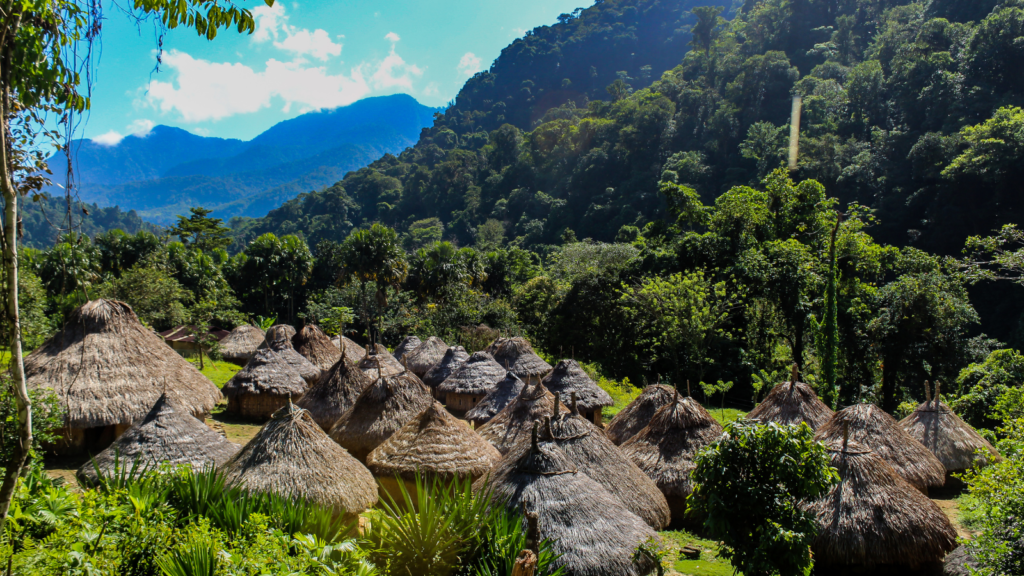
In many countries, official reports have emphasized government-led programs—protected areas, national missions, and environment or forest department schemes—while overlooking community-led conservation, traditional farming and seed systems, local restoration, and civil society research. By activating a new ORT feature, the CBD aims to close that gap, allowing contributors from Indigenous Peoples and Local Communities (IPLCs) to sectors such as agriculture, fisheries and forestry to document how their activities support National Biodiversity Strategies and Action Plans and the KMGBF.
Indigenous representatives have long argued that they protect and manage a significant share of the world’s biodiversity through customary knowledge and local governance, yet their contributions have not been reflected in official mechanisms. Neema Pathak Broome, international policy coordinator at the ICCA Consortium and a member of Kalpavriksh, called the expanded access a welcome step—if communities can report independently.
“Unless there are real attempts to create awareness about this tool, simplify the reporting process and ensure language accessibility, it will still have limited value for indigenous people and local communities,” she said.

Guardrails Against Greenwashing
Civil society groups and experts warn the wider reporting door also brings risks of corporate greenwashing. They say safeguards for equity, verification and meaningful inclusion will be necessary to ensure the new flow of data strengthens accountability rather than diluting it.
Wildlife conservationist Vivek Menon, founder and executive director of the Wildlife Trust of India, underscored the need to broaden responsibility beyond capitals and ministries. Holding governments solely responsible for nature protection is “short-sighted,” he said. “Civil society, including IPLCs, does a major share of the work. If this is captured, a more holistic picture of biodiversity conservation will emerge.”
What Meaningful Inclusion Requires
Indigenous delegates at recent CBD meetings welcomed stronger recognition of rights, while expressing continued frustration over slow progress on funding and on inclusion in monitoring and decision-making. Experts note that the success of the ORT expansion will hinge on:
- Access and awareness: outreach so communities and local authorities know the tool exists and how to use it.
- Language and usability: simplified reporting and translation to lower barriers for IPLCs and grassroots groups.
- Verification and safeguards: processes that validate claims and screen for misleading disclosures.
- Equity in participation: ensuring that community-generated knowledge is recognized and protected, not appropriated.
By opening the ORT beyond government channels, the CBD seeks a fuller, more accurate map of action under the global biodiversity framework—one that captures on-the-ground stewardship, local restoration, and growing private-sector engagement. Whether that promise is realized will depend on how inclusive, accessible and credible the new reporting pipeline becomes—and on the safeguards put in place to ensure it advances equity and accountabilityalongside global goals.
You may also be interested in :
Kunming Biodiversity Fund Launches First major Projects To Support Global Biodiversity Goals