

Our plastic pollution crisis is too big for recycling to fix. It’stime to #actforthefuture #bergerakuntukmasadepan
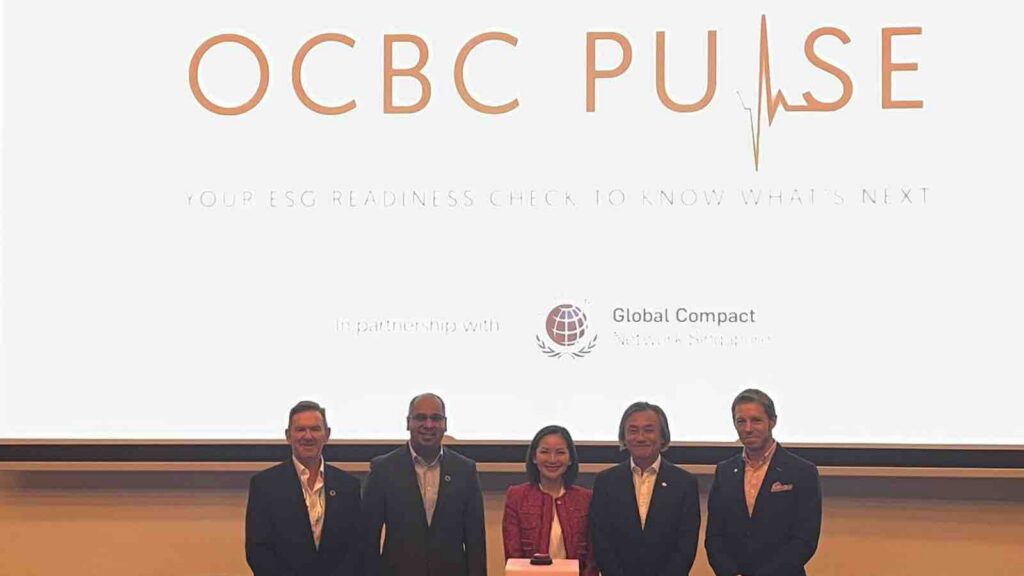
Singapore, 18 June 2026 – UN Global Compact Network Singapore (UNGCNS) today renewed its
call for a more inclusive and commercially viable sustainability transition for micro, small and
medium-sized enterprises (MSMEs), alongside the launch of OCBC PULSE, a new ESG assessment
tool developed in partnership with OCBC.
call for a more inclusive and commercially viable sustainability transition for micro, small and
medium-sized enterprises (MSMEs), alongside the launch of OCBC PULSE, a new ESG assessment
tool developed in partnership with OCBC.
The call comes amid growing recognition that while sustainability expectations continue to
accelerate across supply chains, financial markets and regulatory frameworks, many smaller
businesses remain under-equipped to respond.
The announcement was made at UNGCNS MSME Day x SGX Group: Supply Chain in Focus, held at
the SGX Auditorium in conjunction with the United Nations’ annual observance of MSME Day. The
event brought together more than 150 leaders from government, business, finance and civil
society to examine how sustainability can be translated into practical, commercially viable action
for smaller businesses.
accelerate across supply chains, financial markets and regulatory frameworks, many smaller
businesses remain under-equipped to respond.
The announcement was made at UNGCNS MSME Day x SGX Group: Supply Chain in Focus, held at
the SGX Auditorium in conjunction with the United Nations’ annual observance of MSME Day. The
event brought together more than 150 leaders from government, business, finance and civil
society to examine how sustainability can be translated into practical, commercially viable action
for smaller businesses.
RELEVANT SUSTAINABLE GOALS
Dr. Bicky Bhangu, President of UN Global Compact Network Singapore, said: “Sustainability cannot become a competitive advantage reserved for the largest organisations. It must become an opportunity accessible to all businesses. It must be an opportunity accessible to all businesses. OCBC PULSE, developed in partnership with our member OCBC, is an important step towards helping MSMEs build the capabilities they need to compete, grow and thrive in a rapidly changing business environment.”
Closing the MSME Sustainability Gap
MSMEs power Southeast Asia’s economies but often lack the resources needed to keep pace with growing sustainability expectations. This year’s MSME Day theme, Leave No One Behind, highlighted the need for a transition that is both ambitious and inclusive.
To advance that conversation, UNGCNS brought together leaders from business, government and
finance to explore how sustainability can become a driver of resilience and competitiveness for
MSMEs – not an additional burden.
finance to explore how sustainability can become a driver of resilience and competitiveness for
MSMEs – not an additional burden.
Conversations were delivered in a range of formats, from a panel discussion on “Making Dollars and Sense of Sustainability, to asking anything about “Nature, Money, and the MSME Reality” to a live debate on “Gender Bias or Reverse Bias”, where our social impact experts- who through random side allocation – fought out their best fight, for the fun of the fight, notwithstanding personal positions.
From Ambition to Action
The programme featured keynote speaker Robert Swan OBE, the first person in history to walk to both the North and South Poles, who shared first-hand observations of environmental change and
challenged businesses to view sustainability as a source of resilience, innovation and long-term competitiveness.
challenged businesses to view sustainability as a source of resilience, innovation and long-term competitiveness.
Discussions throughout the day focused on: how sustainability requirements can be implemented without imposing disproportionate burdens on smaller suppliers; how climate and nature-related risks are reshaping business resilience; how sustainable finance can become more accessible; and what forms of collaboration are needed to ensure sustainability remains commercially viable for businesses of all sizes.
Turning Commitment into Action
As part of its commitment to supporting MSMEs on their sustainability journeys, UNGCNS and OCBC announced the launch of OCBC PULSE, a free online ESG assessment tool designed to help MSMEs better understand the ESG performance of their MSME suppliers.
The platform is available free of charge to MSMEs across OCBC’s core markets of Singapore, Malaysia, Indonesia and Hong Kong.
Ms Elaine Heng, Head of Global Commercial Banking, OCBC, said: “OCBC PULSE is a meaningful step forward in making sustainability more accessible for SMEs. Available at no cost and being easy to use, it lowers the cost and complexity for SMEs to start taking action to track and improve their ESG performance, and enhances their access to financing with us. This is particularly important as many SMEs are part of larger corporate value chains, where expectations around supply chain ESG transparency are rising. OCBC PULSE helps SMEs seize sustainable growth opportunities and stay competitive by meeting these evolving requirements. It also enables large companies to track their suppliers’ ESG readiness, identify gaps and drive collective progress. This reflects our broader commitment to go beyond financing by providing SMEs practical tools, insights and advisory support to make sustainability more actionable.”
A Call to Collective Action
The launch of OCBC PULSE builds on a growing portfolio of initiatives led by UNGCNS to strengthen sustainability capability across the business ecosystem, including the enhanced LowCarbonSG Programme, the Global Biodiversity Insurance Study and ongoing collaboration with the Singapore Business Federation on the Singapore Emissions Factors Registry.
David Fogarty, CEO, UN Global Compact Network Singapore, said: “For many years, sustainability conversations have focused on what businesses should do. Increasingly, the question is how we help them do it. The next phase of sustainability leadership is not about raising ambition alone. It is about building capability at scale and creating practical pathways that enable businesses of every size to participate meaningfully in the transition to a sustainable economy.”
As businesses race towards the 2030 deadline for the Sustainable Development Goals, the message from UNGCNS MSME Day was clear: sustainability progress will depend not only on the commitments of large corporations, but on the ability of MSMEs to participate meaningfully in the transition.
