

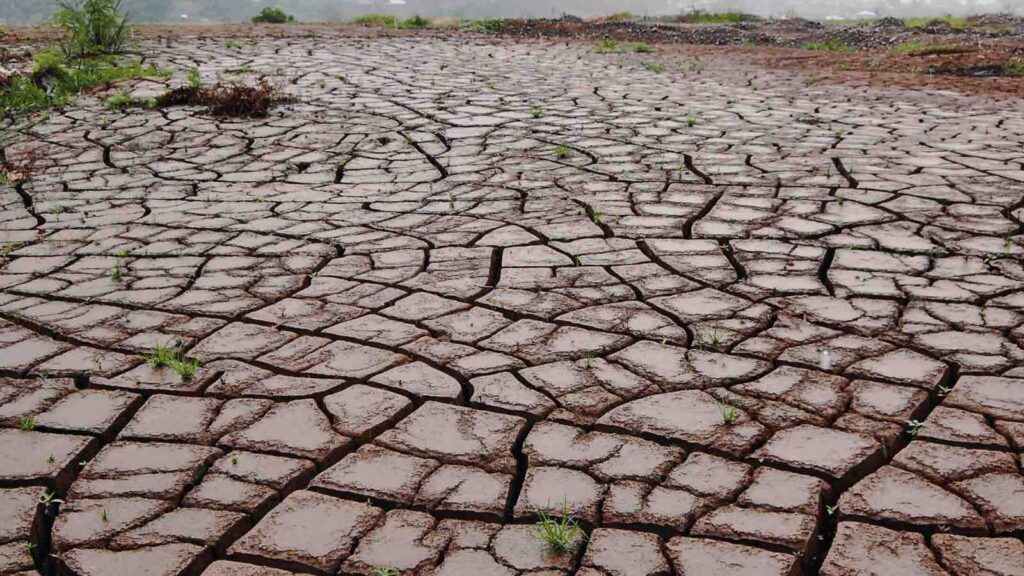

The UN report says irreversible damage to rivers, aquifers and ecosystems has pushed many regions beyond recovery, demanding a reset of the global water agenda.
UNITED NATIONS, New York — The world is no longer merely facing a water crisis. It has entered what United Nations scientists are formally calling an era of Global Water Bankruptcy — a post-crisis condition in which natural water systems have been so depleted and damaged that many can no longer return to historic baselines.
That is the central finding of a sweeping new report, Global Water Bankruptcy: Living Beyond Our Hydrological Means in the Post-Crisis Era, released on Jan 20 by the United Nations University. Drawing on global datasets, satellite observations and peer-reviewed research, the report argues that familiar terms like “water stress” and “water crisis” no longer capture the scale or permanence of today’s water reality for billions of people.
“This report tells an uncomfortable truth: many regions are living beyond their hydrological means, and many critical water systems are already bankrupt,” said Kaveh Madani, the report’s lead author and director of the UNU Institute for Water, Environment and Health.
RELEVANT SUSTAINABLE GOALS
From Water Stress to Water Bankruptcy
The report introduces “water bankruptcy” as a distinct scientific diagnosis. Unlike water stress, which describes high but reversible pressure, or a water crisis, which implies a temporary shock, water bankruptcy refers to a persistent state of failure.
It is defined as long-term over-withdrawal from surface and groundwater beyond renewable inflows and safe depletion limits, combined with irreversible or prohibitively costly loss of water-related natural capital.
Expressed in financial terms, the report says many societies have not only overspent their annual water “income” from rivers, rainfall and snowpack, but have also drained their long-term “savings” — aquifers, glaciers, wetlands and lakes.
The result has been compacted aquifers, sinking cities, vanished wetlands, disappearing lakes and permanent biodiversity loss.

A Planet Living Beyond Its Water Means
The scale of change, the report shows, is stark and overwhelmingly human-driven:
- More than 50 per cent of the world’s large lakes have lost water since the early 1990s, affecting about a quarter of humanity that depends on them directly.
- Around 70 per cent of major aquifers show long-term decline, while 50 per cent of domestic water and more than 40 per cent of irrigation water now come from groundwater.
- Nearly 410 million hectares of natural wetlands — almost the size of the European Union — have been erased over the past five decades.
- In several regions, more than 30 per cent of glacier mass has been lost since 1970, with entire mountain ranges expected to lose functional glaciers within decades.
In that sense, the report argues, humanity is facing a form of anthropogenic drought — water scarcity driven less by natural variability than by over-allocation, pollution, land degradation, deforestation and climate change.
Hotspots of Risk and Global Interdependence
While not every basin or country is water-bankrupt, enough critical systems have crossed irreversible thresholds to alter the global risk landscape, the report says.
It highlights particular hotspots:
- In the Middle East and North Africa, water stress intersects with climate vulnerability, energy-intensive desalination and complex political economies.
- In South Asia, groundwater-dependent agriculture and rapid urbanisation have driven chronic declines in water tables and land subsidence.
- In the American Southwest, the Colorado River has become a symbol of over-promised and over-allocated water.

Because food systems, trade, migration and climate feedbacks are tightly interconnected, the consequences of water bankruptcy travel far beyond local basins.
“When water scarcity undermines farming in one region, the effects ripple through global markets, political stability and food security elsewhere,” Madani said.
A Justice and Security Challenge
The report stresses that water bankruptcy is not only a hydrological problem, but also a justice and security issue. Its burdens fall disproportionately on smallholder farmers, Indigenous Peoples, low-income urban residents, women and youth, while the benefits of overuse have often accrued to more powerful actors.
“Water bankruptcy is becoming a driver of fragility, displacement and conflict,” said Tshilidzi Marwala, the UN Under-Secretary-General and Rector of United Nations University.
Managing it fairly, he said, is now central to maintaining peace, stability and social cohesion
From Crisis Management to Bankruptcy Management
The report calls for a fundamental reset of the global water agenda, warning that current approaches — focused largely on drinking water, sanitation and incremental efficiency gains — are no longer fit for purpose in many regions.
Instead, it urges governments to shift from crisis management to bankruptcy management, prioritising the prevention of further irreversible damage, rebalancing water rights and expectations to match degraded carrying capacity, and supporting just transitions for communities whose livelihoods must change.
It also calls for water to be elevated across climate, biodiversity and desertification negotiations, arguing that investment in water can deliver co-benefits across all three Rio Conventions.
Upcoming milestones — including the 2026 and 2028 UN Water Conferences, the end of the Water Action Decade in 2028 and the 2030 Sustainable Development Goal deadline — offer critical opportunities to act, the report says.
“Declaring bankruptcy is not about giving up,” Madani said. “It’s about starting fresh. By acknowledging the reality of water bankruptcy, we can finally make the hard choices that will protect people, economies and ecosystems.”
You may also be interested in :
Water and Sanitation: The Silent Emergency Holding Back Global Development