
100×100, formerly known as Wavemaker Impact, has launched a second fund targeting $100 million — and plans to co-found 50 new companies to cut emissions across Southeast Asia and India.
SINGAPORE — For most venture capital firms, investing means writing a check and waiting. For 100×100, a Singapore-based climate company builder, it means something considerably more hands-on: sitting alongside an entrepreneur from the earliest days and building a company from the ground up, targeting both profit and planetary impact in equal measure.
RELEVANT SUSTAINABLE GOALS
On Tuesday, the firm announced the launch of Fund II, a new vehicle with a target of US$100 million. It is the largest fundraise in the firm’s short history — and the most ambitious. 100×100 said it plans to use the capital to co-found 50 new climate companies across Southeast Asia and India, focusing on sectors that together account for an outsize share of global emissions: energy, agriculture, manufacturing, and digital infrastructure.
The announcement marks a significant moment in the regional climate investment landscape, arriving as Southeast Asia’s share of venture funding flowing into climate technology has more than tripled in four years — rising from 3.2 percent in 2019 to 9.5 percent in 2023.

From Wavemaker Impact to 100×100: A Rebrand With Purpose
The firm was previously known as Wavemaker Impact, a name that carried some recognition in regional climate circles. The rebranding to 100×100 is not merely cosmetic. The new name encodes the firm’s core investment thesis: every company it builds must have the potential to abate 100 million metric tons of carbon dioxide equivalent and reach US$100 million in annual revenue. No company enters the portfolio unless it can credibly aim for both milestones.
“We believe that solving the world’s most pressing emissions challenges also represents a significant economic opportunity,” said Marie Cheong, a Founding Partner at 100×100. “Our name reflects our conviction that profit and carbon reduction are not a trade-off, but a multiplier. With Fund II, we are doubling down on a demonstrated strategy with a platform that is ready-to-go.”
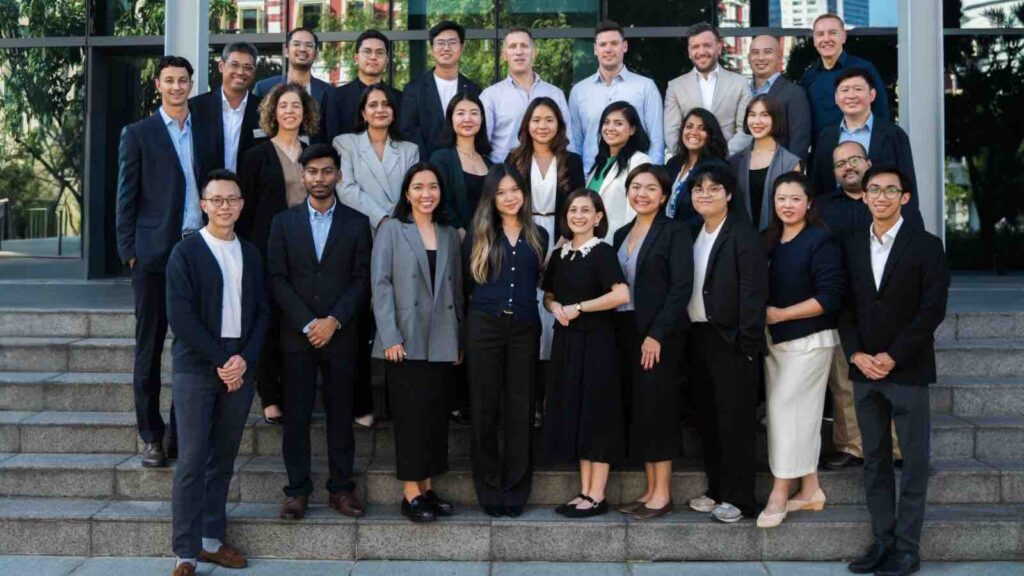
The firm’s six partners — Guillem Segarra, Marie Cheong, Paul Lam Wai, Quentin Vaquette, Steve Melhuish, and Subhadeep Sanyal — bring combined experience across venture creation, climate technology, and institutional investing throughout Asia. Collectively, the team has built 58 companies, invested in 73 climate businesses, and completed 19 exits.
A Different Kind of Climate Investor
Most venture capital funds find a promising company, negotiate a stake, and provide capital. 100×100 operates differently. Rather than funding existing startups, it works alongside experienced founders from the very beginning — identifying gaps in high-emissions sectors and then deliberately constructing companies designed to fill them.
The firm describes this as a structured venture-building process. Each year, it reviews more than 1,000 founder profiles to identify entrepreneurs with the expertise, track record, and temperament to build a business from scratch in the sectors it targets. The goal, the firm says, is to build companies that deliver what it calls a “green discount” — meaning they must be cheaper or economically more attractive than their high-emissions alternatives, not just greener.
This approach also means 100×100 holds significantly higher equity stakes than typical venture capital funds. In exchange, it provides operational support, not just money. Portfolio companies, the firm says, operate at 1.5 times greater capital efficiency than the broader market.
Fund I: 27 Companies, Eight Countries, and a 550% Growth Story
The pitch for Fund II rests on what Fund I has delivered. That first fund, which launched in 2022, hit its hard cap of US$60 million in 2023 and has since co-founded 27 companies across eight countries. The firm says a majority of those companies generated revenue within six months of launch — a timeline that would be unusually fast even by the standards of traditional startup building.
The fund’s portfolio survival rate is described as nearly double the median for venture capital, a metric that speaks to the firm’s hands-on model. Its Fund I portfolio companies have collectively raised over US$28 million from 16 external investors.
Perhaps the most striking example from the portfolio is Rize, a company that reduces methane emissions in rice cultivation while working with smallholder rice farmers. In 2025, Rize generated US$11 million in revenue — a figure that represented a 550 percent year-on-year growth rate. The company also claims to have improved the livelihoods of more than 40,000 farmers.
Another portfolio company, Helios, a residential solar provider operating in the Philippines, has grown at more than 40 percent month-on-month for 12 consecutive months.
Who Is Backing Fund II
Fund II has attracted institutional, strategic, and development finance backing. Confirmed investors include the Singapore Economic Development Board, the Grantham Foundation for the Protection of the Environment, and British International Investment, the UK government’s development finance institution.
The participation of these three backers is notable. The Singapore Economic Development Board’s involvement signals alignment with Singapore’s broader ambition to position itself as a hub for regional climate finance. The Grantham Foundation is one of the world’s most prominent philanthropic funders of climate solutions research and action. British International Investment, meanwhile, has a specific mandate to back businesses that generate development impact across Asia and Africa.
Fund I attracted a similarly varied group, including the US Development Finance Corporation, Triple Jump, Qarlbo Energy, JG Digital Equity Ventures, Kajima Corporation, and Beacon Ventures.
A Market That Is Finally Moving
The launch arrives against a backdrop of rapid expansion in regional climate investment. Since 2020, nearly 30 climate-focused funds have collectively raised more than US$830 million, with the majority of that capital allocated to Southeast Asia. Climate tech’s share of total Southeast Asian venture funding nearly tripled between 2019 and 2023, rising from 3.2 percent to 9.5 percent.
The firm’s own framing of the moment is blunt. Energy, food, materials, and supply chains are being reshaped by rising demand, geopolitical fragmentation, resource constraints, and the pressure on governments to pursue national self-sufficiency. Against that backdrop, 100×100 argues, the gap between the technical readiness of low-emissions technologies and their actual commercial deployment remains wide — and closing that gap is precisely where it intends to operate.
The firm’s portfolio currently spans land use, agriculture, energy, industry, materials, and buildings across Southeast Asia and India — a breadth that reflects both the geographic ambition of Fund II and the firm’s conviction that climate solutions must be economically attractive to achieve scale at the speed the science demands.
What This Means for the Region
For a region that simultaneously ranks among the world’s fastest-growing sources of greenhouse gas emissions and its most climate-vulnerable geographies, the arrival of a well-capitalised, operationally intensive climate company builder carries real weight.
Southeast Asia’s smallholder farmers, fishing communities, and industrial workers are already absorbing the costs of climate disruption — through unpredictable monsoons, ocean warming, and rising sea levels. Solutions that reach those communities while simultaneously building viable businesses represent a double dividend that development finance institutions have been chasing for years.
Whether 100×100 can replicate the results of Fund I across 50 new companies — a significantly larger and faster build — will be one of the more consequential tests for the regional climate investment thesis over the coming years.
You may also be interested in :
Southeast Asians Push For Faster Coal Phase-Out As Climate Concerns Intensify, Survey Finds