

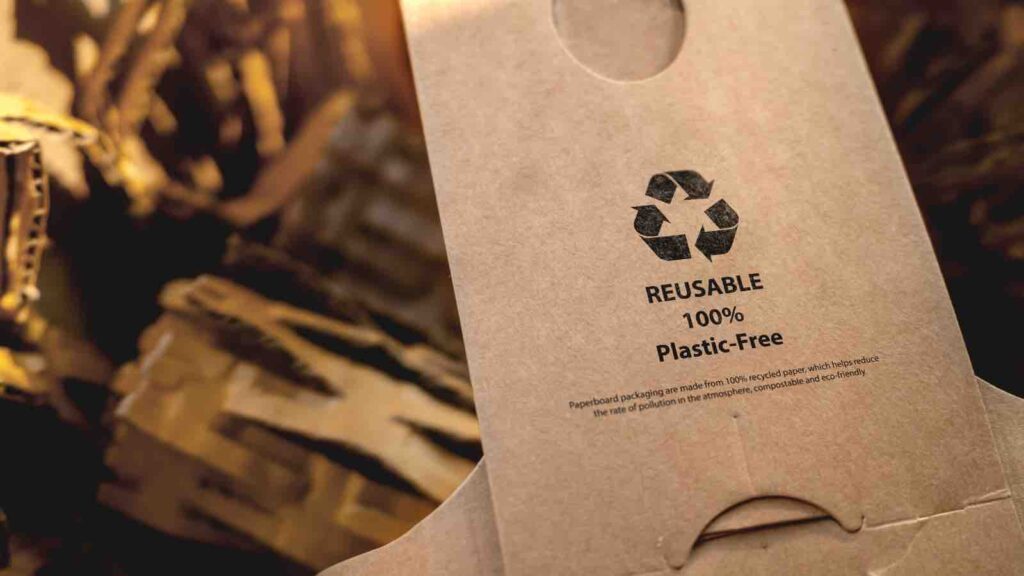

Globally, reuse systems have received just 4 per cent of circular economy investment for plastics between 2018 and 2023, compared with 82 per cent directed toward recycling and recovery, according to the Circulate Initiative.
Singapore has taken a new step toward reducing waste and building a more resilient economy with the launch of the Singapore Reuse Coalition.
The coalition, a newly formed non-profit, aims to accelerate the adoption of reuse systems across the city-state — focusing on returnable, refillable, repair, remanufacture and repurpose models.
Its launch comes as Singapore faces rising waste volumes and a slower-than-expected transition toward a circular economy.
RELEVANT SUSTAINABLE GOALS
Rising Costs and Global Pressures Drive Urgency
The initiative emerges against a backdrop of increasing packaging costs linked to the Iran war, which has disrupted supply chains and highlighted the risks of dependence on single-use materials.
“Reuse is no longer just about waste reduction and circularity — it is a practical hedge against cost shocks,” said Sean Lam, a founding member of the coalition.
The group positions reuse not only as an environmental solution but also as a strategy for economic resilience.
The coalition brings together a diverse group of sustainability leaders and entrepreneurs, including:
- Nuryanee Anisah of textile upcycling firm Commenhers
- Jonathan Tostevin of reusable container brand Muuse
- Lynn Kee of leather aftercare firm Dr Bags
- Lionel Dorai of Zero Waste SG
Together, they aim to strengthen collaboration across industries and push for systemic changes in how resources are used and reused

A Push to Rebalance the Circular Economy
The coalition is currently developing a white paper to map Singapore’s reuse landscape, identify best practices and address structural gaps.
Globally, reuse systems have received just 4 per cent of circular economy investment for plastics between 2018 and 2023, compared with 82 per cent directed toward recycling and recovery, according to the Circulate Initiative.
“Much of the circular economy conversation is still centred on recycling, which continues to attract the bulk of funding. Reuse needs a stronger voice to grow,” Lam said.
At the Cities: Possibilities conference in Singapore last November, Tostevin argued that reuse should be treated as essential infrastructure rather than a niche consumer habit
“There’s a reason we say ‘reduce, reuse, recycle’ — reuse comes before recycling,” he said. “But we prioritise what we build for, and right now, infrastructure investment is the missing piece.”
This perspective reflects a broader shift toward embedding reuse into systems, rather than relying solely on individual behaviour change.
Policy Momentum and Public Awareness Efforts
The coalition’s launch follows growing policy attention. Five months earlier, Poh Li San called for stronger measures to reduce single-use plastics and promote bring-your-own (BYO) container and cup schemes in food establishments.
Public campaigns led by Zero Waste SG have supported the BYO movement, although progress slowed during the Covid-19 pandemic when hygiene concerns led many retailers to suspend reusable container policies.
Efforts to revive the movement are now underway.
Despite its advantages, reuse faces persistent challenges in Singapore.
The city-state generates some of the highest waste volumes per capita globally, while its domestic recycling rate fell to a record low last year. At the same time, convenience-driven consumption habits continue to limit widespread adoption of reuse systems.
Industry leaders have also highlighted operational challenges. In October, Venisa Chu noted that refill stations can sometimes lead to additional waste if products expire before use.
Experts say stronger incentives and infrastructure will be key to scaling reuse.
Ideas include tools such as publicly accessible maps of water refill stations — similar to one developed by a student in 2024 — to encourage reduced reliance on bottled water. Singapore ranks among the highest globally in per capita bottled water consumption, according to the United Nations.
The coalition’s formation also coincides with regional shifts. Taiwan has recently expanded reuse initiatives following supply disruptions to petrochemical feedstocks linked to the Middle East conflict, which triggered panic buying of plastic bags.
