

Blending recycling innovation with women’s empowerment, the company positions waste as both an economic and social opportunity.
JAKARTA — As Indonesia continues to grapple with mounting waste and the informal conditions faced by millions of waste workers, a local startup has drawn international attention for a model that seeks to address both challenges at once.
Rezycology Indonesia has secured fresh funding of US$200,000, or about Rp 3.3 billion, from the Canadian government and Singapore-based impact investor Impact Investment Exchange (IIX). The funding comes with technical assistance aimed at helping the company scale its operations and deepen its social impact.
The investment was channelled through the Impact Investment Readiness in Indonesia (IIRI) programme, a joint initiative focused on strengthening businesses with a core mission of women’s empowerment.
RELEVANT SUSTAINABLE GOALS
More Than Capital: A Growth Package
Unlike conventional venture funding, the support extended to Rezycology combines capital with business and financial capacity-building. The programme provides technical assistance, investment readiness support and access to networks of investors and financial institutions.
“This is not just funding, but also support for strengthening our business capacity,” said Octalia Stefani, Rezycology’s chief executive officer.
The IIRI programme is a collaboration between Global Affairs Canada and IIX. Its goal is to help Indonesian social enterprises grow, access capital and expand their business opportunities while maintaining a strong focus on social outcomes.

Tackling Waste and Informality at the Same Time
Rezycology’s business model targets two persistent problems in Indonesia: inefficient waste management and unstable incomes among waste collectors, many of whom work informally.
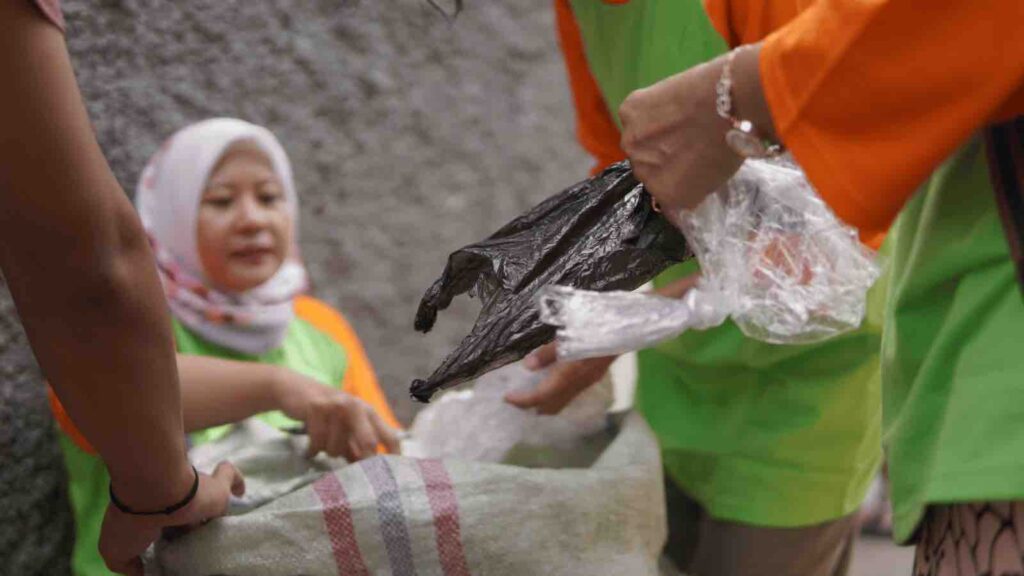
The company collects waste from scavengers and aggregators, processing it into raw materials suitable for recycling factories. It also offers corporate waste management services, including digitalisation of waste handling, and operates a shared ownership programme for recycling facilities.
Indonesia’s waste management system relies heavily on an estimated 3.7 million waste collectors and aggregators. Despite their critical role, most operate outside formal labour structures, with limited price transparency and income security.
A Digital Marketplace for Waste
One of Rezycology’s distinguishing features is its digital marketplace for buying and selling waste materials. Through a dedicated application, waste collectors can track market prices and monitor the quality of materials they collect.
Lower contamination levels translate directly into higher prices. By linking quality to income, the system incentivises better waste sorting while helping collectors earn more stable and competitive returns.
“If contamination can be reduced, prices go up, margins improve and income becomes more stable,” Stefani said. “That’s how waste collection can gradually become more viable and more formal.”
Women at the Centre of the Model
Women’s empowerment is a central focus of the funding. Many actors in the waste collection and processing chain are women working in precarious conditions, often with limited access to training, capital or formal employment pathways.
Through business mentoring and technical support, the programme aims to strengthen women’s roles within the waste value chain while improving overall efficiency and environmental outcomes.
Why Impact Investors Are Paying Attention
IIX specialises in impact investing — directing capital toward businesses that generate measurable social and environmental benefits. For investors, Rezycology represents a convergence of priorities: environmental sustainability, income stability for informal workers and a technology-driven business model.
With the new funding and technical support, Rezycology plans to expand its services, deepen collaboration with waste collectors and aggregators, and accelerate its contribution to Indonesia’s recycling ecosystem.
At a time when waste has become one of Indonesia’s most pressing environmental challenges, the company’s progress highlights how locally rooted innovation, supported by global capital, can help turn systemic problems into shared economic opportunities.
You may also be interested in :
US-ASEAN Business Council Urges Regional Alignment to Advance Southeast Asia’s Circular Economy