Over the past 20 years, China has combined manufacturing might with industrial policy to dominate solar power and other climate technologies. In some cases — electric vehicles in the United States, for instance — its lead is so significant that punitive tariffs are needed to prevent the country’s manufacturers from threatening domestic rivals.
Now it appears that China is deploying the same playbook in a completely different area of sustainability.
The world’s largest agricultural traders source and sell staggering quantities of corn, soy and other “soft” commodities, generating equally extraordinary quantities of emissions in the process. Among the five agricultural behemoths seen as the sector’s key competitors, one has recently emerged as the group’s sustainability leader: COFCO International, the trading arm of China’s largest food and agriculture business.
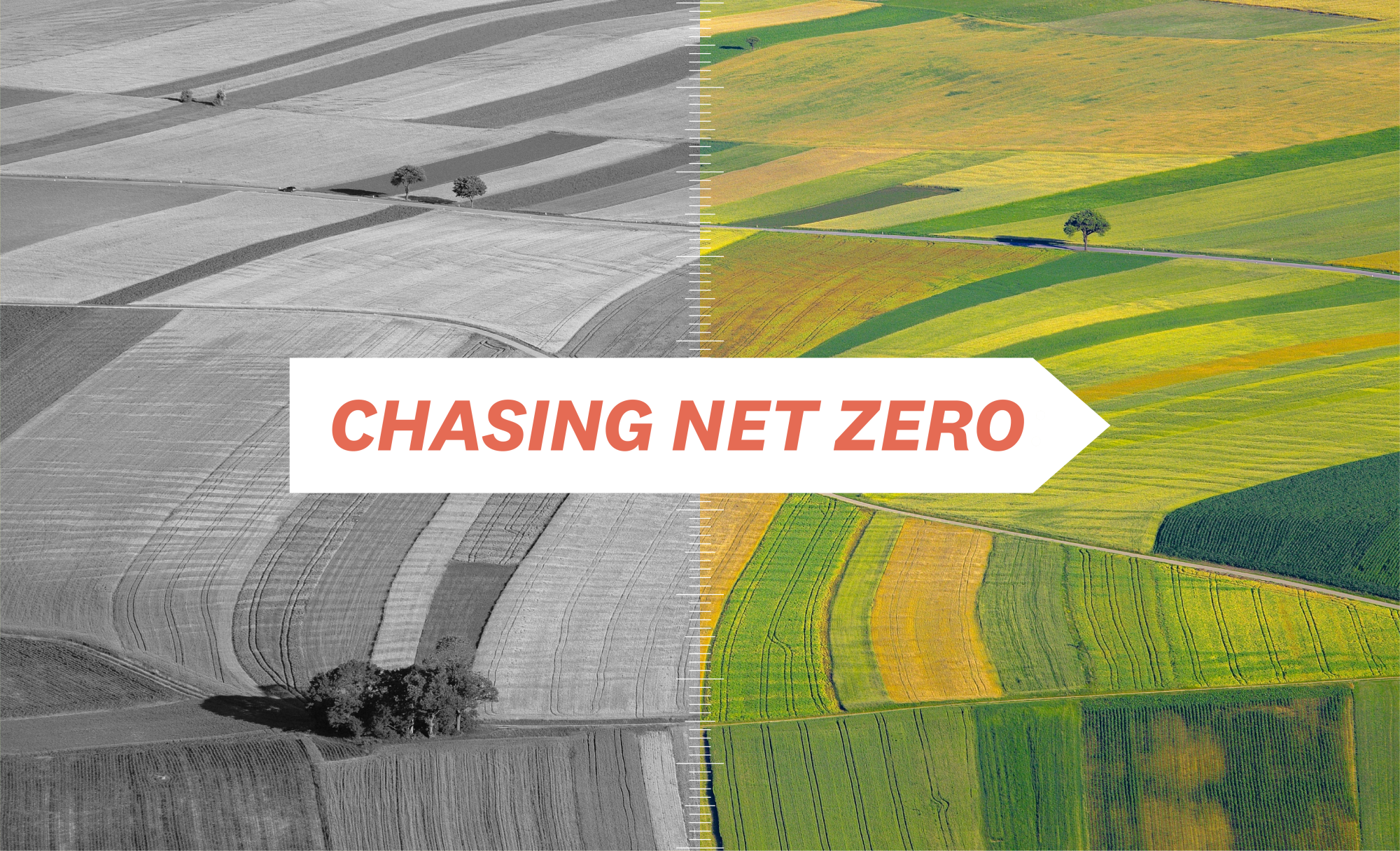
The latest installment in Chasing Net Zero, our series of in-depth assessments of progress toward emissions goals, reveals that the state-owned company has reported meaningful progress toward its emissions targets for corn and soy, which, unlike its peers, have been validated under recent and more demanding rules for the sector. It’s also placed sustainability at the heart of its corporate strategy by linking loans worth more than $1 billion to its emissions targets.
“I think they’re really an outlier,” said Leah Samberg, a lead scientist at the nonprofit Accountability Framework initiative who has assessed the strategies of the major agribusinesses. “They’re definitely pretty out in front on this.”
Meanwhile, none of COFCO’s better-known rivals — the “ABCD” group of Archer Daniels Midland, Bunge, Cargill and Louis Dreyfus — has demonstrated unambiguous evidence of emission reductions. What’s more, two have quietly walked away from commitments that were validated by the Science Based Targets initiative (SBTi), seen by many as the key standard-setter for emissions goals.
COFCO’s progress, if maintained, could be good news for global emissions. But the implications for its peers are more troubling. If China steals a lead in sustainable agriculture, would that once again be to the detriment of Western rivals?
The daunting task of decarbonizing food
The scale of the global food system is dizzying: A single large agribusiness might trade a hundred million metric tons of commodities every year — enough to fill around 4 million shipping containers.
The companies can pull multiple levers to reduce the emissions generated by this trade, but none is more important than ending the conversion of undeveloped ecosystems to agriculture. Farmers often burn the vegetation they clear to make space for crops, sending stored carbon up in smoke. Carbon held in the soil is also released. The combined impact is enormous: In 2023, emissions from deforestation totaled 2.8 billion metric tons of carbon dioxide equivalent (tCO2e). And that doesn’t include emissions from the conversion of grasslands and other ecosystems, which also releases stored carbon.
Ag traders can help to end this practice by refusing to buy from farms on recently cleared land. But that can be difficult: Soft commodities are often sourced from a web of suppliers and intermediaries spread across some of the more remote regions of the world. In 2025, for instance, Bunge used satellite data to monitor for deforestation on more than 100,000 farms across 220,000 square miles in Brazil, Argentina and Paraguay. Such efforts have helped slow but not eliminate land conversion, according to nonprofits who track the sector.
Creating target-setting and carbon accounting rules for what one expert called this “bugbear” of a sector was so challenging that the SBTi did not require companies to account for deforestation until 2022. Other key issues were only resolved earlier this year when the Greenhouse Gas Protocol updated its guidance on land-sector emissions and removals.
The incumbents are largely stalled
According to the big traders, these challenges explain their lackluster progress in reducing emissions. Critics in environmental groups add other causes, notably a prioritization of profits over sustainability investments. Whatever the reason, the data paints a gloomy picture.
ADM, for instance, remains committed to its 2022 pledge to cut Scope 3 emissions — those from indirect sources, including its supply chain — by 25 percent by 2030. But it reversed course on its plan to seek SBTi validation for that goal, and its footprint has shrunk just 2 percent since 2021. At Louis Dreyfus, the company’s footprint has grown 6 percent since its baseline year of 2022.
Only Bunge appears to be on track to hit its SBTi-validated goal, but it is hard to know what to make of that claim: The company’s footprint almost doubled in 2025 following a merger; the year prior, its emissions were unchanged relative to 2020. The company declined to provide more information.
The final ABCD company, Cargill, has long been the subject of attacks from environmental groups, partly because of what they characterize as inadequate action on deforestation. Its footprint — 235 million tCO2e in 2024, up 40 percent since 2017 — was until the Bunge merger by far the largest of the group. (The company said the leap is largely due to changes in accounting methodology and data collection.) And while Cargill has an SBTi-validated Scope 3 goal, the company told Trellis it is no longer working toward that target.
Earlier this year, Cargill set new targets that a company spokesperson described as more ambitious: an absolute Scope 3 cut of 25 percent between 2020 and 2035. But the pace of reductions enshrined in the new target would have been too slow to qualify for SBTi approval. According to the initiative’s rules, Cargill would have had to commit to a Scope 3 reduction of around 40 percent over the same period, said Greg Downing, a senior director for sustainability at the company.
Hard-to-abate emissions sources such as fertilizers are one stumbling block, Downing added. The potent greenhouse gas nitrous oxide is released after fertilizer is applied to crops, for instance. These emissions can be cut by more judicious use of fertilizer and other methods, but those tactics only get you so far. “There’s a certain amount of nitrogen that you need to produce the amount of food that we need as a global population,” Downing argued. “And there just aren’t the technologies yet to reduce the volume that ends up as nitrous oxide emissions.”
Chinese exceptionalism
COFCO reached rough parity
Read More