
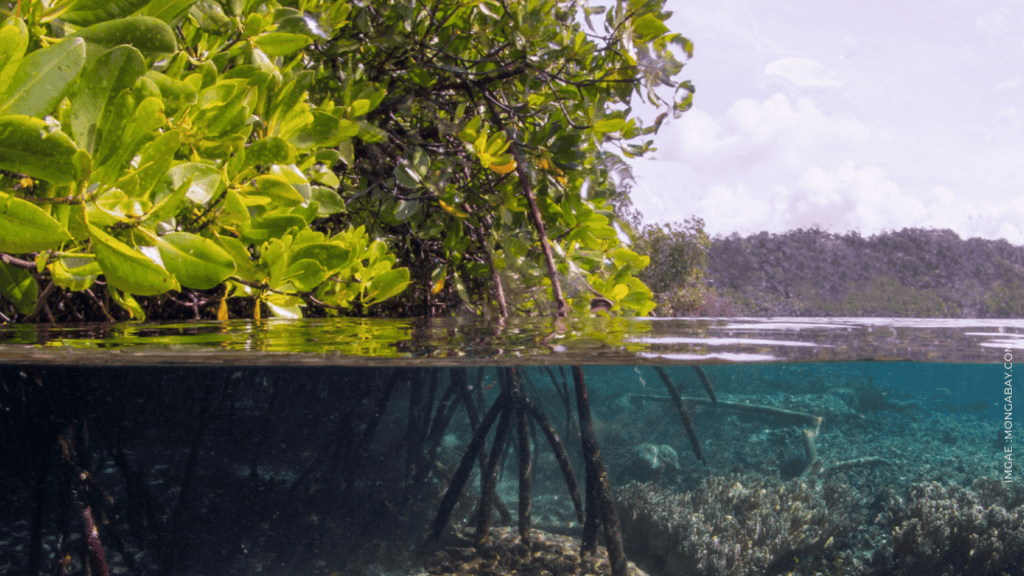

Located across four villages in North Sumatra, the project seeks to restore and conserve 142.82 hectares of degraded mangrove forest. Though microscale in size, the initiative carries measurable climate potential.
Gold Standard has issued its first Design Certification for a blue carbon project, marking a new chapter for nature-based climate finance. The certification was granted to the Global Mangrove Trust Blue Carbon Restoration Project – Sumatra 1 in Indonesia.
The announcement was made Wednesday, Feb. 25, 2026, through Gold Standard’s official social media channels.
The decision signals a shift in how carbon markets evaluate coastal ecosystem restoration, particularly mangrove forests, which are increasingly viewed as critical tools in the fight against climate change.
RELEVANT SUSTAINABLE GOALS
A Microscale Project With Measurable Impact
Located across four villages in North Sumatra, the project seeks to restore and conserve 142.82 hectares of degraded mangrove forest. Though microscale in size, the initiative carries measurable climate potential.
During its crediting period, the project is estimated to generate carbon removals of around 6,000 tonnes of carbon dioxide equivalent per year.
Mangrove ecosystems are widely recognized as one of the most effective nature-based climate solutions. They have the capacity to sequester and store significant amounts of carbon while supporting biodiversity, protecting coastlines and sustaining coastal livelihoods.
By focusing on restoration in targeted areas, the Sumatra 1 project aims to combine environmental recovery with tangible climate mitigation outcomes.

What Design Certification Means
Design Certification is an early-stage approval under the Gold Standard for the Global Goals framework. It confirms that a project’s design meets requirements for scientific robustness, transparency and integrity.
The certification assesses methodology, emissions accounting, monitoring plans and environmental and social safeguards.
Importantly, the designation does not authorize the issuance of carbon credits. Projects must still undergo validation, verification and issuance processes before credits can be generated.
In a carbon market increasingly scrutinized for credibility, early-stage certification offers assurance that foundational elements meet established standards before financial claims are made.
Local Implementation, National Ambition
The Sumatra 1 project is implemented by the local non-governmental organization Yayasan Gajah Sumatra, known as Yagasu, and managed by Global Mangrove Trust.
Global Mangrove Trust is also leading the development of a country-wide Gold Standard Programme of Activities designed to scale up mangrove restoration across Indonesia.
This broader ambition reflects growing recognition that ecosystem restoration must move beyond isolated projects to achieve meaningful climate impact.
High-Integrity Blue Carbon in Practice
Gold Standard described the project as an example of high-integrity blue carbon in practice. The approach combines science-based restoration, prioritization of native mangrove species and close collaboration with local communities.
For investors and carbon market participants, integrity has become a central concern. As demand rises for projects with measurable climate impact and strong environmental and social safeguards, certification frameworks are under pressure to ensure credibility.
The milestone is widely seen as a significant step in expanding credible nature-based finance.
Why Mangroves Matter in the Climate Transition
Mangroves do more than capture carbon. They shield coastlines from storm surges, reduce erosion and provide habitat for marine and terrestrial species. For coastal communities, they can also underpin livelihoods tied to fisheries and ecosystem services.
By formally recognizing a blue carbon project under its Design Certification process, Gold Standard has set a precedent for how mangrove restoration can be integrated into regulated carbon frameworks.
As carbon markets evolve and scrutiny intensifies, projects that demonstrate measurable climate benefits alongside environmental and social safeguards are likely to define the next phase of nature-based climate finance.
The Sumatra 1 certification may be microscale in geography, but it signals a broader shift in how blue carbon is assessed, financed and trusted.
You may also be interested in :
The Blue Economy’s Triple Dividend: Why Ocean Finance Is A Climate, Social, and Financial Imperative