Fragile States Face Climate Crisis With Less Than 10% of Global Climate Finance

In regions where climate change exacerbates resource scarcity and displacement, the lack of funding has real-world consequences. 
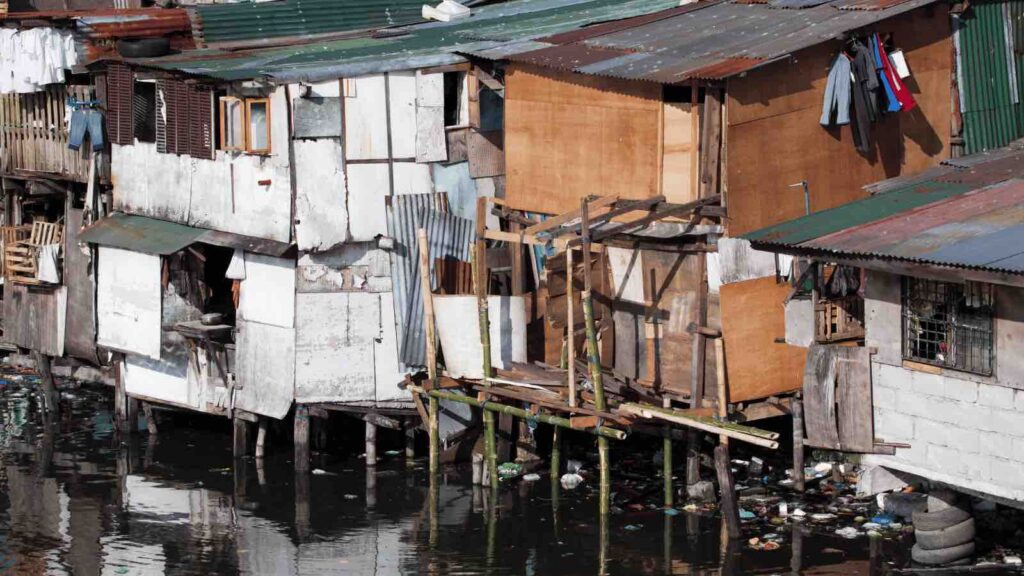
BERLIN — The world’s most fragile and conflict-affected nations — often on the front lines of climate change — are being left behind. Despite bearing the brunt of climate-related disasters, these countries receive less than 10% of global climate finance, according to experts speaking at this week’s Berlin Climate and Security Conference.

RELEVANT SUSTAINABLE GOALS 

The growing disparity, they warn, is not only unjust — it’s dangerous. Undermining climate resilience in fragile states threatens to unravel peace and security gains, exposing global systems to cascading instability.

“The countries most vulnerable to climate change are often the least responsible for it and the least likely to receive the financing they desperately need,”

Triple Threat: Climate, Conflict, and Financial Injustice

Fragile states face what experts call a triple challenge — high climate risk, active conflict, and limited financial support. Public finance is shrinking. Private finance fills only a sliver of the gap — just 3% of the adaptation funding needed.
“The very conditions that make investment urgent also make investors nervous,” said Martin Raiser, senior representative for European economic cooperation at the World Bank. “Traditional finance likes stability, data, and predictability.”
In regions where climate change exacerbates resource scarcity and displacement, the lack of funding has real-world consequences. Of the 70 countries ranked as highly vulnerable to climate impacts, 32 received less than $1 per person in adaptation or disaster risk reduction finance, according to a 2022 report by the International Federation of Red Cross and Red Crescent Societies.
 
A 2024 World Bank analysis found no meaningful correlation between how vulnerable a country is to climate change and how much adaptation funding it receives. Instead, funding correlates more with how well a country can manage and absorb the money — not how desperately it needs it.

What’s Missing? Adaptation Finance and Local Access

At the core of the problem is adaptation: the kind of climate action that protects people from floods, droughts, and displacement. Unlike mitigation — where returns can come in the form of clean energy — adaptation has no clear profit path.
“There are no profits to be found in adaptation because it should be based on the needs of the populations, not profit-based,” said Mariana Paoli, global advocacy lead at Christian Aid.
Adaptation is expected to be a central debate at COP30, where global negotiators will decide on adaptation indicators and possibly commit to new finance targets. But so far, most adaptation efforts remain underfunded, disconnected from local needs, or delayed by bureaucracy.

“It should be what we can build, and specifically what can we build on?”

A New Approach: Localized, Trust-Based, and Resilient

The Green Climate Fund, which has an $18 billion portfolio across 133 countries, is attempting to bypass traditional finance intermediaries and fund local and national entities directly. It also dedicates $500 million every four years for new adaptation projects.
We’re sure the money is making a difference in the hardest-to-reach communities,” said Speck.
But financing is only one side of the coin. Experts say trust, cooperation, and local capacity must be built alongside infrastructure.

“You can’t build climate facilities without social trust,”

In fragile contexts, that trust is often scarce, but essential. Wieland-Karimi emphasized that “innovative finance in fragile states is about making finance fit the context, not the other way around.”
 
She added, “Resilience is always cheaper than recovery. And peace is always cheapest in the end.”
As climate threats escalate and more regions tip into fragility, the cost of inaction is rising. Experts argue that redirecting climate finance toward fragile states isn’t just moral — it’s strategic. Investing in resilience can help stabilize regions before crises escalate and spread.
 
With the countdown to COP30 underway, all eyes will be on global leaders to prioritize adaptation funding — not only for the climate’s sake but for the fragile peace that hangs in the balance.