

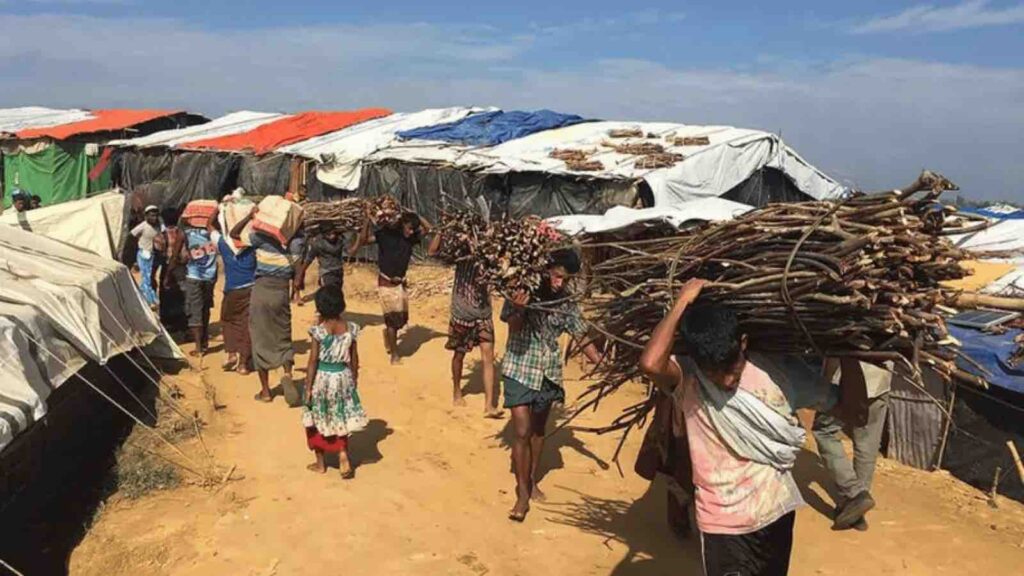

The report identifies the year’s 10 costliest extreme events influenced by the climate crisis, each causing over $1 billion in damage. Among these, the Palisades and Eaton wildfires in California alone cost more than $60 billion.
Heatwaves, wildfires, droughts and storms cost the world more than $120 billion in 2025, according to Christian Aid’s new report, Counting the Cost 2025. The assessment identifies the 10 most expensive extreme events influenced by the climate crisis—each causing over $1 billion in damage—and underscores how fossil fuel expansion and political delay are driving escalating losses.
“These disasters are not ‘natural’ — they are the predictable result of continued fossil fuel expansion and political delay,” said Emeritus Professor Joanna Haigh of Imperial College London.
RELEVANT SUSTAINABLE GOALS

The Biggest Price Tags
A year when extreme weather sent the bill :
- California’s Palisades and Eaton wildfires were the single most costly event, at more than $60 billion, and led to over 400 deaths.
- Cyclones and floods in Southeast Asia in November caused $25 billion in damage and killed more than 1,750 people across Thailand, Indonesia, Sri Lanka, Viet Nam and Malaysia.
- Floods in China displaced thousands, caused $11.7 billion in damage and killed at least 30.
The ten most financially costly events together reached more than $122 billion—mostly based on insured losses—meaning the true financial cost is likely higher, while the human toll often goes uncounted.

Asia’s Heavy Share of the Losses
Asia accounted for four of the top six costliest disasters:
- Flooding in India and Pakistan killed more than 1,860 people, cost up to $6 billion, and affected more than 7 million people in Pakistan alone during a southwest monsoon season that brought 8% more than normal rainfall. The monsoon ranked fifth globally by financial loss.
- Typhoons in the Philippines caused more than $5 billion in damage and displaced more than 1.4 million people.
Not Just the Rich World: The Human Cost in Poorer Countries
While the top ten focuses on insured losses, the report highlights a second set of extreme events that were devastating but under-insured:
- Flooding in Nigeria (May) and the Democratic Republic of Congo (April) together affected thousands, with up to 700 deaths in Nigeria alone.
- Ongoing drought in Iran and West Asia threatens 10 million people in Tehran with possible evacuation because of a water crisis.
“These climate disasters are a warning of what lies ahead if we do not accelerate the transition away from fossil fuels,” said Christian Aid CEO Patrick Watt, noting that the poorest communities are first and worst affected.
No continent was spared. The report flags:
- Record-breaking heatwaves in Scotland, with UK wildfires burning 47,000 hectares.
- Extensive droughts in Canada.
- Summer wildfires in Spain and Portugal.
- February cyclones in Australia and Réunion.
- Japan’s extremes of heavy snowstorms and record heatwaves.
- Record sea temperatures and coral bleaching in Western Australia, signaling mounting threats to biodiversity.
“The world is paying an ever-higher price for a crisis we already know how to solve,” said Davide Faranda of France’s LSCE/Institut Pierre Simon Laplace. “What we are seeing in 2025 is not a warning of the future; it is the present reality of climate breakdown.”
Accountability and the Fossil Fuel Fingerprint
“The fingerprints of fossil fuels are all over the list of the year’s most expensive disasters,” said Harjeet Singh, Founding Director of Satat Sampada Climate Foundation. Sanjay Vashist, Director of Climate Action Network South Asia, added that while climate disasters grow more costly, “the United States continues to treat climate action as optional,” even as two of the world’s most expensive disasters hit the US this year.
“This year lays bare the brutal reality of climate change,” said Mohamed Adow, Director of Nairobi-based Power Shift Africa. “While wealthy nations count the financial cost of disasters, millions across Africa, Asia and the Caribbean are counting lost lives, homes and futures.”
Christian Aid urges urgent emissions cuts and scaled-up support for vulnerable communities, emphasizing that the impacts can be mitigated with the right steps. The year’s balance sheet, the report concludes, demonstrates that climate inaction carries a mounting price—financially, socially and in lives lost.
You may also be interested in :
Fast-Growing, Global South Cities Are ‘Strikingly Underrepresented’ in Climate Research