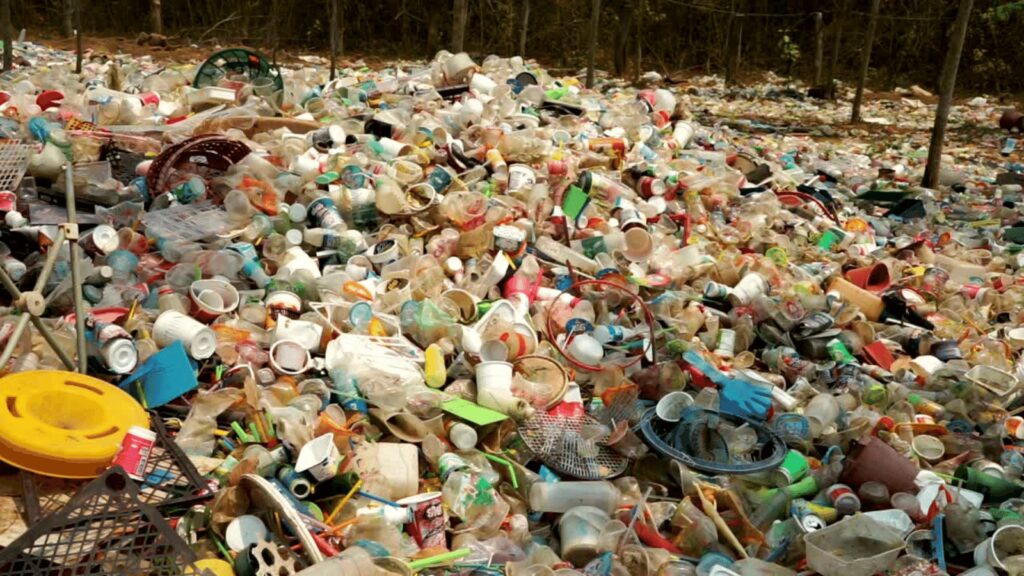
The Consumer Goods Forum’s Plastic Waste Coalition of Action has published new guidance on Extended Producer Responsibility (EPR) for packaging in low- and middle-income countries (LMICs), where waste systems often face systemic challenges.
The Consumer Goods Forum’s Plastic Waste Coalition of Action has published new guidance on Extended Producer Responsibility (EPR) for packaging tailored to low- and middle-income countries (LMICs)—a blueprint designed to fund collection, boost recycling, and reduce plastic pollution where waste systems face the steepest constraints.
RELEVANT SUSTAINABLE GOALS
What’s New: A Playbook Built for Real-World Constraints
The paper, EPR for Packaging: Design and Implementation in Low- and Middle-Income Countries, builds on the CGF’s 2022 Principles for Optimal EPR Design and addresses challenges common in LMICs: limited solid waste infrastructure, complex institutional landscapes, and the central role of informal waste workers. It reinforces EPR as a “key tool”—but only when sufficient waste and recycling systems are in place to make producer funding effective.
Established in 2020, the CGF Plastic Waste Coalition represents more than 40 retailers, manufacturers, and packaging producers, collectively responsible for around 10% of global packaging volumes. The guidance is the product of collaboration among industry leaders, local experts, and partners such as the Fair Circularity Initiative.
“EPR systems have proven to be a powerful tool in advancing circularity in packaging, but their success in LMICs hinges on inclusive, well-funded, and context-aware design,” said Cédric Dever, director, Plastic Waste at The Consumer Goods Forum. “This guidance… will help create EPR systems that are both effective and equitable.”
The “3Is”: Where EPR Succeeds or Stalls
The report outlines six core elements for effective EPR and highlights three areas—the “3Is”—as particularly complex in LMIC contexts:
1) Institutions
Create a professional, not-for-profit central body governed by producers to manage and implement the EPR system and ensure all key functions are fulfilled. Clear roles and accountability are essential to maintain transparency and performance.
2) Infrastructure
Use EPR schemes to attract public and private investment into waste collection and recycling, backing projects with long-term service revenues and contracts to close infrastructure gaps and improve service reliability.
3) Integration of the Informal Sector
Embed waste pickers in system governance; secure fair compensation; and facilitate collaboration with formal waste organizations to ensure EPR is inclusive, improves livelihoods, and captures material that would otherwise be lost.
“Well-designed EPR systems can be an effective way to boost recycling and drive infrastructure investment… one size does not fit all,” said Anke Boykin, senior director, global environmental policy, PepsiCo. “This guidance aims to accelerate EPR… including where waste pickers play a critical role.”
The guidance targets policymakers, industry leaders, and waste-management stakeholders seeking to design locally tailored EPR schemes that can sustainably fund packaging waste management. In LMICs—where financing gapsand informal economies are significant—context-aware systems can increase recycling, reduce leakage, and channel capital into durable infrastructure.
Read the full report here