

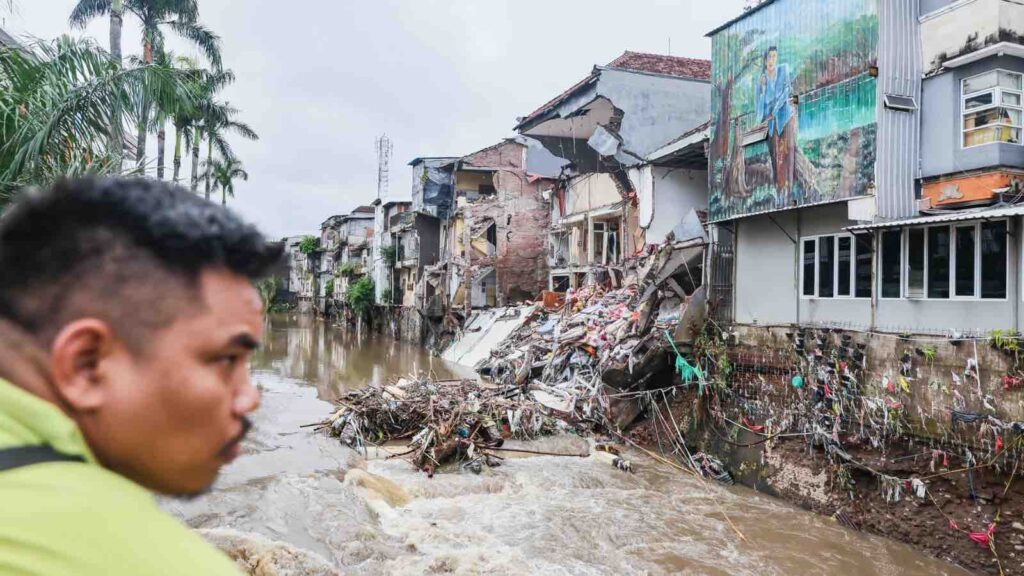

Indonesia’s environment minister cites clogged drains and reckless development, while Bali’s governor disputes the claims. Survivors grapple with the aftermath as the island begins recovery.
DENPASAR, Indonesia — The death toll from this week’s devastating floods in Bali has risen to 16 people, with one still missing, according to Indonesia’s disaster agency. The flooding, which followed two days of intense rain, left entire neighborhoods under water, triggered landslides, and forced hundreds into temporary shelters.
As rescue operations continue, a dispute has emerged between national and local officials over the root causes of the disaster.
RELEVANT SUSTAINABLE GOALS



Waste and Rapid Land Conversion Blamed
Indonesia’s environment minister, Hanif Faisol Nurofiq, said Thursday that the floods in Denpasar were worsened by extraordinary piles of garbage clogging drainage systems, alongside the rapid conversion of rice fields and green spaces into hotels, villas, and cafés catering to tourism.
“The floods were aggravated by extraordinary piles of garbage clogging the drains,” Hanif said in Jakarta, calling the tragedy “a lesson” that authorities must heed.
He added that the loss of agricultural land and open space had stripped the island of its natural ability to absorb rainwater. “We must not be reckless. Once the landscape is disrupted, nature recalibrates itself through disasters like this,” he warned.
Environmental group Walhi Bali backed the minister’s concerns, reporting that between 2018 and 2023, land degradation across the Sabagita metropolitan area — which includes Denpasar, Badung, Gianyar, and Tabanan — reached 3 to 6 percent, steadily reducing farmland.

Governor Rejects Claim of City Land Conversion
But Bali Governor I Wayan Koster pushed back against the minister’s assessment, saying that land conversion in Denpasar was not responsible. Instead, he argued, flooding was worsened by river flows from neighboring districts.
“That’s not the case. Land conversion is in Badung and Gianyar,” Koster said during an inspection in Denpasar. “In North Kuta the rivers flow downstream to Denpasar, so this is a river flow issue, not land conversion in the city.”
The governor’s remarks highlight a broader tension between local economic priorities tied to Bali’s tourism industry and national-level calls for more sustainable land-use planning.
According to the National Disaster Mitigation Agency (BNPB), flood fatalities included 10 people in Denpasar, three in Gianyar, two in Jembrana, and one in Badung. Search teams on Thursday night recovered the body of one missing person, while efforts continue to locate another.
Authorities have declared a seven-day state of emergency starting Sept. 10.
The floods also triggered 18 landslides, mostly in Karangasem (12), followed by Gianyar (5) and Badung (1). Denpasar bore the brunt, recording 81 flood locations out of more than 120 island-wide.
Recovery and Relief Efforts Underway
The Meteorology, Climatology and Geophysics Agency (BMKG) said the heavy rainfall was linked to the equatorial Rossby wave, which persisted for more than 24 hours starting Tuesday morning.
While the weather pattern was natural, experts say human factors such as poor waste management and unchecked development worsened its impact, amplifying the devastation in Bali’s urban centers.
The Indonesian Army has deployed over 300 personnel to assist flood victims, alongside police, rescue agencies, and local officials. Their tasks include clearing mud, pumping out waterlogged sites such as Badung Market’s basement, and helping search for the missing person.
So far, 562 residents have been evacuated to schools, village halls, and community centers.
BNPB has dispatched emergency aid, including 200 blankets, 200 mattresses, 300 food packages, 50 family tents, two large refugee tents, one rubber boat, and three water pumps. Authorities have also pledged cash assistance to help families repair damaged homes.
BNPB spokesman Abdul Muhari said conditions were “gradually returning to normal” as floodwaters receded across most areas. Still, officials stressed that the lessons from this disaster — from clogged drains to reckless land use — must not be ignored.
For residents of Bali, where tourism remains both an economic lifeline and a driver of environmental strain, the floods are a stark reminder of the island’s fragile balance. While leaders debate whether the crisis was caused by waste, development, or river flows, experts agree that integrated, sustainable planning is urgently needed to prevent repeat disasters.
Lead image courtesy of Anadolu/Getty Images
You may also be interested in :
Deforestation Tied to 28,000 Heat Deaths A Year – ASEAN Faces The Highest Risk, Study Finds