The Institute for Climate and Sustainable Cities (ICSC), a Manila-based non-governmental think tank, has deployed SPECTRUM (Solar Power Estimation of Capacities and Tracking Using Machine Learning) to pinpoint installed systems and quantify their output with up to 90 percent accuracy.
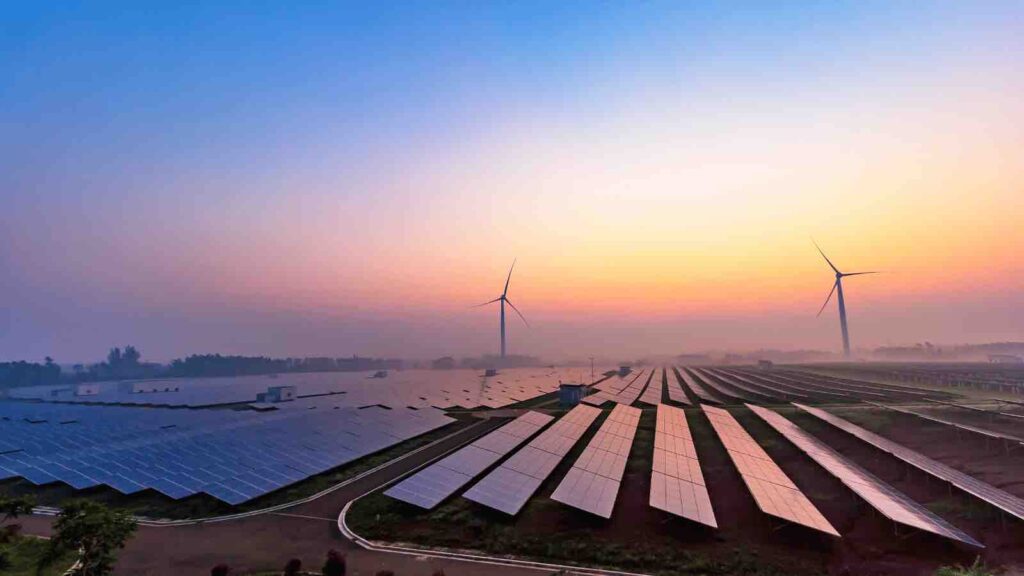
As the Philippines races to decarbonize its power sector, a new artificial-intelligence platform is shining a light on just how much untapped rooftop solar capacity lies above its cities. The Institute for Climate and Sustainable Cities (ICSC), a Manila-based non-governmental think tank, has deployed SPECTRUM (Solar Power Estimation of Capacities and Tracking Using Machine Learning) to pinpoint installed systems and quantify their output with up to 90 percent accuracy—revealing 1,846.08 MW of rooftop panels nationwide, yet less than 1 percent of urban rooftop area is covered.
RELEVANT SUSTAINABLE GOALS
SPECTRUM Launches with High-Precision Mapping
On July 15, ICSC officially unveiled SPECTRUM, which pairs satellite imagery with machine-learning algorithms to detect and classify rooftop solar into residential, commercial and utility-scale installations. The platform has already identified a total of 1,398.25 MW of utility-scale arrays, 245.8 MW on private homes and 202.03 MW across commercial rooftops. Detection accuracy stands at 87.6 percent for residential, 87.1 percent for commercial and an exceptional 98.47 percent for utility-scale projects, according to ICSC Chief Data Scientist Jephraim Manansala.
Despite a net-metering program that requires registration of rooftop systems, a significant share of owners has opted out—leaving distribution utilities without a clear picture of actual capacity and complicating grid planning. “The rise in unregistered solar affects how utilities plan and manage the grid,” Manansala said, underscoring the need for better tracking mechanisms as distributed generation climbs.
Urban Adoption Lags Far Behind Potential
Though the Philippines boasts nearly 1,800 MW of installed rooftop solar, major metro areas remain solar-poor. Metro Manila, with the country’s largest rooftop area, has a coverage rate of just 0.47 percent. Metro Cebu follows at 0.48 percent, Metro Iloilo at 0.54 percent and Bacolod—the national high-water mark—at 0.81 percent. These figures illustrate a vast gap between available roof space and actual panel deployment in urban centers.
Launched in 2023, the Expanded Rooftop Solar Program (ERSP) has so far delivered only modest gains. To accelerate adoption, the Department of Energy has signaled new regulations in Q3 2025 that Undersecretary Rowena Cristina Guevara expects will spur more households to go solar. She also noted that plummeting panel prices have shortened payback periods to 3–5 years, improving the economics for residential owners.
Toward a Brighter, Distributed Future
Beyond private rooftops, the government plans to outfit all public schools with solar arrays by 2028, creating demand for local installers and demonstrating clean-energy benefits to a new generation. This initiative dovetails with ICSC’s push for data-driven policymaking: by spotlighting existing capacity and highlighting where growth is needed, SPECTRUM provides a roadmap for regulatory and financing interventions.
With climate commitments looming and peak demand forecasts rising, accurate intelligence on distributed solar is critical. SPECTRUM’s high-accuracy mapping fills a data gap that has long hampered the Philippines’ rooftop solar ambitions. As ICSC and policymakers leverage these insights, the archipelago may yet transform its urban skylines—and its grid—one panel at a time.
You may also be interested in :
Liter of Lights Sets Guiness World Record With 3,500 Hand-built Solar Lamps in Manila