
A surprising thing has happened at the UN climate conference, Cop31, as it gears up to its conclusion in Antalya, Turkey. Negotiators are discussing how to cool the planet.
You might think this should not be surprising, but how to respond to the latest climate science was not on the agenda when the meeting started. Now, the summit’s latest draft decision explicitly recognises a role for carbon dioxide removal (CDR) alongside deep emissions cuts. This is a significant shift, driven by pressure from some of the countries most vulnerable to climate change – the small island states – in response to two alarming scientific reports in the last month.
The World Meteorological Organization has confirmed that the rate at which the Earth is heating up is accelerating. One reason is the planet is becoming less “reflective”: the loss of ice and snow, changes in cloud formation and (paradoxically) reductions in atmospheric pollution means that more solar radiation is being absorbed rather than reflected into space.
The result is that the Paris Agreement goal of limiting warming to 1.5°C will not be met. There’s a new term for this new warming trajectory: “overshoot”. As a United Nations Environment Programme (Unep) report explains, the best we can hope for now is to exceed 1.5°C but then limit the extent of the overshoot, peaking emissions as soon as possible and then returning to 1.5°C later in the century.
Unfortunately, Unep also notes that this may be easier said than done. The longer temperatures remain above 1.5°C, the greater the risk of triggering irreversible changes to systems such as polar ice sheets and glaciers, ocean currents and the Amazon rainforest, which could make returning to lower temperatures impossible.

Beyond cutting emissions
Up until now we have thought there were basically two responses to global heating. We needed to cut emissions (mitigation), and cope with the warming we experienced (adaptation). But overshoot means that achieving net zero emissions is not enough. By the time we get there the temperature will be too high.
Overshoot will require two other kinds of response. As well as cutting the flow of greenhouse gases into the atmosphere, we can physically take them out, a process known as carbon dioxide removal or CDR.
And we will also need to consider different ways to increase the planet’s reflectivity. These include limiting aircraft contrails (which trap heat), expanding the white surface areas of the earth (both buildings and crops), or making glaciers more stable. It could potentially include various methods of “solar radiation management”, such as brightening clouds over the oceans, or injecting reflective aerosols into the stratosphere. If any of these “climate cooling” technologies could help bring temperatures down, they need much more carefully governed research.
Removing carbon dioxide from the atmosphere is not the same as carbon capture and storage (CCS), which refers to the capture of emissions from industrial plants before they reach the atmosphere. In all net zero scenarios CCS is needed to deal with the residual emissions of fossil fuels. But we now know CDR is going to be required as well – first alongside emissions reduction, to slow warming down, and then to return the global temperature to a safer level.
There are various potential removal methods. Some are familiar and uncontroversial, though not yet being done at anything like the required scale. These are natural processes such as tree-planting, restoring ecosystems and improving carbon in soils.
Other “novel” forms of CDR are still in development. Carbon uptake methods in the oceans include enhancing the ocean’s alkalinity and the fertilisation of phytoplankton by adding iron. On land, enhanced natural processes include adding charcoal to soils (“biochar”), and accelerating the creation of carbonates from rock weathering.
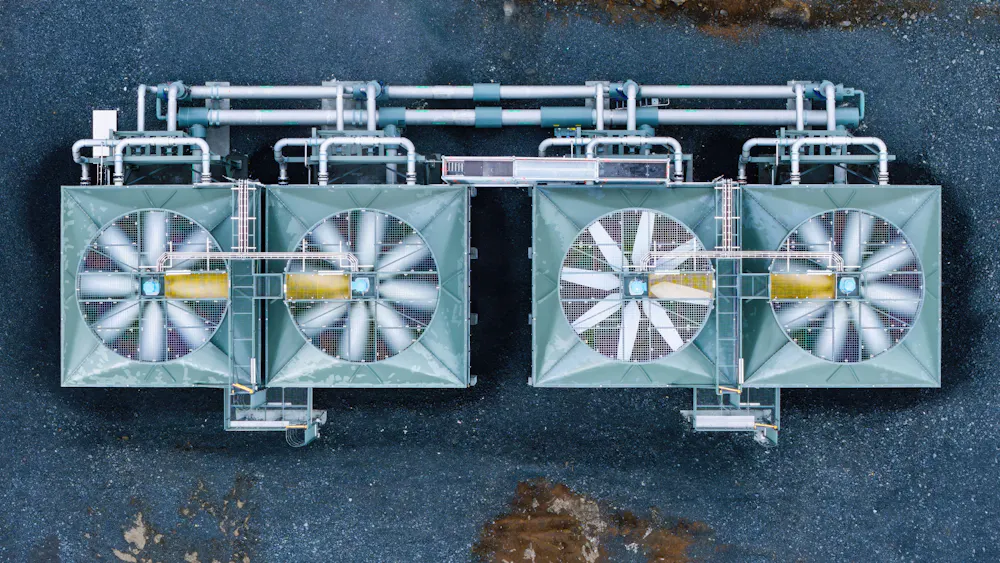
There are also more technological interventions. These include “bioenergy with carbon capture and stor
Read More