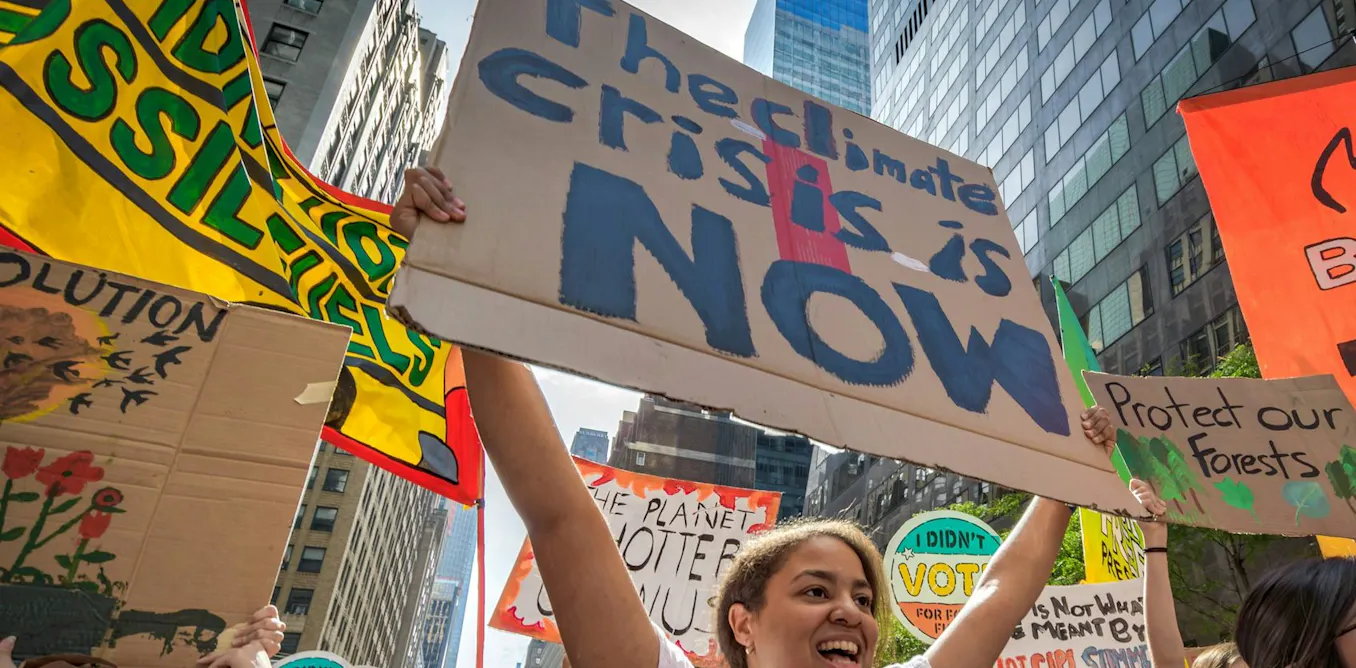
You may be hearing phrases like “climate crisis,” “climate emergency” and “climate justice” a lot as the 2026 United Nations climate summit is underway. Political leaders, including U.N. Secretary-General António Guterres, are using them to try to get across the urgent risks and consequences of climate change. The danger is real, but is using this language actually persuasive?
It turns out that Americans are more familiar with – and more concerned about – climate change and global warming than they are about climate crisis, climate emergency or climate justice, according to a survey we conducted with a nationally representative sample of 5,137 Americans.
Moreover, we found no evidence that the alternative terms increased people’s sense of urgency, willingness to support climate-friendly policies or willingness to act.
The familiar terms – climate change and global warming – did at least as well, and sometimes better, than climate crisis and climate emergency in eliciting concern, perceived urgency and willingness to act. The phrase climate justice consistently tended to do worse, likely in part because it was the least familiar. These response patterns were similar among Republicans, Democrats and independents.
Just keep it simple
In our work as research psychologists, we have explored how Americans respond to the ways climate change is communicated and have uncovered a need to use straightforward language.
For example, people we interviewed for a study published in 2021 felt that climate experts were talking over their heads with terms like “adaptation,” “mitigation,” “sustainability” and “carbon-dioxide removal.” They wanted experts to use more familiar terms instead.
This inspired us to write a quick guide to climate jargon, published in The Conversation. Using everyday language makes information easier to understand, and even highly educated people tend to prefer it.
Jargon like “biodiversity loss” has similar problems. That refers to the shrinking variety of life on Earth, which is exacerbated by climate change. A survey of 7,338 U.S. adults led by one of us found people were much more familiar with and more concerned about “extinction of plants and animals” – or, if an explanation was provided, “nature loss”.
Even with an explanation, “biodiversity loss” was the least familiar and of least concern for people among several terms. Most people didn’t find “biodiversity crisis” or “extinction crisis” familiar either.
Yet, experts often use complex jargon because it is familiar to them, and they may not realize it is unfamiliar to others.
How the terms evolved
It has become common to talk about climate change and global warming as if they have the same meaning, but there are differences. Climate change refers to changes in the overall climate, while global warming refers specifically to rising temperatures.
A historical review found that, in the past, people were less likely to associate the term climate change with the idea that humans are actively warming the planet than they were with the term global warming. Perhaps this is why Democrats used to like the term global warming, while the popularization of the term climate change has been credited to Frank Luntz, an adviser to the George W. Bush administration.
Past surveys also found that Democrats used to think of global warming as being more serious than climate change, while Re
Read More