

The timing of a hospital appointment does more than tell you when to see a doctor. It can also shape how you get there. For some older patients, an early appointment can fall before their concessionary bus pass, which provides free bus travel, becomes valid. An unreliable bus service can mean having to leave much earlier than necessary. And an appointment at a specialist hospital rather than the one closest to home can turn a straightforward journey into one that involves several connections.
For someone who is already unwell, these are not minor inconveniences. A short appointment can involve hours of travelling and waiting, followed by the challenge of getting home again.
Research shows that transport can affect access to healthcare. A 2024 review of research into repeated missed appointments found that transport problems, distance and access to services were among the reasons people struggled to attend. It also highlighted the value of more flexible, patient-centred appointment systems.
There are implications for the climate too. Patient and visitor journeys account for more than 40% of transport emissions from England’s NHS. The most recent figures from the Department for Transport’s now-discontinued journey-time statistics, which cover 2019, show that around two-thirds of households in England could not reach their nearest hospital within 30 minutes by public transport or walking.
More recent research illustrates how healthcare itself generates substantial travel. A 2025 study of 6,599 NHS patients in Greater Glasgow found that annual hospital travel varied considerably according to health condition and peaked around the year of diagnosis. Among the conditions examined, people with cancer travelled the furthest.
It is tempting to treat this as a question of persuading patients to drive less. But decisions about when and where healthcare is provided can make public transport practical or make travelling by car or taxi almost unavoidable.
Our research in Southampton and the Isle of Wight shows how some of these difficulties play out locally. The Community responsive digital twins for inequality alleviation and low-carbon mobility (Cordial) project explored connections between access to healthcare, transport disadvantage and carbon emissions. The Extreme temperature and health outcomes (Ethos) project examines how extreme heat and cold affect people who may be particularly vulnerable, including those living with several long-term health conditions.
Across this work, members of the public contributed their experiences of travelling to healthcare. Many were living with long-term conditions and regularly attending appointments. They described indirect and unreliable buses, long walks to bus stops and journeys involving several connections. Others spoke about the cost of repeated hospital visits when household budgets were already tight.
These experiences echo findings elsewhere. A study of cancer patients in north-east Scotland found that travelling for treatment could take up much of a day and create extra financial and physical strain. Some participants described fuel costs becoming difficult to manage, while others said transport problems affected when they sought help.
Repeated tests, treatment and follow-up appointments can make these difficulties particularly burdensome. Timing can make them harder still. Some contributors to our work said early appointments meant travelling before their concessionary passes became valid, so they had to pay for journeys that would otherwise have been free. Others caught an earlier bus to allow for delays. One person described spending around an hour travelling to hospital despite living in the same city. Another allowed as much as two hours to be confident of arriving on time.
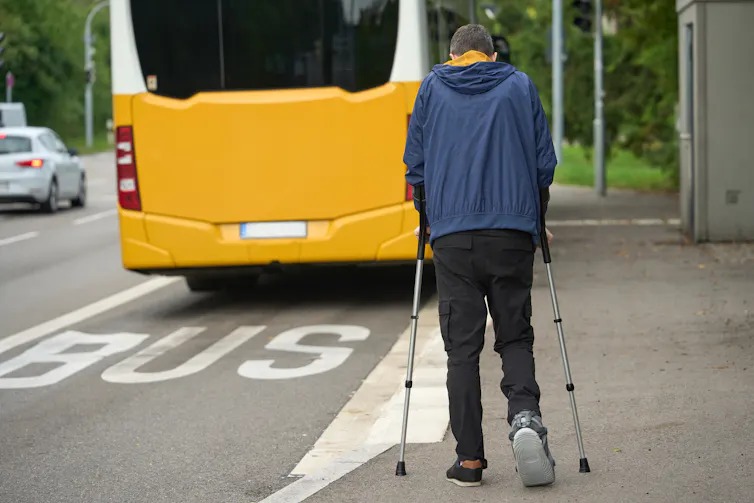
Bus stops that are far away or provide little shelter or shade can add further difficulties du
Read More