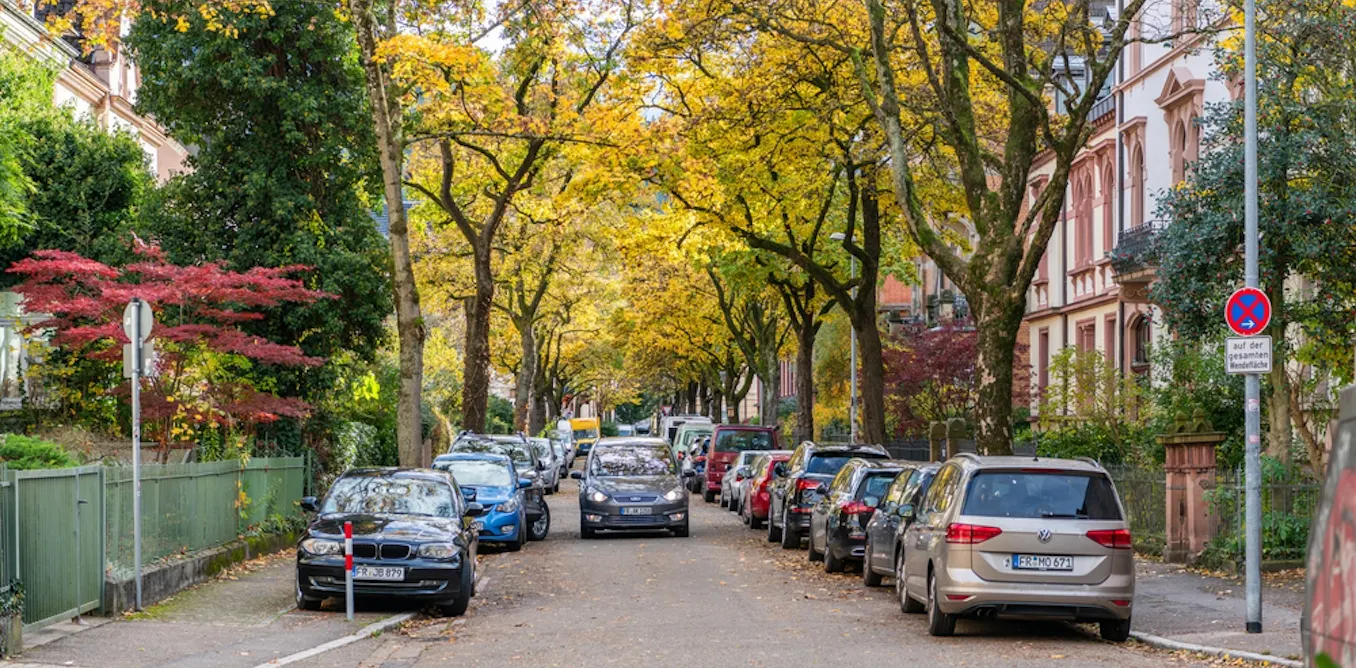

When Olivia Besters began caring for the patch of soil beneath the chestnut tree outside her home in Freiburg, Germany, more than 35 years ago, biodiversity was not on her mind.
“It was the optics,” she told me. The ground was compacted and littered with trash and dog “legacies”. Besters simply wanted the space directly outside her front door to look nicer. “Everything else came much later,” she said. “Thirty-five years ago, no one talked about climate change or insect decline.”
Over time, one tree bed expanded into 36 across Besters’ neighbourhood of Herdern. So deep is her commitment to her tree beds that her children gifted her a bike trailer to cart around her watering system, her phone is filled with stunning pictures of the flowers growing in her tree beds, and she has been nominated for city-wide engagement awards.

As towns and cities grow, biodiversity is being squeezed into ever smaller spaces while people experience a progressive loss of everyday contact with nature. Street tree beds – and the practice of caring for them – offer cities a way to counter urban biodiversity loss while enriching people’s connection with nature in their neighbourhoods.
Our research shows that citizen stewardship of street tree beds can boost species richness and diversity in urban areas.
For years, officials in Freiburg, a city known for being green and eco-conscious, had noticed residents informally planting and caring for the small patches of soil around street trees. In 2004, the city formalised this activity through its tree sponsorship programme, or Baumpatenschaftsprogramm, creating a way to organise and support something residents, like Besters, were already doing.
Biodiversity was built into the concept, but has become much more prominent over time. In 2010, the city joined forces with the Ecostation, an environmental education centre in Freiburg to launch Freiburg blüht auf (Freiburg in bloom). This initiative connected tree bed stewards directly with ecologists, providing stewards with seeds, plants and advice on turning street tree beds into small habitats for native plants and insects. The result, according to the city, are “small flowering islands” that can help the soil retain moisture and provide habitats and food for insects.
Until our research was published, however, there was little data to show what these tiny spaces were actually contributing to urban biodiversity.
In our first study, we surveyed plants growing in 200 street tree beds, comparing 100 beds actively stewarded by residents with 100 similar beds that were not stewarded. Over three months, we recorded 474 plant species growing across these beds. We found that stewarded beds supported around 1.6 times as many plant species as the non-stewarded beds. Although stewarded beds contained more non-native plants than non-stewarded beds, they also supported more native plant species and more varied plant communities.

Through surveys and interviews with more than 100 stewards in Freiburg, participants told us they were very conscious of this ecological role. Planting tree beds can “really promote biodiversity” in what might otherwise be a “concrete district”, said Shari, a 62-year-old steward who has been caring for one tree bed for six years.

Participants frequently described tending their tree beds as relaxing, restorative, absorbing and meaningful. For Besters, it’s “pure relaxation” that feels “good for my soul”. Hank (a 39-year-old steward who has cared for one tree bed for about three years) reports: “I’m so focused … when I do some
Read More