The Albanese government will expand the scheme providing incentives to households and businesses to acquire renewable energy to enable larger businesses, farms and community facilities to install solar systems up to ten times bigger than presently allowed.
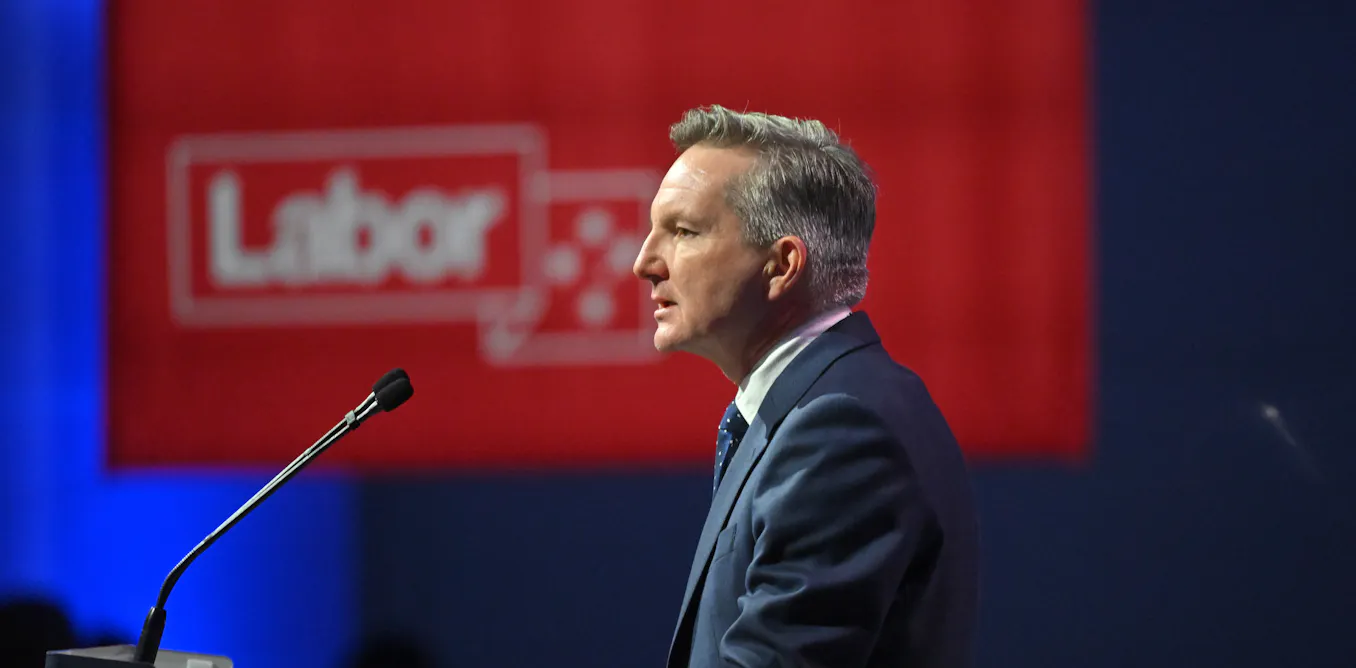
Energy minister Chris Bowen will announce the broadening of the Small-scale Renewable Energy Scheme on Wednesday, saying it will address the “missing middle” in Australia’s energy transition.
“The missing middle is mid-scale solar,” he says in his speech to the National Press Club, part of which has been released ahead of delivery.
Bowen says while utility-scale solar and rooftop household solar are going strongly, the gap is in solar on factories, warehouses, farming sheds and large industrial premises. These form a “big empty roof space ripe for solar generation”.
Australia is already the world’s top rooftop solar nation, per capita. But there is four times as much residential solar on homes as on commercial buildings. In Europe, it’s the opposite – there is 1.5 times as much solar on businesses as on houses.
Bowen says data from the Institute for Energy Economics and Financial Analysis show residential solar installation sits at 22 gigawatts, but businesses have only installed about 5.6 gigawatts.
Under the government’s announcement, the solar discount will be widened to include installations of up to 1 MW in size. Bowen says this will cut the installation costs for commercial, industrial and agricultural rooftops by about 20%.
The installation of a 250kW solar system on a medium size enterprise such as a retailer could save upfront about $68,000 on installation. “Going forward they’d be generating about 345 megawatt hours of electricity each year – a potential saving of $50,000 in annual electricity costs,” Bowen says.
A larger operation installing a 850kW system – enough for a manufacturing business, a large retail complex, or a logistics warehouse – would have an upfront discount of about $232,000. It would be generating annually about 1,173 MWhs, with savings of about $175,000 in energy costs.
“This isn’t just about energy bills – it’s good for productivity, freeing up capital to invest back in
Read More