


The framework includes provisions for project authorization, governance and transparency systems aligned with the Paris Agreement’s Enhanced Transparency Framework and the Sustainable Development Goals.
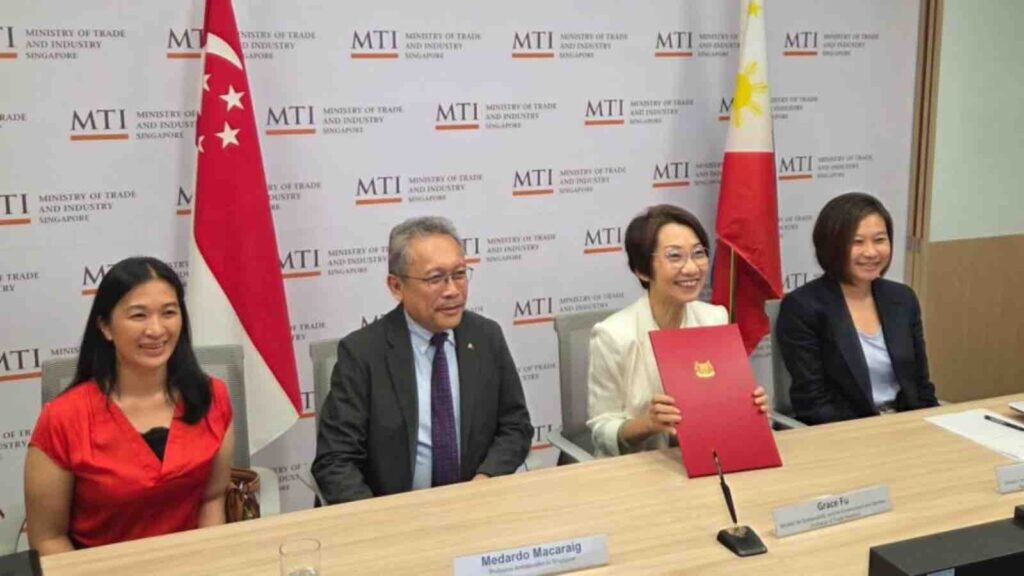
Singapore and the Philippines have signed a legally binding carbon credit agreement under Article 6.2 of the Paris Agreement, marking a significant step in regional climate cooperation and the Philippines’ first such deal.
The Implementation Agreement, signed on April 30, 2026 during ASEAN Climate Week, establishes a bilateral framework for generating and transferring carbon credits through emissions-reduction projects aligned with global standards.
The agreement enables the transfer of Internationally Transferred Mitigation Outcomes (ITMOs), creating a formal mechanism for high-integrity carbon trading between the two countries.
RELEVANT SUSTAINABLE GOALS


A New Channel for Climate Finance and Investment
Officials say the pact is designed to unlock new streams of climate finance, directing investment into emissions-reduction projects across the Philippines.
Grace Fu, Singapore’s Minister for Sustainability and the Environment, said the agreement would deepen bilateral ties while opening opportunities in carbon markets.
“This agreement will unlock opportunities for businesses and local communities, while supporting ASEAN’s transition to a low-carbon future,” she said.
Her Philippine counterpart, Juan Miguel T. Cuna, described the deal as a strategic move aligned with national development priorities, emphasizing its potential to support job creation, energy security and pollution reduction.
How the Carbon Credit System Will Work
Under the agreement, project developers will be able to generate carbon credits from approved mitigation activities, which can then be transferred between the two countries.
The framework includes provisions for project authorization, governance and transparency systems aligned with the Paris Agreement’s Enhanced Transparency Framework and the Sustainable Development Goals.
A Joint Committee will be established to oversee implementation, including maintaining a pre-approved list of carbon crediting programs and methodologies. Further details on project authorization processes and eligible methodologies are expected to be released.
One carbon credit represents one tonne of carbon dioxide either prevented from being emitted or removed from the atmosphere.
Strategic Gains for the Philippines
The agreement positions the Philippines to access growing demand for high-quality carbon credits, while strengthening its role in regional carbon markets.
Officials highlighted four key national benefits: institutional readiness for participation in high-integrity markets, access to new green investment, improved regional competitiveness and direct benefits for local communities.
Revenues generated through carbon credits are expected to support initiatives such as reforestation, forest protection, renewable energy deployment, community-based mitigation projects and local resilience infrastructure.
The agreement also opens pathways for investment in sectors including renewable energy, energy efficiency, waste management, methane reduction, nature-based solutions and climate-smart agriculture.
Expanding Singapore’s Carbon Market Network
For Singapore, the pact expands its growing network of bilateral carbon trading agreements.
The deal is the 11th such agreement signed by the government since the end of 2023 and makes the Philippines the third Southeast Asian country to enter into a carbon trading partnership with the city-state.
Under Singapore’s carbon tax framework, companies liable for carbon taxes are allowed to offset up to 5 percent of their emissions using eligible carbon credits sourced from countries with which Singapore has implementation agreements.
The system offers flexibility for businesses, as purchasing credits from overseas projects can sometimes be more cost-effective than reducing emissions domestically.
A Model for Regional Cooperation in ASEAN
Beyond bilateral benefits, the agreement is being positioned as a model for wider regional cooperation.
Officials say it demonstrates how trust, technical standards and governance can support the development of credible carbon markets across Southeast Asia.
As Undersecretary Analiza Teh noted, the agreement shows that regional collaboration on carbon markets is not theoretical, but actionable.
Following the signing, both governments will move to activate the Joint Committee, integrate national registries for tracking carbon credits and open formal project authorization processes.
The agreement reflects a broader push across Southeast Asia to scale carbon markets as a tool for decarbonization and sustainable development.
By linking climate finance with on-the-ground projects, the partnership aims to deliver tangible benefits — from job creation to improved energy systems — while helping both countries meet their emissions reduction targets.
As governments and businesses increasingly turn to carbon markets, the Singapore-Philippines pact signals a shift toward more structured, transparent and regionally coordinated climate action.
In a region facing rising climate risks, the agreement underscores how international cooperation can translate into practical solutions with measurable impact.