

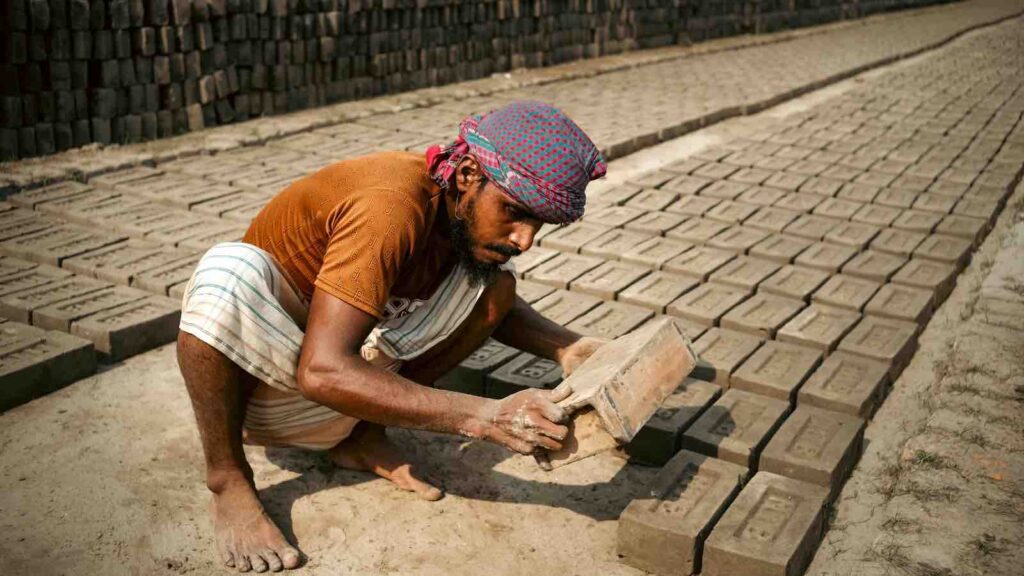

Outdoor workers will be required to shift their working hours to cooler parts of the day — typically from 6am to 11am and 4pm to 8pm — with a strict break enforced between 12 noon and 4pm.
The policy applies across high-risk urban areas, including Mumbai, and extends to 15 districts identified as particularly vulnerable under the state’s Heat Action Plan.
Facing intensifying summer heat, the Maharashtra government has introduced a sweeping set of protections for outdoor workers, mandating a compulsory break from 12 noon to 4pm during peak heat alerts.
The new Standard Operating Procedure (SOP), announced by Girish Mahajan, is designed to reduce health risks and prevent heat-related deaths in one of India’s most heat-exposed states.
“Maharashtra has several districts with extreme heat conditions during summer. It affects human health and also causes deaths. To protect the people from extreme heat conditions, we have issued SOP,” Mahajan said.
RELEVANT SUSTAINABLE GOALS




Mandatory Midday Break During Heat Alerts
Under the new rules, all municipal corporations, municipal councils and nagar panchayats must enforce revised work schedules during orange and red heat alerts.
Outdoor workers will be required to shift their working hours to cooler parts of the day — typically from 6am to 11am and 4pm to 8pm — with a strict break enforced between 12 noon and 4pm.
The policy applies across high-risk urban areas, including Mumbai, and extends to 15 districts identified as particularly vulnerable under the state’s Heat Action Plan.

Focus on Informal and High-Risk Workers
The SOP specifically targets informal workers who are most exposed to extreme heat.
These include street vendors, construction workers, daily wage labourers, traffic police, sanitation workers, gig and delivery workers, rickshaw pullers and porters. Other vulnerable groups include waste pickers, security guards, pushcart pullers, anganwadi workers and ASHA workers. Authorities say enforcement will be especially critical in sectors such as construction, industry and street vending, where exposure to heat is unavoidable.
To prevent dehydration and heat stress, the government has outlined several on-ground measures.
Water booths will be installed at key work locations such as markets, traffic junctions, transit hubs and street vending zones. Oral Rehydration Solution (ORS) and electrolyte sachets will be distributed through primary health centres, ward offices and non-governmental organisations.
Temporary shade structures will also be set up in high-traffic work areas, while parks and gardens will remain open during the afternoon to provide access to cooler environments.
Special Measures for Worker Safety
The SOP also highlights workplace safety, particularly for women.
Authorities are required to ensure adequate lighting, transport arrangements and protective measures in heat-affected areas, reflecting broader concerns about safety alongside climate-related risks.
Beyond immediate interventions, Maharashtra is planning structural upgrades to improve resilience against extreme heat.
The government aims to enhance dense work zones with permanent shade structures, cool roofs and improved access to drinking water. Employers and market associations are also being encouraged to invest in cooling infrastructure.
In parallel, the state is setting up a dedicated training and research centre on disaster management in Nagpur, with an investment of ₹184 crore. The centre will focus on extreme heat conditions and sustainable cooling strategies.
A State at the Frontline of Climate Risk
Maharashtra ranks among the 10 most heat-vulnerable states in India, with 15 districts across Vidarbha, Marathwada and Khandesh — including Latur, Nagpur and Chandrapur — identified as highly at risk.
The introduction of the SOP marks a significant step in adapting to rising temperatures, as authorities move to protect workers who face the greatest exposure.
As heatwaves become more frequent and intense, Maharashtra’s approach reflects a growing recognition that climate risks require both immediate protection and long-term planning.
By combining enforced rest periods, improved infrastructure and targeted policy measures, the state is attempting to reduce the human cost of extreme heat while maintaining economic activity — a balance that is becoming increasingly critical across India.
You may also be interested in :
Super El Niño Could Trigger Severe Drought in ASEAN and Push 2027 to Record Heat