

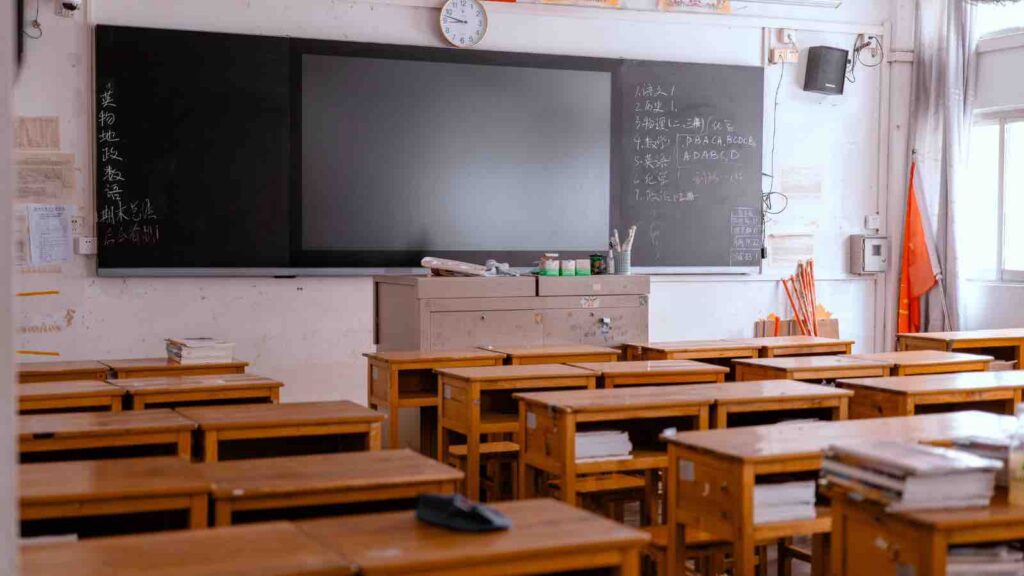

The UNESCO report highlights a stark reality: more than one in six children now live in conflict-affected areas. These conditions have left millions of additional children out of school beyond those captured in official statistics. In the Middle East, ongoing regional tensions have forced widespread school closures, increasing the risk of long-term educational setbacks.
A new global education report has revealed a troubling trend: the number of children out of school has continued to rise for the seventh consecutive year, signaling a slowdown in progress that had once defined global education efforts.
The 2026 Global Education Monitoring (GEM) Report, released by UNESCO, finds that advances in keeping children in school have stalled across nearly every region since 2015. The slowdown is particularly pronounced in sub-Saharan Africa, where rapid population growth has outpaced education expansion.
At the same time, global crises — including conflict — have further disrupted access to education, pushing millions more children out of classrooms.
RELEVANT SUSTAINABLE GOALS
Conflict Zones Leave Millions Behind
The report highlights a stark reality: more than one in six children now live in conflict-affected areas.
These conditions have left millions of additional children out of school beyond those captured in official statistics. In the Middle East, ongoing regional tensions have forced widespread school closures, increasing the risk of long-term educational setbacks.
For children in these regions, the disruption is not only immediate but potentially lasting, as missed years of schooling can be difficult to recover.

Enrollment Growth Masks Uneven Progress
Despite these setbacks, the report underscores significant long-term gains in global education.
By 2024, 1.4 billion students were enrolled in school, reflecting an increase of 327 million students — or 30 per cent — in primary and secondary education since 2000. Pre-primary enrollment rose by 45 per cent, while post-secondary enrollment surged by 161 per cent.
This expansion is equivalent to more than 25 additional children entering school every minute over the past two decades.
Countries such as Madagascar and Togo have reduced out-of-school rates among children by at least 80 per cent since 2000. Similar progress has been seen among adolescents in Morocco and Viet Nam, and among youth in Georgia and Türkiye. Côte d’Ivoire has halved out-of-school rates across all age groups during the same period.
Not only are more children enrolling in school, more are completing their education.
Since 2000, global completion rates have risen to 88 per cent in primary education, 78 per cent in lower secondary, and 61 per cent in upper secondary. Gender gaps in primary and secondary education have largely closed, with countries like Nepal demonstrating rapid progress in girls’ education.
However, the pace of improvement remains insufficient. At current rates, the world is not expected to reach 95 per cent upper secondary completion until 2105, underscoring the scale of the challenge ahead.
Inclusion and Equity Gains Show Promise
The report also points to growing global commitment to inclusive education.
Since 2000, the share of countries with laws supporting inclusive education has increased from 1 per cent to 24 per cent. Meanwhile, policies promoting the inclusion of children with disabilities in mainstream education have risen from 17 per cent to 29 per cent.
Financing mechanisms aimed at supporting disadvantaged populations have expanded significantly. Today, 76 per cent of countries have policies to reallocate resources toward disadvantaged schools.
Yet only 8 per cent of countries are fully utilizing these mechanisms to effectively redistribute education resources.
Efforts to make education more affordable have improved access but introduced new challenges.
While removing school fees has helped increase enrollment, it has also, in some cases, compromised quality and contributed to higher dropout rates. At the same time, indirect costs — including transportation, meals and after-school care — remain significant barriers for many families.
As international donor funding declines, programs such as school grants and meal schemes — present in 84 per cent of countries — face uncertainty, particularly where they have not been fully integrated into national budgets.
No Single Solution to a Complex Problem
The report emphasizes that no single policy can solve the problem of educational exclusion.
Instead, effective strategies must address multiple factors and be tailored to local conditions. Evidence shows that combining policies can deliver stronger outcomes. In 14 African countries, making education compulsory — not just free — added more than a year of schooling for both girls and boys. When combined with child labor laws, the gains increased further.
Broader development measures also play a role. Electrification in Cambodia has been linked to nearly an additional year of schooling, while school feeding programs can add up to half a year of learning for every US$100 spent in low- and middle-income countries. Cash transfers tied to school attendance increase the likelihood of enrollment by 36 per cent.
As the world approaches the 2030 education targets, the findings of the 2026 GEM Report present both a warning and a call to action.
While decades of progress have expanded access and improved outcomes, the recent slowdown — driven by conflict, economic pressures and systemic gaps — threatens to reverse gains.
UNESCO has reaffirmed its role in supporting governments, development partners and civil society to shape the post-2030 education agenda.
The message is clear: without renewed commitment and coordinated action, millions of children risk being left behind — not just outside the classroom, but outside the future that education makes possible.
