
Starbucks, the world’s largest coffeehouse brand, faces an existential risk: the threat to farms across the global “coffee belt” posed by climate change. The company has responded by investing hundreds of millions of dollars to prepare for the hotter, drier future.
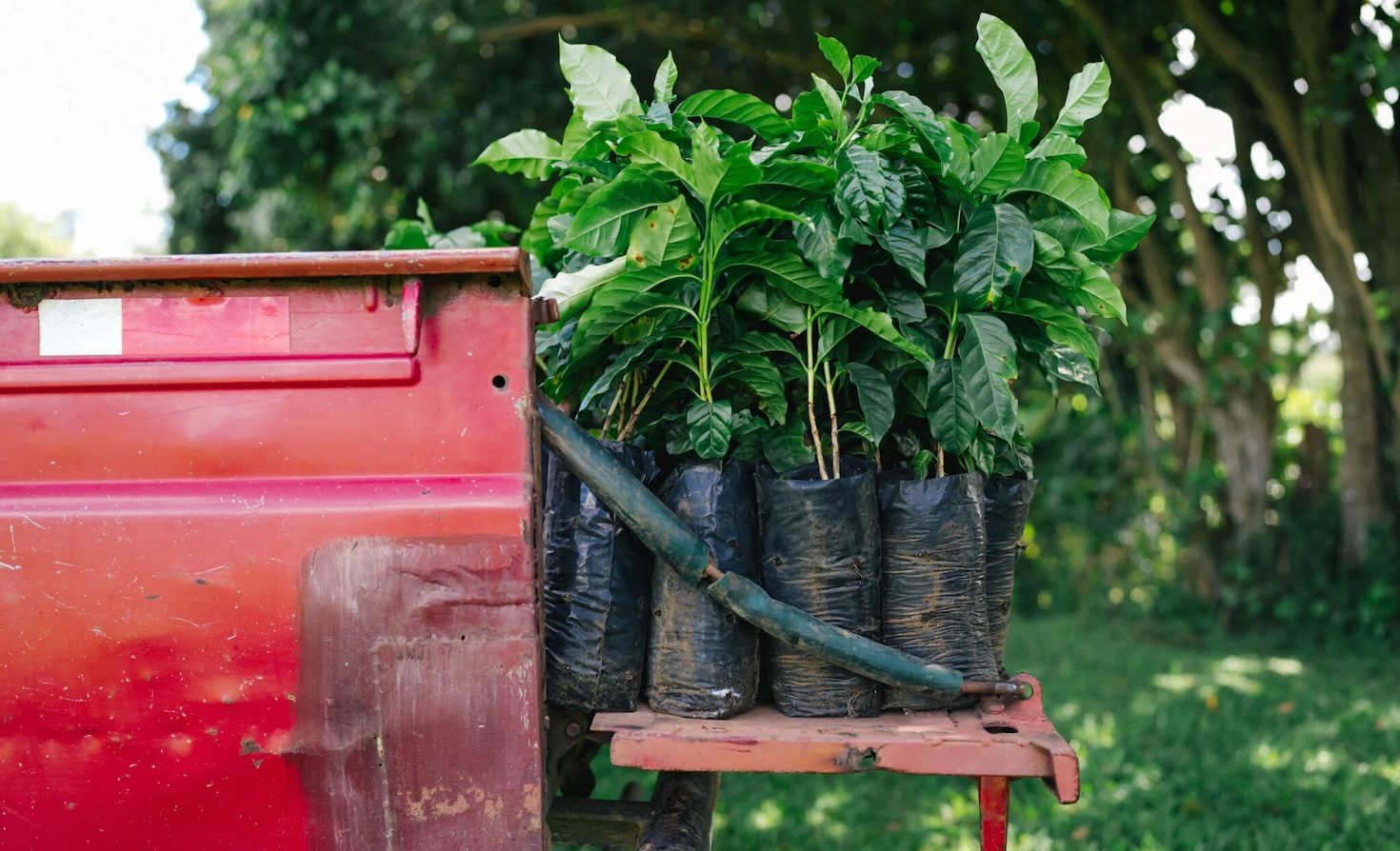
Over the past nine years, Starbucks has donated more than 100 million climate-resilient trees to farmers in El Salvador, Guatemala and Mexico. It announced that milestone on March 26.
“The future of coffee depends on action,” said Ricardo Arias-Nath, senior vice president of global coffee and tea at Starbucks, and president of the company’s Latin America and Caribbean operation. “We are investing in farmers, protecting coffee landscapes and scaling solutions that help strengthen resilience across our supply chain.”
Starbucks plans to distribute another 50 million trees, this time to farms in Ethiopia, Tanzania and Colombia. It did not disclose a timeline for meeting that mark.
Trouble Brewing
Uncertain future supply
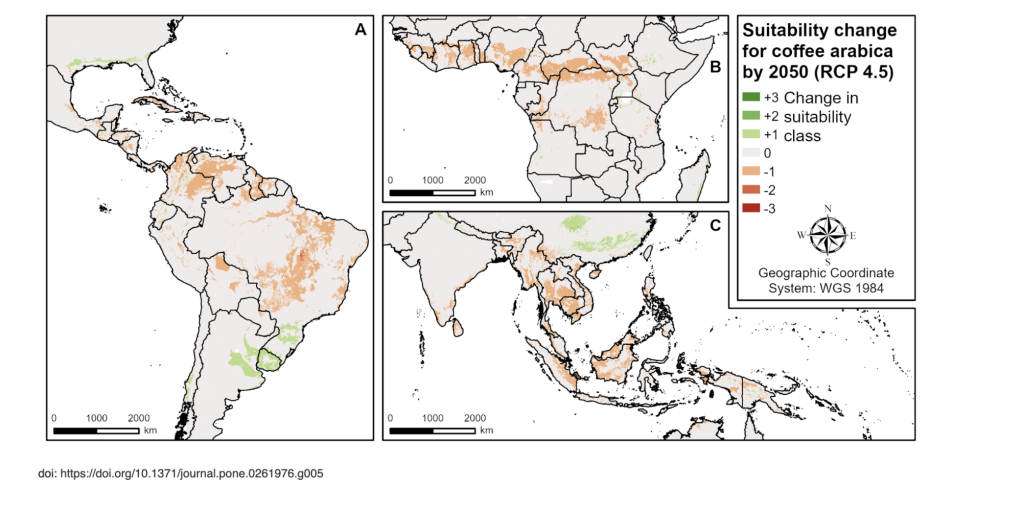
More than half of the land used to cultivate the Arabica beans featured on Starbucks menus could become unusable by 2050 as soil degrades, temperatures rise and water supplies dry up in the prime growing regions of South America, Africa and Indonesia, according to projections by the Intergovernmental Panel on Climate Change.
“Farmers have felt the impact of climate change for some time,” said Raina Lang, senior director of sustainable coffee at Conservation International, which has collaborated with Starbucks on its strategy for 25 years.
Starbucks buys an estimated 5 million bags of Arabica green coffee beans annually from more than 400,000 farms — about 3 percent of global production. Many coffee belt countries on its list are particularly vulnerable to the changing climate, notably Brazil, Colombia, Costa Rica, Ethiopia, Honduras, Indonesia, Nicaragua and Vietnam.
Arabica trees typically grow in cool mountain climates, 2,000 to 6,500 feet above sea level. Up to 2,500 liters of water are needed to produce one kilogram of green coffee beans. Harvesting accounts for an appreciable portion of that.
With temperatures rising, coffee farmers are being forced to shift production to higher elevations. That, in turn, comes with its own consequences, such as deforestation. Meanwhile, not making the move increases the risk of infestation from pests such as coffee borer beetles, which spread more quickly in warmer climates.
Increasingly unpredictable weather patterns are being priced into commodities markets. Average coffee prices rose sharply in 2025 to more than $8.30 per kilogram, compared with $2.88 in 2019. One major factor: droughts and erratic rainfall in Brazil and Vietnam.
Emissions reductions and resilience
Coffee cultivation accounted for 12 percent of Starbucks’ carbon footprint in 2024, the last year for which data is available. That makes it a focus of the company’s goal to cut greenhouse gas emissions, water consumption and waste in half by 2030. Those efforts to cut emissions can positively impact the long-term resilience of the world’s coffee crop, agricultural experts said.
Starbucks has invested millions of dollars to educate farmers about regenerative agricultural practices such as planting other crops alongside their trees, reducing fertilizer use and disposing of waste generated through pruning and harvesting by turning it into biochar that can improve soil health and promote water retention.
Those techniques are supported by an updated version of the Coffee and Farmer Equity (CAFE) Practices standard that Starbucks has used to verify suppliers since 2004. The company pays a premium above market price for CAFE-certified beans, giving farms a financial incentive to participate in the program.
100 million clim
Read More