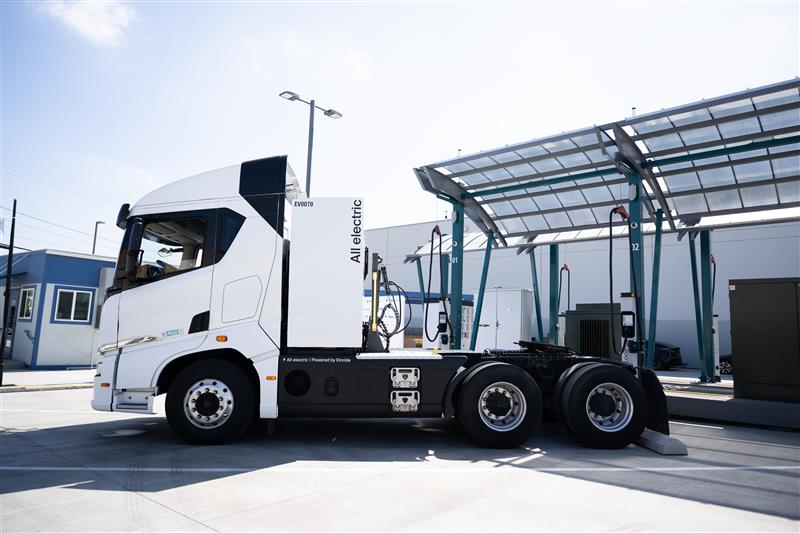

Real estate investment trust Prologis started installing on-site solar panels two decades ago to reduce operational emissions from its buildings.
The company now generates more than 1 gigawatt of electricity from those installations. Its chief energy and sustainability officer, who is also a managing director and part of the Prologis executive committee, is responsible for turning energy investments into new revenue.
“We value energy, we value decarbonization,” said Susan Uthayakumar, who joined Prologis in January 2022 after more than 17 years with energy services provider Schneider Electric. “We see that as a differentiator.”
Prologis doesn’t disclose revenue projections for its energy services, but it has plenty of places to put solar and other clean power technologies: more than 1.3 billion square feet of rooftops on its warehouses, logistics facilities and data centers, not to mention the land around them. That’s more than the world’s largest retailer, Walmart, which runs more than 500 solar installations on its stores.
“Power has become integral to future-proofing the portfolio,” she said.
Prologis’ solar investments cover about 6 percent of its rooftops and span 18 of the 20 markets where the company does business, giving tit enormous growth potential. Where doesn’t it have big solar plans? In Canada, because much of the grid-available power is already clean, or in India, where Prologis is still building its market strategy.
The business case
Prologis doesn’t disclose revenue projections for its energy services business, but Uthayakumar said the offering appeals to customers seeking sites with flexible power capacity and growth potential or that have their own emissions-reduction goals.
Close to 75 percent of Prologis’ carbon footprint comes from the energy consumed at its facilities, and that climate liability flows through to the companies using those sites.
In Europe, starting in 2026, regulations mandate solar installations for new commercial and industrial facilities larger than about 2,700 square feet — the average size of a Prologis building is 100,000 square feet. Existing buildings need to add solar by 2027.
“For our European customers, this is table stakes,” Uthayakumar said. “They sometimes won’t take the facility if you don’t have this.”
The capital for solar and clean power projects is approved by the executive committee. Prologis looks for a return of 11 to 13 percent, after an installation has been built and stabiliz
Read More