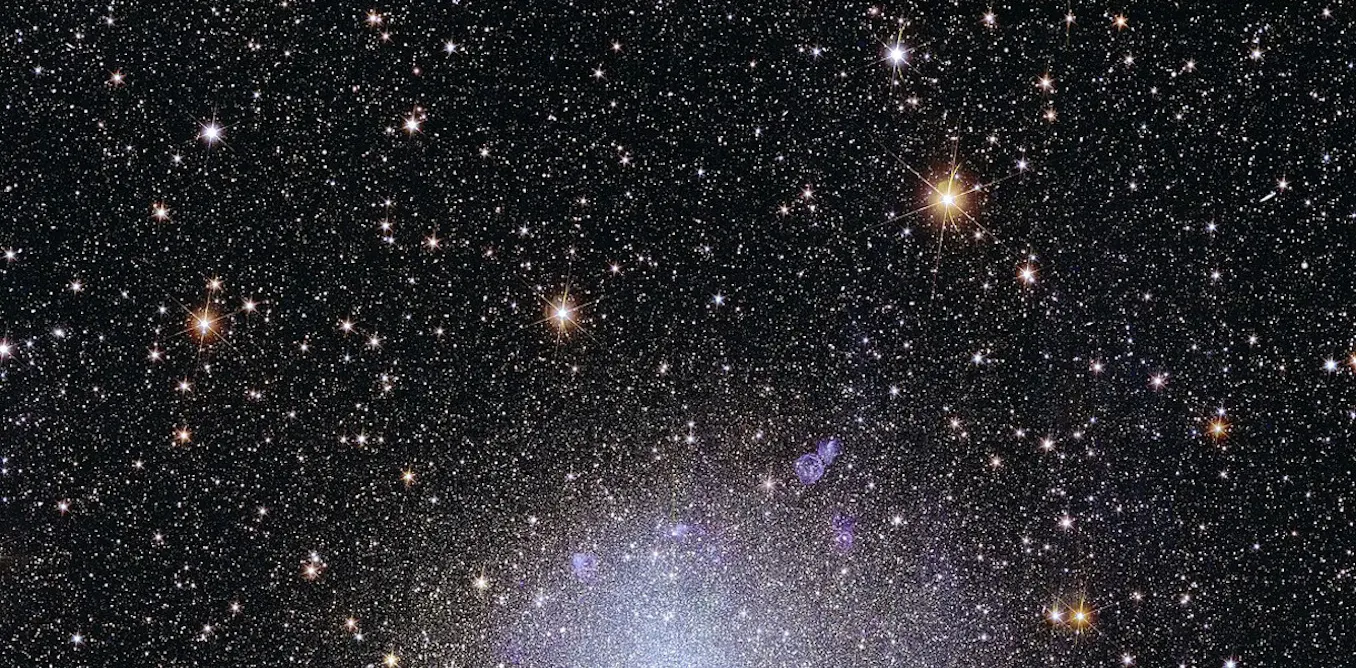

“Project Hail Mary,” the movie adaptation to Andy Weir’s 2021 novel about a science teacher attempting to save the Earth from sun-eating microbes, was released in March 2026 to stellar ratings from critics and audiences alike. The movie explores a few unique forms that extraterrestrial life could take, from space microorganisms that produce both infrared light and an unfathomable amount of energy, to rocklike aliens that live under crushing pressure and breathe ammonia.
Over the past decade, scientists have come up with a variety of frameworks to guide their search for life in the universe. While it’s most convenient to start looking for life using the knowledge that biologists have about life on Earth, scientists have also begun integrating broader conceptions of life, including life that perhaps evolved in different chemical environments.
To expand on the idea that life out in space might look nothing like life on Earth, here are five articles The Conversation U.S. rounded up from our archives, and written by astronomers and astrobiologists.
1. Why base the search on life on Earth?
Astronomers participating in the Search for Extraterrestrial Intelligence typically start by identifying potentially habitable planets. And to do that, they look for what sustains life on Earth: water.
Planets that are close enough to their Sun that liquid water wouldn’t freeze, but far enough away that it wouldn’t evaporate, fall into what’s called the Goldilocks Zone. But why base the search on water, which complex life on Earth uses to survive, if an extraterrestrial life-form might use different chemistry?
Cole Mathis, a physicist and astrobiologist at Arizona State University who studies complex adaptive systems, explained that out of convenience, astronomers start by looking for signals similar to those produced by life on Earth.
Detecting chemical signatures using the instruments on telescopes is tricky – it’s like playing hide-and-seek, but you’re outside the house and can only peer in through the window. You might as well start by ruling out the easy and more obvious hiding spots.
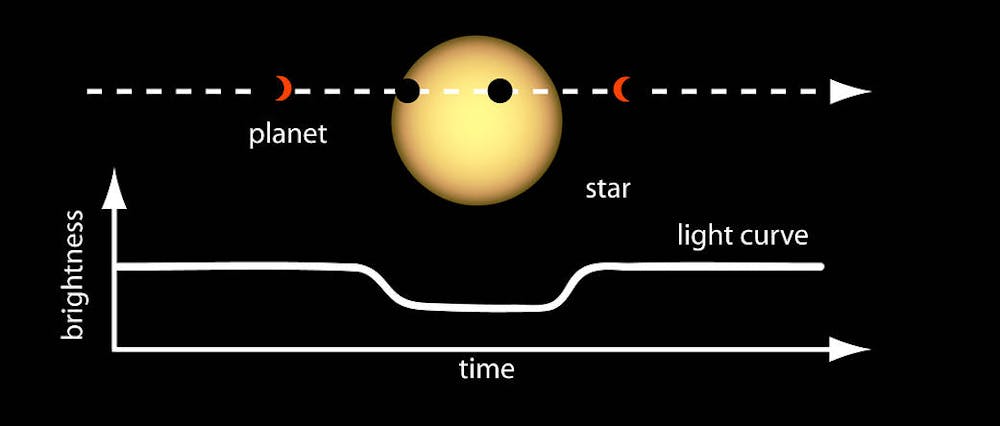
Missions to Mars have looked for signs of photosynthesis – the process by which plants take in energy – and telescopes peering deep into space look for oxygen, which organisms on Earth release into the atmosphere.
“Most astronomers and astrobiologists know that if we only look for life that’s like Earth life, we might miss the signs of aliens that are really different,” Mathis wrote. “But honestly, we’ve never detected aliens before, so it’s hard to know where to start. When you don’t know what to do, starting somewhere is usually better than nowhere.”
Read more: Why do astronomers look for signs of life on other planets based on what life is like on Earth?
2. Finding patterns of purpose
Sometimes, scientists find chemical ingredients that make up life on Earth out in space, but they can’t assume that these ingredients on their own indicate life. Geological and environmental processes on planets may produce these chemical signatures without any living organisms involved.
The key difference, to Amirali Aghazadeh, a computational scientist at the Georgia Institute of Technology, is purpose. Life grows, adapts and changes over time to better fit its environment.
His research team came up with a framework that, instead of looking for a specific type of life-form, looks at patterns in collections of chemicals and evaluates whether they could have been produced by processes like metabolism and evolution.
“If we assume that alien life uses the same chemistry, we risk missing biology that is similar – but not identical – to our own, or misidentifying nonliving chemistry as a sign of life,” wrote Aghazadeh.
3. Lessons from complex, evolving systems
Like Aghazadeh, many astrobiologists are starting to look more broadly at how complexity emerges, rather than searching for a specific type of molecule that could indicate the presence of extraterrestrial life. Other forms of life may be made up of entirely different chemical ingredients to humans, but to be considered life, they would still have to adapt and evolve over time.
Chris Impey, an astronomer from the University of Arizona, attended a workshop where scientists across disciplines came together to try to understand how and why systems in the universe – from organisms to languages and information – change or grow more complex over time.
Figuring out these underlying drivers of complexity, or finding signals that indicate the presence of a complex system, could help scientists search for unique forms of life in the universe.
“As astrobiologists try to detect life off Earth, they’ll need to be creative,” Impey wrote. “One strategy is to measure mineral signatures on the rocky surfaces of exoplanets, since mineral diversity tracks terrestrial biological evolution. As life evolved on Earth, it used and created minerals for exoskeletons and habitats.”
4. Beyond biology: Looking for ‘technosignatures’
Another option for searching for life has nothing to do with biology. Some scientists, wrote astronomers Macy Huston and Jason Wright from Penn State University, look for “technosignatures:” signals that would come from technology originating beyond Earth.
Human technology – from TV towers to satellite and spacecraft communications – emits enough radio waves to create faint but detectable signals traveling through space. Scientists use this idea to search for artificial signals that could potentially come from an extraterrestrial civilization.
Other technosignatures could include chemical pollution, artificial heat or light from industry, or signals from a large number of satellites.
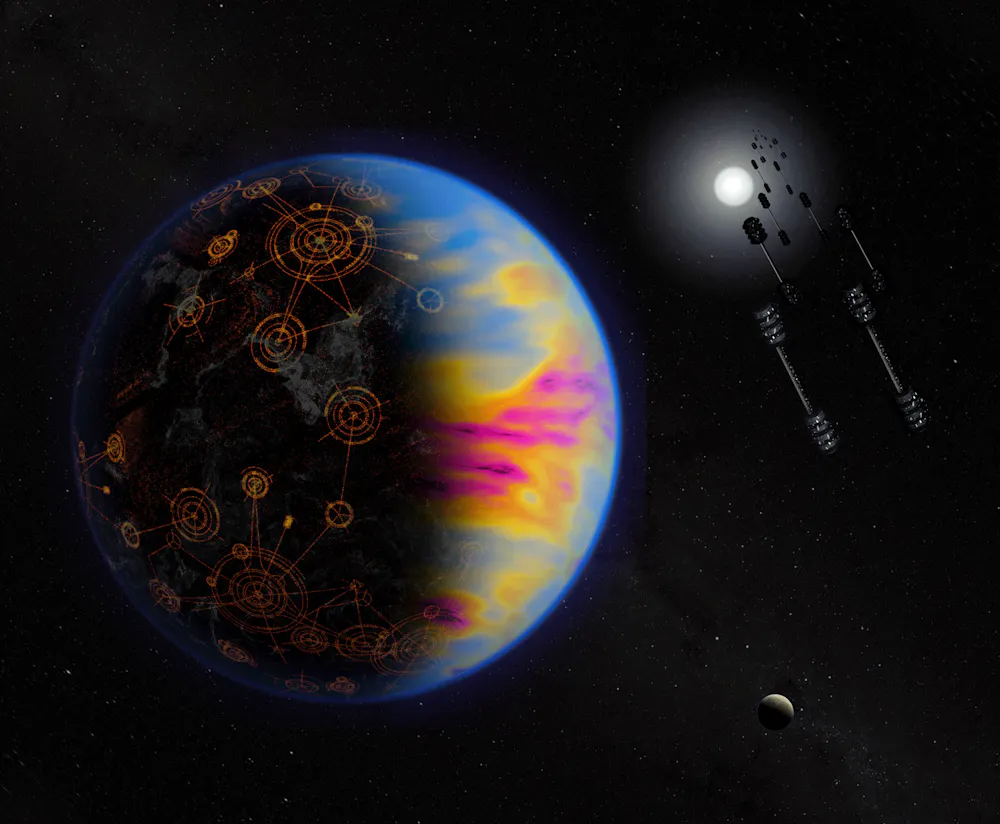
“While many astronomers have thought a lot about what might make for a good signal, ultimately, nobody knows what extraterrestrial technology might look like and what signals are out there in the universe,” wrote Huston and Wright.
Read more: Signatures of
Read More