The staggering value of the assets in the Norwegian government’s pension holdings — $2.1 trillion, as of the end of 2025 — isn’t the only thing that’s remarkable about the world’s largest sovereign wealth fund.
The fund is subject to ethical criteria that include environmental harm. Managers there also consider climate and nature risks when adjusting the portfolio. And because the fund is invested so widely — it owns an average of 1.5 percent of 7,200 companies around the world — its progress and decision making provide insights into corporate sustainability at a global level.
Here are some key takeaways from the climate and nature report published late last month by Norges Bank Investment Management (NBIM), the asset management arm of Norway’s central bank.
Evaluating expectations — and progress
NBIM has previously compiled “Expectation Scores” for climate and nature, which measure the extent to which disclosures made by the companies it invests in meet the bank’s expectations. The score is used to evaluate climate and nature risks associated with the portfolio, and companies can be removed to reduce those risks.
Portfolio companies scored an average of 52 out of 100 on climate (up nearly 4 points from 2024) and 36 on nature (virtually unchanged), with European businesses leading the way.
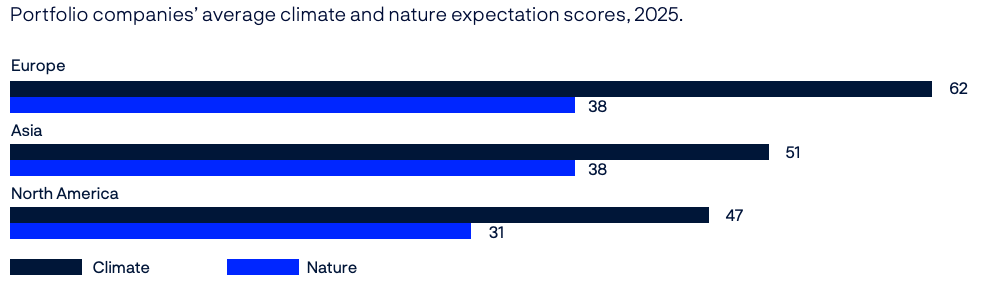
In 2025, NBIM added a “Climate Performance Score,” an indicator based on seven factors that the bank says provides a “reality-check on whether companies’ stated commitments translate into measurable climate action.” Factors that contribute to the indicator include progress toward interim emissions targets alongside trends in absolute and revenue-based emissions intensities.
Lobbying is also being tracked
NBIM did not publish performance scores, but the bank did break down results from one of the indicators that contribute to the scores: corporate policy engagement.
To examine company lobbying, the bank turned to nonprofit Danu Insight, which has developed an AI-powered system that allows it to monitor disclosures on climate-related corporate lobbying. The bank’s report, which covers more than 1,200 portfolio companies, found that 61 percent lobbied in a way that was consistent with the goal of limiting global warming to 1.5 degrees Celsius. However, that figure fell dramatically, to just 14 percent, when including lobbying by the trade organizations the portfolio companies belonged to.
Lobbying experts have long noted that trade organizations, such as the U.S. Chamber of Commerce, experience limited pushback when attacking climate legislation. “They’re not subject to the same pressures
Read More