

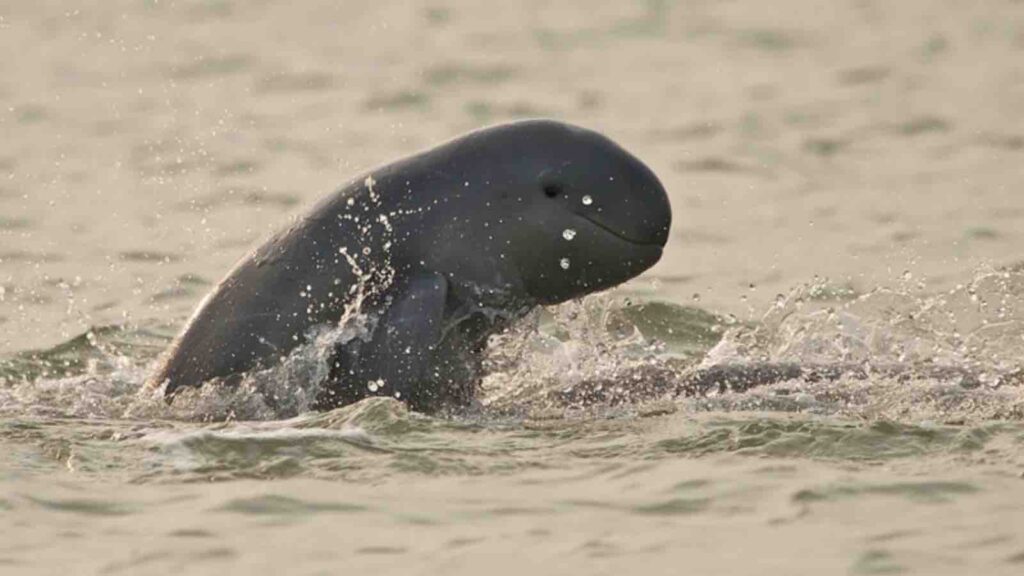

Annual Census Records 493 dolphins across Bhitarkanika and Gahirmatha Marine Sanctuary.
The dolphin population in Odisha’s Bhitarkanika National Park and Gahirmatha Marine Sanctuary has declined slightly this year, according to the latest census conducted by the state forest department.
The 2026 annual survey counted 493 dolphins, compared with 504 recorded last year, marking a decrease of 11 animals. While the drop is relatively small, the change has raised new questions about conservation pressures in one of eastern India’s most important habitats for marine mammals.
The survey was conducted by the Rajnagar Mangrove Wildlife Division, which oversees the region that hosts the largest dolphin population in Odisha.
RELEVANT SUSTAINABLE GOALS



Three-Day Census Surveys Rivers, Creeks and Estuaries
The dolphin census took place over three days from January 20 to January 22, covering an extensive coastal ecosystem stretching from the Dhamra estuary to the Debi estuary.
Survey teams monitored rivers, estuaries and tidal creeks, areas known for supporting marine biodiversity and serving as feeding and breeding grounds for several dolphin species.
According to Divisional Forest Officer Vardaraj Gaonkar, the census identified five species of dolphins within the region. These included:
- Irrawaddy dolphin
- Indo-Pacific bottlenose dolphin
- Indo-Pacific humpback dolphin
- Indo-Pacific finless porpoise
- Spinner dolphin
The diversity of species underscores the ecological importance of the Bhitarkanika–Gahirmatha coastal zone.

Humpback Dolphins Dominate the Population
Among the species recorded, the Indo-Pacific humpback dolphin was by far the most numerous.
The census documented 402 humpback dolphins within the Gahirmatha Marine Sanctuary, making the sanctuary a significant stronghold for the species.
Most of these dolphins were observed near Babubali and Habalikhati, areas that appear to support a large concentration of marine mammals.
By contrast, the census recorded only nine Irrawaddy dolphins, highlighting the limited presence of that species in the surveyed waters.
Bhitarkanika Included in Census Alongside Chilika
The latest survey reflects a shift in monitoring practices.
For many years, dolphin population counts in Odisha focused primarily on Chilika Lake, one of India’s most well-known coastal ecosystems.
However, Bhitarkanika has been included in the official census alongside Chilika since 2015, expanding the scope of marine mammal monitoring in the state.
This broader approach provides a more complete picture of dolphin populations along Odisha’s coastline.
A Critical Habitat for Marine Mammals
Despite the decline recorded this year, conservation officials emphasize that the Rajnagar Mangrove Wildlife Division remains a crucial refuge for dolphins and other marine species.
The mangrove ecosystems of Bhitarkanika and the coastal waters of Gahirmatha create a complex habitat of estuaries, creeks and tidal channels that support marine biodiversity.
These waters serve as feeding grounds and migration corridors for several dolphin species.
The annual census is part of ongoing efforts to monitor the health of marine mammal populations and guide conservation strategies.
Growing Focus on Marine Conservation
The slight decrease in dolphin numbers has renewed attention on conservation efforts across Odisha’s coastal ecosystems.
Regular monitoring through annual surveys allows researchers and forest authorities to track population trends, identify habitat pressures and respond with targeted management measures.
For Bhitarkanika and Gahirmatha — two of India’s most ecologically significant coastal landscapes — maintaining healthy dolphin populations remains an important indicator of marine ecosystem health.
The latest census underscores both the region’s biological richness and the continuing need to safeguard the habitats that sustain it.
You may also be interested in :
UNOC3: 30×30 Ocean Action Plan Launched Accelerate Ocean Protection